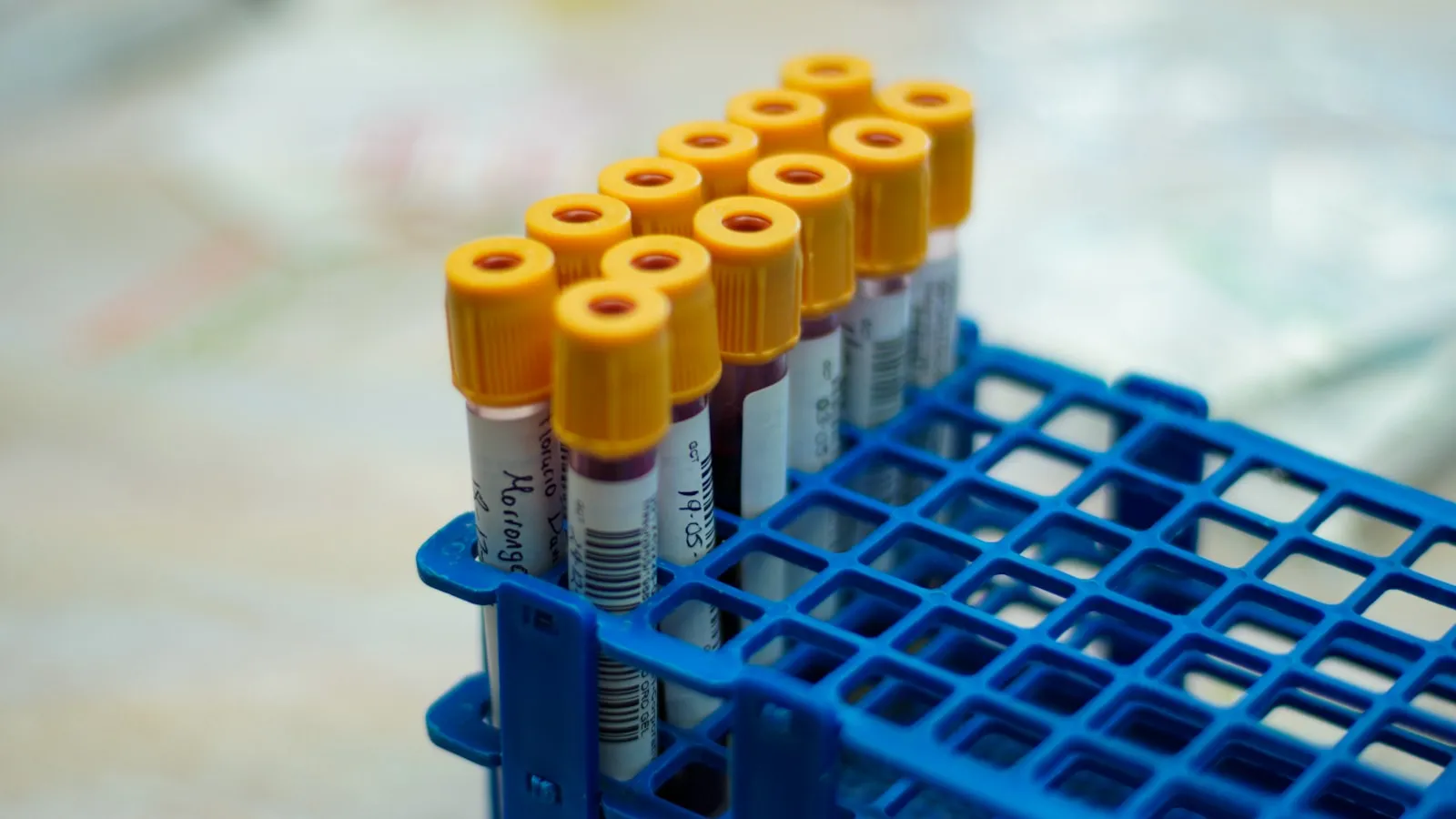
Een pfeiffer test is bloedonderzoek in twee smaken: een sneltest op heterofiele antistoffen, en EBV-serologie waarbij drie specifieke antistoffen samen worden beoordeeld. De sneltest is snel en goedkoop, maar mist in de eerste ziekteweek een deel van de gevallen. Dat tijdsaspect is de belangrijkste valkuil.
Een negatieve uitslag op dag drie sluit dus weinig uit.
Ik zie mensen daarop afgaan en daarna weken denken dat het iets anders is. Wanneer je prikt, bepaalt hier wat de uitslag waard is.
Welke tests bestaan er?
De heterofiele antistoftest, vaak Monospot genoemd, kijkt naar een algemene afweerreactie die typisch bij pfeiffer hoort. De EBV-serologie kijkt naar antistoffen die specifiek tegen het virus gericht zijn: VCA IgM, VCA IgG en EBNA-1 IgG. Daarnaast bewegen het bloedbeeld en de leverwaarden vaak mee.
| Onderzoek | Wat het laat zien | Belangrijkste beperking |
|---|---|---|
| Heterofiele sneltest | algemene reactie passend bij pfeiffer | vaker negatief in de eerste week en bij jonge kinderen |
| EBV-serologie | onderscheid recent versus doorgemaakt | alleen bruikbaar als patroon, niet los |
| Leukocytendifferentiatie | verhoogde lymfocyten, vaak atypisch van vorm | past bij meer virale infecties |
| Leverwaarden | tijdelijke stijging van ALAT en ASAT | zegt niets over de verwekker |
De Paschale en Clerici beschreven uitgebreid waar de losse bepalingen tekortschieten en waarom een patroonbeoordeling nodig is (PMID 24175209). Klutts en collega's werkten dat uit tot een gestructureerde manier om die patronen te lezen (PMID 19656988).
Wanneer kun je het beste prikken?
Voor de sneltest geldt: liever na de eerste ziekteweek dan erin, omdat de antistoffen tijd nodig hebben om op te komen. Voor de EBV-serologie maakt het moment minder uit, omdat je juist het patroon over drie antistoffen beoordeelt. Bij twijfel na een vroege negatieve uitslag is herhalen zinvoller dan een andere test zoeken.
Dat klinkt saai en het scheelt veel verwarring.
Neem een student met keelpijn sinds maandag, die op dag 3 een sneltest laat doen die negatief is. Twee weken later is diezelfde test positief, zonder dat er iets nieuws is gebeurd. De ziekte was er al; de antistoffen nog niet.
Wat betekent een positieve EBV-uitslag?
Op zichzelf vaak weinig, omdat ongeveer negen op de tien volwassenen antistoffen tegen EBV draagt na een eerdere infectie. Een positieve IgG zegt dus vooral dat je het virus ooit hebt gehad. Het onderscheid tussen recent en lang geleden zit in de combinatie met VCA IgM en EBNA-1 IgG.
EBNA-1 is daarbij de tijdstempel.
Die antistoffen verschijnen pas weken tot maanden na de eerste infectie. Zijn ze aanwezig, dan wijst dat op iets van langer geleden. Het volledige patroonoverzicht staat in Epstein-Barr virus symptomen.
Verandert de uitslag iets aan de behandeling?
Voor de meeste mensen niet, en dat is goed om vooraf te weten. Er bestaat geen middel tegen het virus zelf en Thuisarts beschrijft dat het vanzelf overgaat. De uitslag heeft vooral waarde als verklaring en als tijdstempel voor je herstel.
Voor sporters ligt daar wel een praktisch belang.
Bij een bevestigd beeld hoort een aparte pauze voor contact- en botsingssport in de eerste weken, vanwege de kans op een vergrote milt. Die termijn staat in hoe lang duurt pfeiffer. De sportgeneeskundige standpunten over deelname na pfeiffer gaan precies over dat onderscheid (PMID 37186809).
En als je al maanden moe bent?
Dan verschuift het nut van de test. Een EBV-uitslag verklaart aanhoudende vermoeidheid maanden later meestal niet, terwijl andere oorzaken dat wel kunnen. Op dat moment is het uitsluiten van behandelbare verklaringen nuttiger dan het bevestigen van een virus dat je toch al had.
De volgorde draait dus om.
Waarden die dan in beeld komen zijn ferritine, TSH, vitamine B12 en hs-CRP, gebundeld in het 360 gezondheidspanel. Wat er met langdurige klachten na een infectie gebeurt, staat in post viraal syndroom, en het complete overzicht in bloedtest bij vermoeidheid.
De RIVM-informatie noemt een vermoeidheid van twee tot drie maanden als gewoon beloop, dus onder die grens is geduld vaak het juiste antwoord.
Mijn advies: laat een vroege negatieve sneltest niet het einde van het gesprek zijn, en bespreek met je huisarts of herhalen of serologie hier iets toevoegt.
Elk bloedtestresultaat bevat een professionele beoordeling door een BIG-geregistreerde arts. Bespreek voor behandelbeslissingen je resultaten met je huisarts.
Bronnen
- De Paschale M, Clerici P. Serological diagnosis of Epstein-Barr virus infection: problems and solutions. World Journal of Virology, 2012;1(1):31-43. PMID 24175209.
- Klutts JS, Ford BA, Perez NR, Gronowski AM. Evidence-based approach for interpretation of Epstein-Barr virus serological patterns. Journal of Clinical Microbiology, 2009;47(10):3204-10. PMID 19656988.
- Putukian M, O'Connor FG, Stricker P, et al. American Medical Society for Sports Medicine position statement: mononucleosis and athletic participation. Clinical Journal of Sport Medicine, 2023. PMID 37186809.
- RIVM. Pfeiffer, ziekte van. Vragen en antwoorden.
- Thuisarts.nl. Ik heb de ziekte van Pfeiffer.
Auteur
Enhanced Health
Dr. Naimi, BIG-geregistreerde arts, ziet toe op de medische standaarden achter onze content en beoordelingen. Lees ons medisch beleid
Gerelateerde testen
Gerelateerde berichten

Post exertionele malaise: waarom je pas 24 uur later instort

Gevolgen ziekte van pfeiffer op lange termijn: wat blijft en wat herstelt