Order an extensive blood test for athletes
A 45-biomarker comprehensive health panel inspired by WHOOP Advanced Labs — a deep look at metabolism, cardiovascular risk, hormones, liver, kidney and inflammation.
Add to your order
No referral needed
Added to your order
Click the button to view your cart
Biomarkers Included
48 markersSHBG (Sex Hormone Binding Globulin), TSH (Thyroid Stimulating Hormone), ALT (Alanine Aminotransferase), LDL Cholesterol, Cortisol, DHEA-S, Estradiol (E2), Free Testosterone, FSH (Follicle Stimulating Hormone), LH (Luteinizing Hormone), Total Testosterone, Bicarbonate, Calcium, Chloride, Ferritin, Iron (Serum), Magnesium, Potassium, Sodium, Transferrin, CRP (C-Reactive Protein), Homocysteine, Glucose (Fasting), HbA1c (Glycated Hemoglobin), ApoB (Apolipoprotein B), HDL Cholesterol, Total Cholesterol, Albumin, HOMA-IR, ALP (Alkaline Phosphatase), AST (Aspartate Aminotransferase), Bilirubin (Total), Total Protein, Urea (BUN), Creatinine, Vitamin D (25-OH), eGFR (Estimated Glomerular Filtration Rate), Insulin (Fasting), Leukocyte Differential, Transferrin Saturation, Lipoprotein(a), Triglycerides, Basic Blood Count, Bilirubin (Direct), Bilirubin (Indirect), Cholesterol/HDL Ratio, Non-HDL Cholesterol, LDL/HDL Ratio
This is an extensive blood test built for athletes and active people who want a broad view of their body. The panel brings forty-three blood values together in one measurement, from your hormones and metabolism to your ferritin, heart, liver, kidneys and vitamins.
Wearables and training data tell you a lot about your effort and recovery, but they cannot look inside your blood. An extensive blood test can add that layer of objective data, so you understand your body from the inside as well.
Why this test?
Your training data shows how hard you work and how you recover, but your blood adds a different kind of insight. An extensive blood test brings values from many systems together, so you can see how your hormones, your metabolism and your recovery markers stand.
For athletes, this can be interesting, because your training, your nutrition and your sleep can all play a part in these blood values. By measuring a broad set of markers, you can build a picture of where you stand and where you may want to look closer.
This way you work with data instead of assumptions, which fits an approach where you want to understand and optimise your body.
Who is this test for?
An extensive blood test may suit athletes and active people who want a broad baseline. This blood test for athletes can be relevant for:
- Athletes who want to combine their training data with objective blood values
- People who want insight into many systems at once, from hormones to metabolism
- People who want to follow their recovery markers over a training season
- People who want to follow their values periodically
- People who prefer one extensive blood test over several separate panels
What is tested?
This panel measures forty-three blood values, grouped by area:
- Hormones: Testosterone, Free Testosterone, SHBG, Estradiol, DHEA-S, Cortisol, LH and FSH.
- Metabolism: Fasting Glucose, Fasting Insulin, HbA1c and HOMA-IR.
- Heart and vessels: Total Cholesterol, HDL, LDL, Triglycerides, ApoB and Lp(a).
- Liver: ALT, AST, GGT, ALP, Total Bilirubin and Albumin.
- Kidneys: Creatinine, eGFR and Urea.
- Inflammation: CRP and Homocysteine.
- Minerals and iron: Ferritin, Iron, Transferrin, Transferrin Saturation, Magnesium, Calcium, Sodium, Potassium, Chloride and Bicarbonate.
- Thyroid, vitamins and blood count: TSH, Vitamin D, Total Protein and a blood count.
What can this test tell you?
The results can show you how your values across these areas compare to the reference ranges. Because this extensive blood test covers many systems, you can see how your hormones, your metabolism, your recovery markers and your iron status relate to each other.
For athletes, this broad view can help you decide where to look closer, for example if your iron or your recovery markers stand out. Keep in mind that a single value is not a diagnosis: your results only gain meaning in combination with your situation and your history.
How is the sample collected?
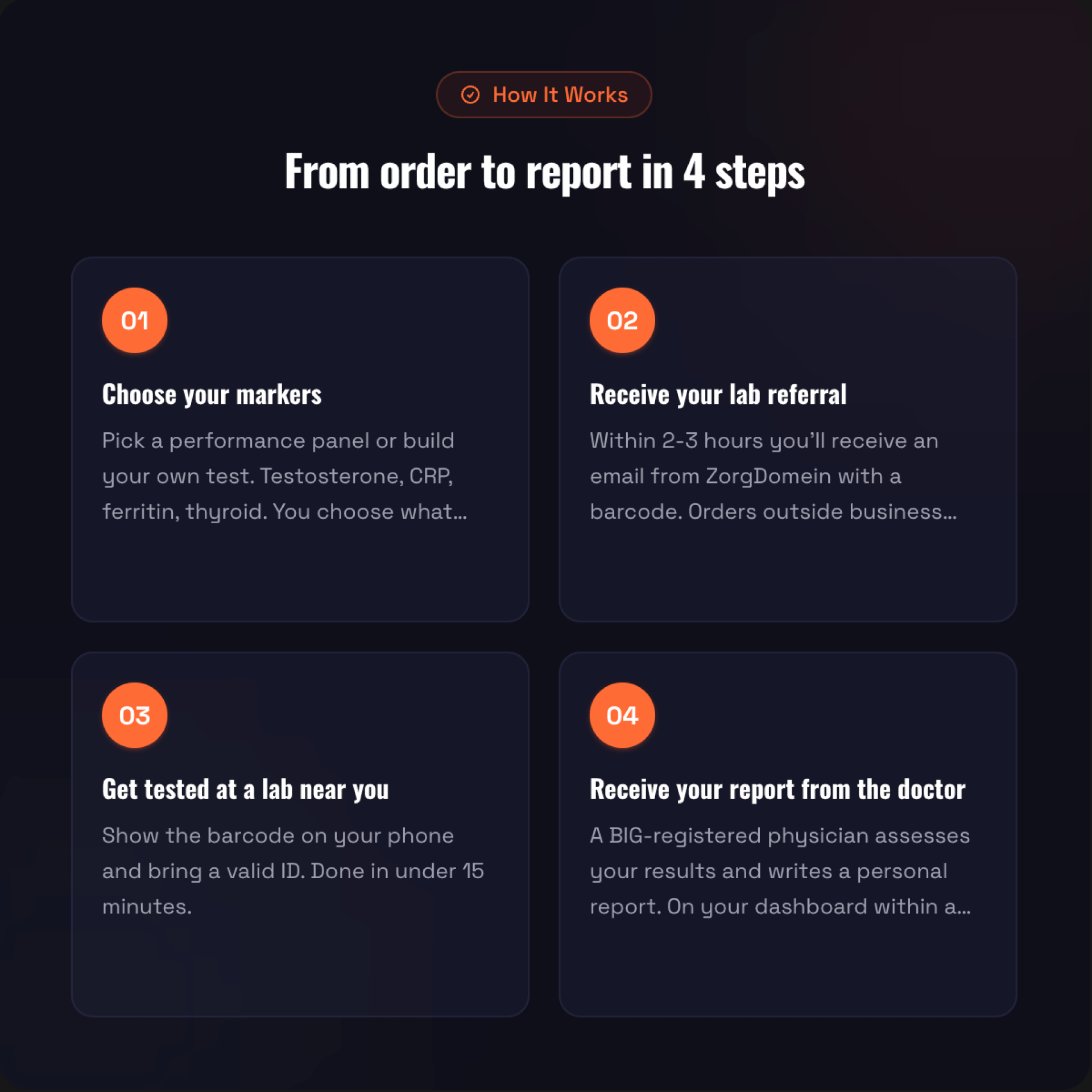
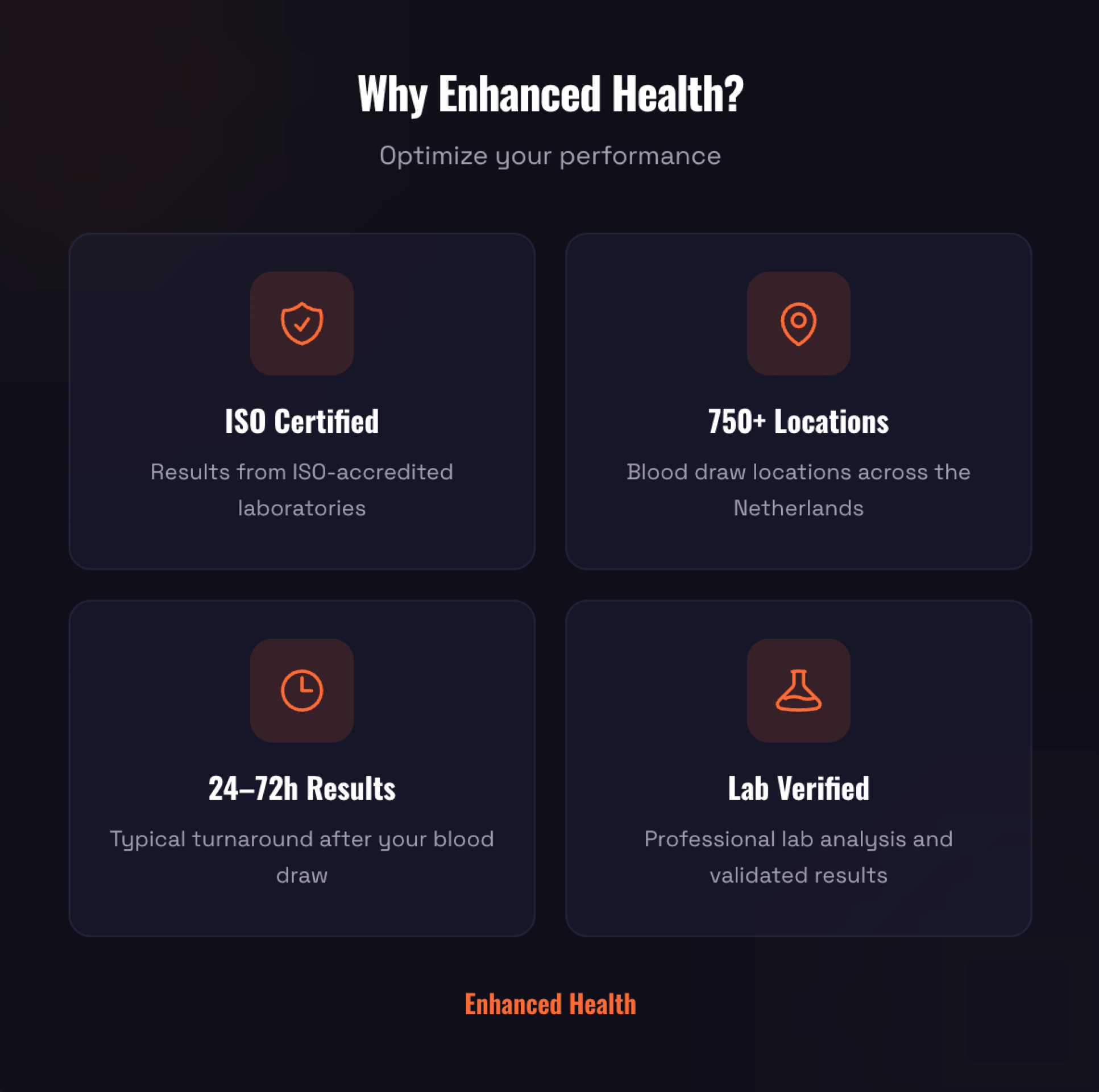
For this blood test, a staff member draws a small tube of blood at a certified location. You can choose from 650+ collection sites in the Netherlands, so there is almost always a location near you.
You need little for this: the barcode from your ZorgDomein email on your phone and a valid ID. Without a BSN there is no barcode: you then print your referral form through the link in the email and bring it to the draw location. The draw itself usually takes only a few minutes.
When is this test useful?
An extensive blood test can be useful at different moments. Some athletes choose to test:
- When they want a broad baseline before a new training block
- When they want to follow their recovery markers over a season
- When they feel tired or flat and want to look at several systems at once
- When they want to follow the effect of a change in training or nutrition
- When they prefer one extensive blood test over several separate tests
Know InsideTracker? Our InsideTracker panel measures comparable blood values at a lab in the Netherlands, useful if you are looking for that approach.
What do the results mean?
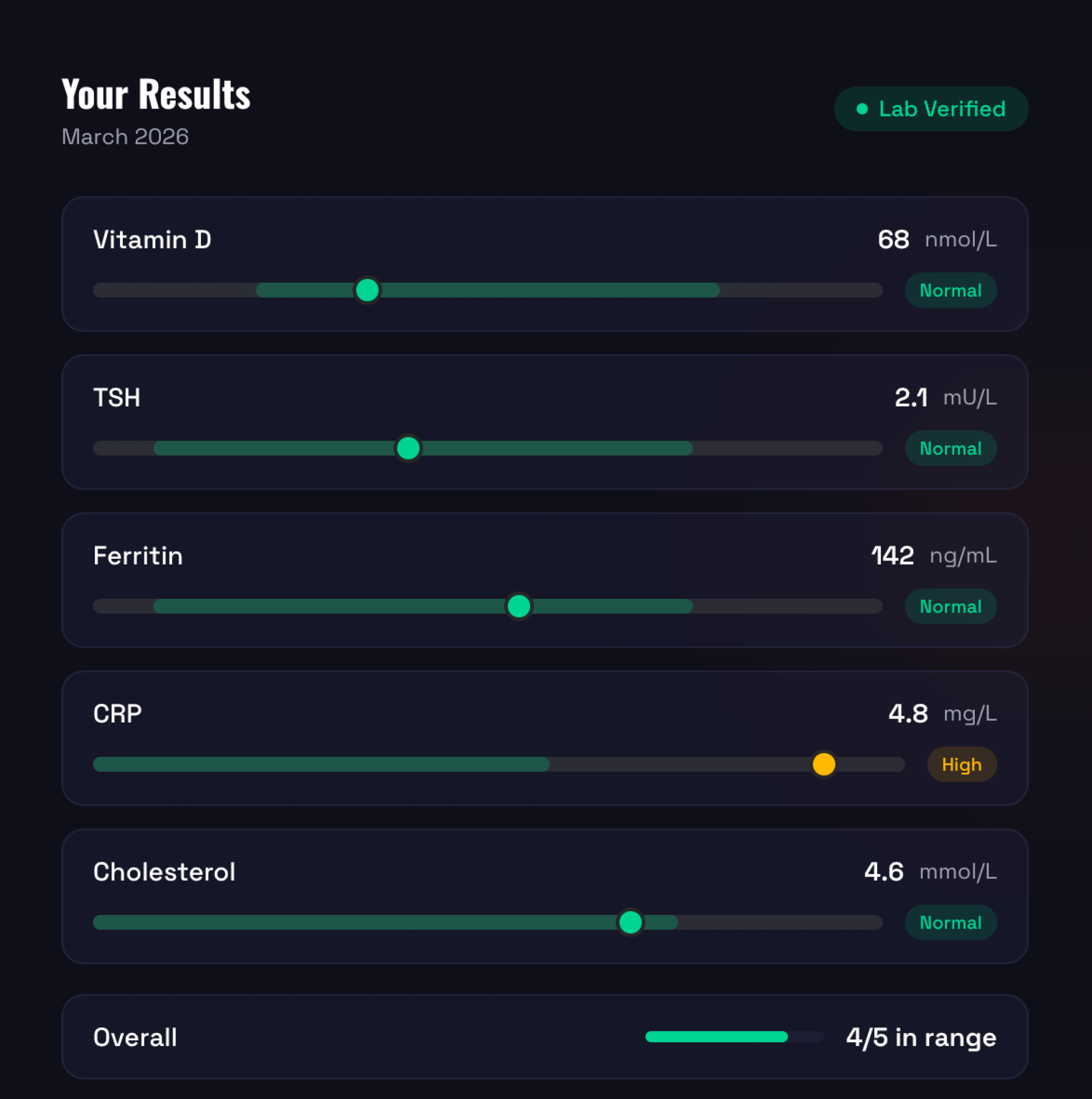
What the results mean depends on your personal situation. Each value is compared to a reference range, but a value outside that range does not automatically mean something is wrong.
With a broad panel, a doctor often looks at how the values relate to each other, rather than at one value on its own. Always discuss any deviating values with your GP, so you know what the results may mean for you personally.
What happens after the results?
You receive your results digitally in your account, usually within a few working days. For each value, you can see whether it falls within the reference range. You can then share your results with your own GP.
Every blood test result includes a professional assessment from a BIG-registered doctor. For treatment decisions, discuss your results with your GP.
Frequently Asked Questions
No, you can request this blood test yourself online. You can then discuss your results with your GP.
This panel measures forty-three blood values across hormones, metabolism, heart, liver, kidneys, minerals, vitamins and your blood count.
For values such as your glucose, insulin and lipids, fasting is advisable. For your hormone values, the morning is often a good moment.
A wearable tracks your effort and recovery, while a blood test adds objective values from inside your body. Together they can give you a broader view.
You usually receive your results within a few working days, digitally in your account.
What's Included
| No. | Biomarker | Unit | Turnaround |
|---|---|---|---|
| 01 | SHBG (Sex Hormone Binding Globulin) | nmol/l | 5 days |
| 02 | TSH (Thyroid Stimulating Hormone) | mu/l | 2 days |
| 03 | ALT (Alanine Aminotransferase) | u/l | 1 day |
| 04 | LDL Cholesterol | mmol/l | 1 day |
| 05 | Cortisol | nmol/l | 3 days |
| 06 | DHEA-S | umol/l | 5 days |
| 07 | Estradiol (E2) | pmol/l | 2 days |
| 08 | Free Testosterone | pmol/L | 3 days |
| 09 | FSH (Follicle Stimulating Hormone) | U/L | 2 days |
| 10 | LH (Luteinizing Hormone) | U/L | 3 days |
| 11 | Total Testosterone | nmol/l | 2 days |
| 12 | Bicarbonate | mmol/l | 4 days |
| 13 | Calcium | mmol/l | 5 days |
| 14 | Chloride | mmol/l | 4 days |
| 15 | Ferritin | ug/l | 2 days |
| 16 | Iron (Serum) | umol/l | 5 days |
| 17 | Magnesium | mmol/l | 5 days |
| 18 | Potassium | mmol/l | 2 days |
| 19 | Sodium | mmol/l | 2 days |
| 20 | Transferrin | g/l | 2 days |
| 21 | CRP (C-Reactive Protein) | mg/l | 2 days |
| 22 | Homocysteine | umol/L | 3 days |
| 23 | Glucose (Fasting) | mmol/l | 1 day |
| 24 | HbA1c (Glycated Hemoglobin) | mmol/mol | 2 days |
| 25 | ApoB (Apolipoprotein B) | g/l | 4 days |
| 26 | HDL Cholesterol | mmol/l | 1 day |
| 27 | Total Cholesterol | mmol/l | 1 day |
| 28 | Albumin | g/l | 2 days |
| 29 | HOMA-IR | Index | — |
| 30 | ALP (Alkaline Phosphatase) | u/l | 1 day |
| 31 | AST (Aspartate Aminotransferase) | u/l | 1 day |
| 32 | Bilirubin (Total) | umol/l | 4 days |
| 33 | Total Protein | g/l | 5 days |
| 34 | Urea (BUN) | mmol/l | 5 days |
| 35 | Creatinine | umol/l | 1 day |
| 36 | Vitamin D (25-OH) | nmol/l | 3 days |
| 37 | eGFR (Estimated Glomerular Filtration Rate) | ml/min/1,73m² | 1 day |
| 38 | Insulin (Fasting) | pmol/L | 5 days |
| 39 | Leukocyte Differential | — | 4 days |
| 40 | Transferrin Saturation | % | — |
| 41 | Lipoprotein(a) | g/l | 6 days |
| 42 | Triglycerides | mmol/l | 1 day |
| 43 | Basic Blood Count | — | 2 days |
| 44 | Bilirubin (Direct) | umol/l | 2 days |
| 45 | Bilirubin (Indirect) | umol/l | — |
| 46 | Cholesterol/HDL Ratio | mol/mol | — |
| 47 | Non-HDL Cholesterol | mmol/l | — |
| 48 | LDL/HDL Ratio | ratio | — |
| Your result arrives once the slowest test is finished: 6 days. This is indicative; turnaround varies per laboratory. | |||
Preparation
-
Been ill? Wait a little
RequiredHad a fever, an infection or a vaccination in the past 2 weeks? Wait with the draw until you are fully recovered. These values react to inflammation and would give a distorted picture.
-
Pause biotin
RequiredDo you take a supplement with biotin (vitamin B8, common in hair, skin and nail supplements)? Stop it 72 hours before the draw. Biotin interferes with the measurement of these values.
-
No hard training beforehand
RequiredNo heavy training, long endurance sessions or anything that leaves you out of breath in the 48 hours before the draw. Normal walking is fine.
-
No alcohol beforehand
RequiredDrink no alcohol in the 24 hours before the draw.
-
Come fasting
RequiredFrom 22:00 the evening before, eat and drink nothing except water. That is at least 8 hours. Skip coffee, tea, chewing gum and smoking that morning. Plan the draw before 10:00.
-
Have the draw in the morning
RequiredThese values vary over the day and peak in the morning. Have your blood drawn before 10:00, ideally between 07:00 and 09:00.
-
Do you have a cycle? Pick the right day
RequiredIf you have a menstrual cycle, count the first day of your period as day 1 and have the draw on day 2 to 5. On hormonal contraception, or without a cycle, any day works.
- Water is always fine. Drink as usual beforehand, it makes the draw easier.
- Take your usual medication, unless your own doctor told you otherwise.
Extend this panel
Same draw, no second appointment.
More Test Panels
Whoop Women's Health
A 54-biomarker women's health panel inspired by the WHOOP Women's Health Panel — fertility, cycle and thyroid hormones plus a complete metabolic and nutrient base.
Whoop Heart Health
A 46-biomarker heart health panel inspired by the WHOOP Heart Health Panel — an advanced look at cholesterol, lipoproteins, inflammation and kidney function.
Whoop Metabolic Health
A 52-biomarker metabolic panel inspired by the WHOOP Metabolic Health Panel — blood sugar regulation, insulin, thyroid, liver and the mineral cofactors behind your metabolism.