Hormone test for men: measure testosterone and SHBG
Testosterone panel for men: total testosterone, SHBG, albumin and calculated free testosterone.
Add to your order
No referral needed
Added to your order
Click the button to view your cart
Biomarkers Included
4 markersSHBG (Sex Hormone Binding Globulin), Free Testosterone, Total Testosterone, Albumin
A hormone test for men is a blood test for testosterone and the proteins that bind it. This test measures total testosterone, free testosterone, SHBG and albumin. You order it without a GP referral.
Testosterone is the main male sex hormone. A single testosterone value says little about your hormonal balance without SHBG and albumin. Those proteins decide how much testosterone your body can actually use.
Hormone test for men: what does this panel measure?
The panel has four values:
- Total testosterone: all testosterone in your blood, bound and free together.
- SHBG: the protein that binds testosterone tightly. Your body cannot use that bound part directly.
- Albumin: a protein that binds testosterone loosely. That part is released easily.
- Free testosterone: the part your body can use directly. It is calculated from the other three values.
Who is this hormone test for?
This test suits men who want to know where their testosterone stands. For example with:
- less interest in sex or fewer morning erections
- ongoing tiredness or low energy
- less muscle strength or slower recovery after training
- earlier abnormal values you want to keep following
Complaints such as tiredness or a reduced libido fit a hormonal imbalance. They often have other causes too. Sleep, stress, weight and medication also play an important role.
Already on testosterone therapy under a doctor's care? Then choose the TRT monitoring blood test. It also follows your haematocrit, liver values and PSA.
How does a man test whether his hormones are out of balance?
A doctor looks at the three testosterone values together, not at one number. Your total testosterone can be normal while your free testosterone is low. That happens, for example, with a high SHBG.
A low value is usually measured again, on another morning. Testosterone varies from day to day. Only a repeated low value together with complaints really tells you something.
Preparation: have your blood drawn before 10:00
Testosterone is highest in the morning and falls during the day. So have your blood drawn before 10:00, ideally between 7:00 and 9:00.
Stop taking biotin 72 hours before the draw. It is in many hair and multivitamin supplements and can disturb the result. You do not need to fast for this panel.
How getting your hormones tested works
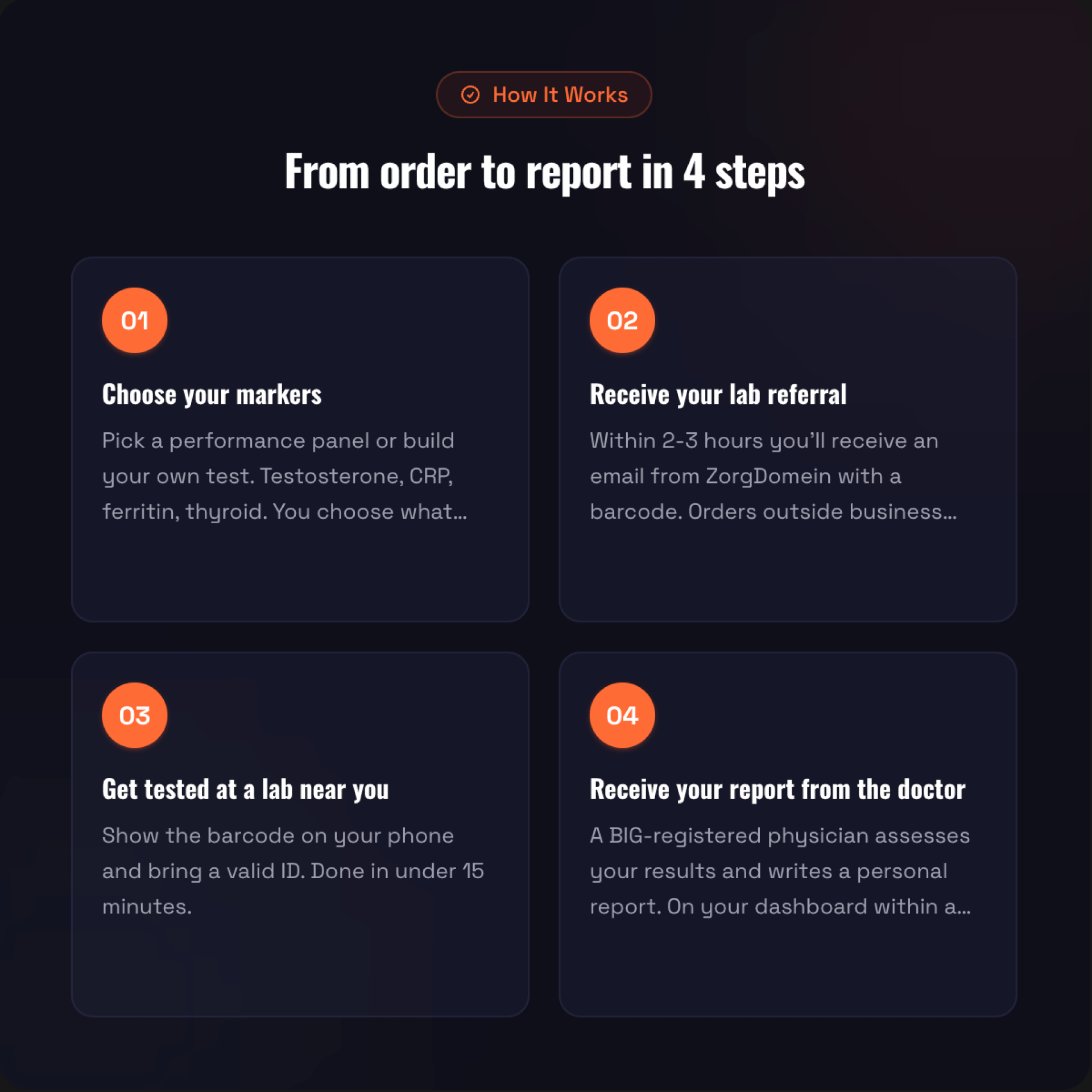
You order the test online. We then request your referral through ZorgDomein. Allow one business day for that. If you order in the evening or at the weekend, the next business day counts.
You receive an email from ZorgDomein with a barcode. You show that barcode at the collection point. Without a BSN there is no barcode: you then print your referral form through the link in the email and bring it to the draw location. You choose from 650+ collection points in the Netherlands.
A staff member draws a tube of blood from your arm. The tube goes to the certified laboratory that runs that collection point. Allow about five days for your result.
What happens after the result?
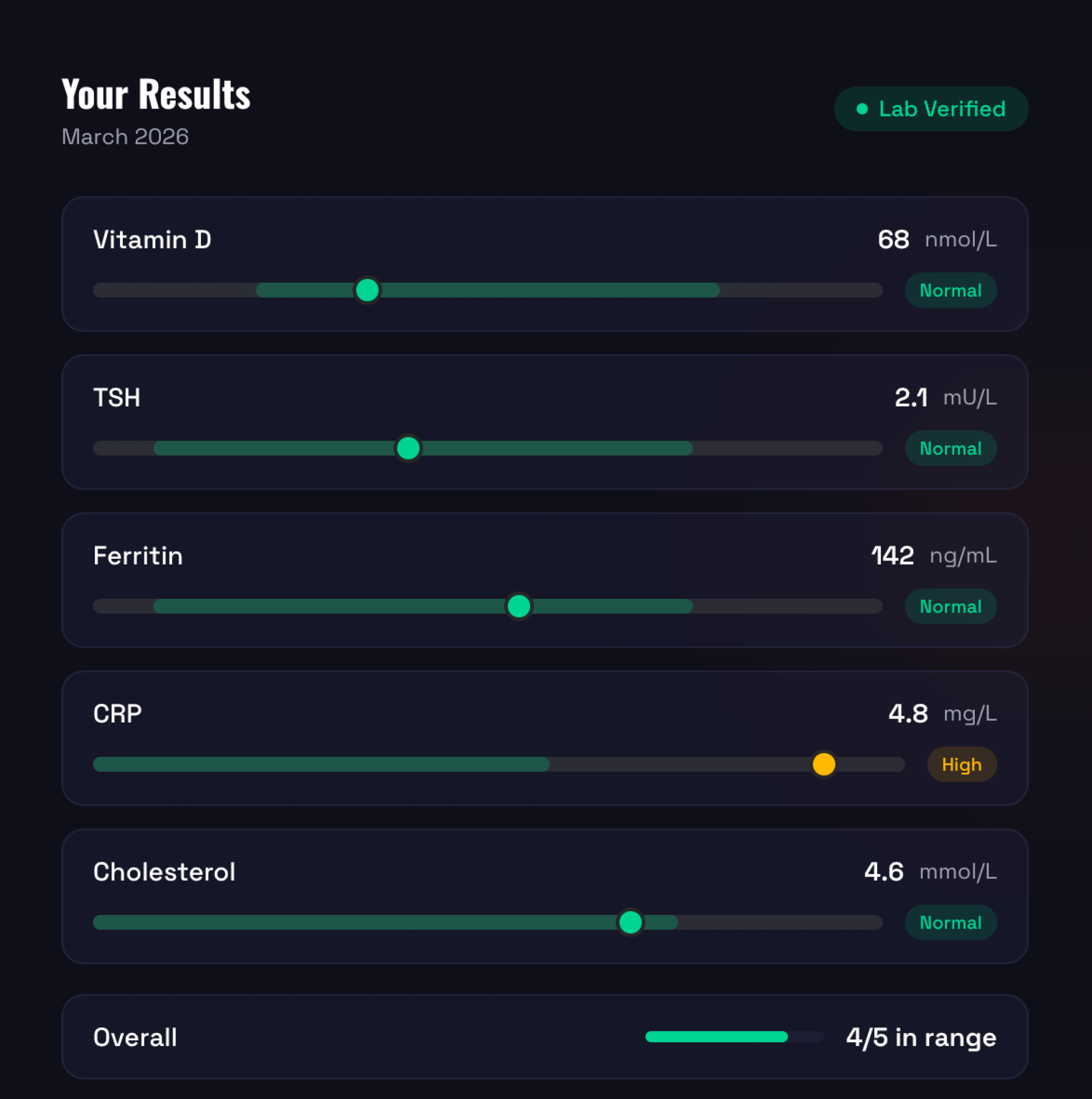
You see your result in your account, each value next to its reference range. A BIG-registered doctor assesses every result. A value outside the range is not automatically a problem.
Discuss abnormal values with your GP. You can simply share your result with them.
Testing your hormones through your GP or yourself?
If you have ongoing complaints, your GP can have your testosterone measured. Your health insurance usually covers that test.
Testing yourself works without a GP referral. You pay for the test yourself and choose when you measure. That helps if you want to follow your values over time.
Frequently asked questions
This panel costs 129 euros. The price includes the blood draw and the order fee.
Total testosterone, free testosterone and SHBG, plus the protein albumin. Free testosterone is calculated from the other three values.
No. You order the test yourself. We then request your referral through ZorgDomein, usually within one business day.
No, fasting is not needed. Do have your blood drawn before 10:00 and stop biotin 72 hours beforehand.
This is not a home test. Your blood is drawn from your arm at a collection point near you.
Total testosterone is all testosterone in your blood. Free testosterone is the part not attached to proteins. Your body can use that part directly.
Allow about five days after the blood draw. You see the result in your account.
What's Included
| No. | Biomarker | Unit | Turnaround |
|---|---|---|---|
| 01 | SHBG (Sex Hormone Binding Globulin) | nmol/l | 5 days |
| 02 | Free Testosterone | pmol/L | 3 days |
| 03 | Total Testosterone | nmol/l | 2 days |
| 04 | Albumin | g/l | 2 days |
| Your result arrives once the slowest test is finished: 5 days. This is indicative; turnaround varies per laboratory. | |||
Preparation
-
Pause biotin
RequiredDo you take a supplement with biotin (vitamin B8, common in hair, skin and nail supplements)? Stop it 72 hours before the draw. Biotin interferes with the measurement of these values.
-
Have the draw in the morning
RequiredThese values vary over the day and peak in the morning. Have your blood drawn before 10:00, ideally between 07:00 and 09:00.
- Water is always fine. Drink as usual beforehand, it makes the draw easier.
- Take your usual medication, unless your own doctor told you otherwise.
Extend this panel
Same draw, no second appointment.
More Test Panels
TRT Monitoring
Independent monitoring panel for men on TRT: testosterone (total and free), SHBG, albumin, hemoglobin, hematocrit and PSA.
Free Testosterone Test
Measure your free testosterone, the bioavailable fraction that influences your performance and recovery. No referral needed.
Testosterone Test
Measure your testosterone, a key hormone for muscle growth, recovery and energy. No referral needed.