InsideTracker Endurance blood test - 7 blood values
A 7-biomarker endurance panel inspired by InsideTracker's Endurance category — your complete blood count, full iron status, B12 and folate behind your endurance score.
Add to your order
No referral needed
Added to your order
Click the button to view your cart
Biomarkers Included
7 markersComplete Blood Count (CBC), Ferritin, Iron (Serum), Transferrin, Transferrin Saturation, Vitamin B12, Folate (Folic Acid)
The InsideTracker Endurance blood test measures the blood values InsideTracker uses to score endurance: a complete blood count, ferritin, serum iron, transferrin, transferrin saturation, vitamin B12 and folate. Here you buy exactly that panel, drawn at a certified Dutch lab.
Endurance is about oxygen transport, and oxygen transport is about red blood cells and iron. This panel maps exactly that chain.
Why this test?
InsideTracker gives members an Endurance score from 0 to 100, calculated from a fixed set of blood values. If you search for InsideTracker in the Netherlands, you usually want those values measured without a membership and without shipping a sample to the United States.
This blood test is that alternative: the same blood values behind the Endurance category, drawn at a certified Dutch lab and returned digitally in your account, with an assessment by a BIG-registered doctor.
Who is this test for?
This panel may suit endurance athletes and active people who want to track their oxygen transport. It can be relevant for:
- Runners, cyclists and triathletes who want to follow their ferritin
- Athletes with an unexplained drop in performance
- Vegetarians and vegans who want to check their iron, B12 and folate
- People who want the InsideTracker Endurance category measured in the Netherlands
What is tested?
This panel measures 7 blood values, of which the blood count itself contains dozens of underlying values:
- Blood count: a Complete Blood Count including hemoglobin, hematocrit and your red cell indices.
- Iron status: Ferritin, Iron, Transferrin and Transferrin Saturation, calculated at no extra draw.
- Vitamins for blood production: Vitamin B12 and Folate.
What can this test tell you?
The results show how your red blood cells, your complete iron status and your B vitamins compare to the reference ranges. For endurance athletes, that is the chain that carries oxygen to your muscles: a shrinking iron store shows first in your ferritin, long before your hemoglobin drops.
If you would rather see how your body absorbs training load, our InsideTracker Recovery blood test is a better fit. The full InsideTracker blood test measures 36 blood values in one go. Keep in mind that a single value is not a diagnosis.
How is the sample collected?
For this blood test, a staff member draws a small tube of blood at a certified location. You can choose from 650+ collection sites, so there is almost always a location near you.
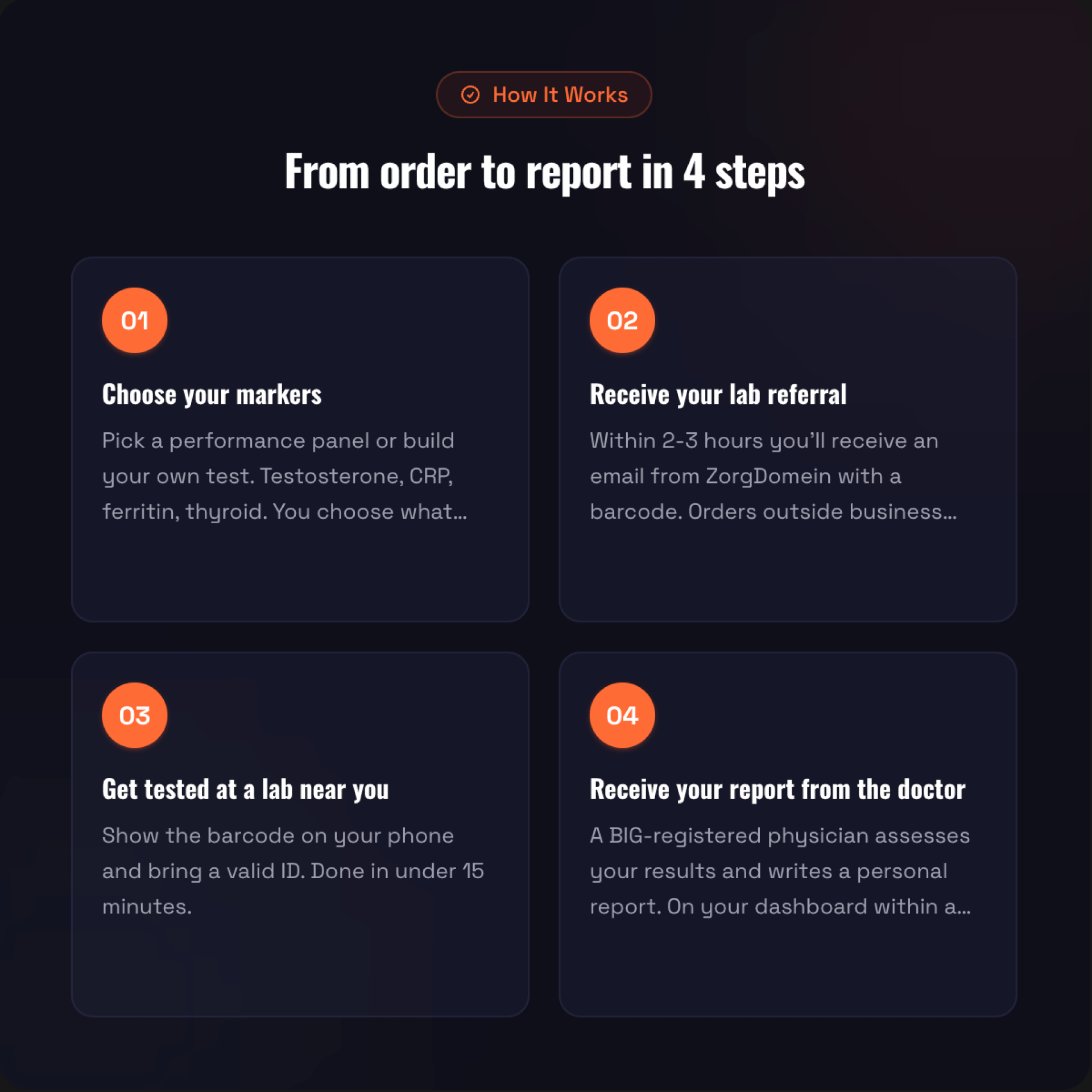
You show the barcode from your ZorgDomein email and bring a valid ID. Without a BSN there is no barcode: you then print your referral form through the link in the email and bring it to the draw location. The draw usually takes just a few minutes.
When is this test useful?
Some endurance athletes choose to measure these values:
- When they want a baseline at the start of a training block
- When their pace or recovery drops without a clear reason
- When they want to follow their iron status around marathon or race preparation
- When they eat plant-based and want to check their B12 and iron
What do the results mean?
What the results mean depends on your personal situation and training load. Endurance athletes often run somewhat lower ferritin values; that is exactly why the pattern across several measurements is informative.
Always discuss any deviating values with your GP, so you know what the results may mean for you personally.
What happens after the results?
You receive your results digitally in your account, usually within a few working days. For each value, you can see whether it falls within the reference range.
Every blood test result includes a professional assessment from a BIG-registered doctor. For treatment decisions, discuss your results with your GP.
Frequently Asked Questions
No. You receive the measured blood values with reference ranges and an assessment by a BIG-registered doctor. The panel measures the same values InsideTracker bases its Endurance score on.
Ferritin, your iron store. It drops first when you run a deficit, long before your hemoglobin falls and you notice it in your performance.
Strict fasting is not required, but preferably plan a morning draw: your serum iron fluctuates through the day.
The percentage of your iron transport protein that actually carries iron. The value is calculated from your iron and transferrin, at no extra draw.
No, you can request this blood test yourself online. You can then discuss your results with your GP.
You usually receive your results within a few working days, digitally in your account.
What's Included
| No. | Biomarker | Unit | Turnaround |
|---|---|---|---|
| 01 | Complete Blood Count (CBC) | — | 5 days |
| 02 | Ferritin | ug/l | 2 days |
| 03 | Iron (Serum) | umol/l | 5 days |
| 04 | Transferrin | g/l | 2 days |
| 05 | Transferrin Saturation | % | — |
| 06 | Vitamin B12 | pmol/l | 3 days |
| 07 | Folate (Folic Acid) | nmol/l | 2 days |
| Your result arrives once the slowest test is finished: 5 days. This is indicative; turnaround varies per laboratory. | |||
Preparation
-
Been ill? Wait a little
RequiredHad a fever, an infection or a vaccination in the past 2 weeks? Wait with the draw until you are fully recovered. These values react to inflammation and would give a distorted picture.
-
Preferably fasting
RecommendedComing fasting gives a slightly cleaner value, but it is not required. If it suits you, eat nothing from 22:00 the evening before and drink only water.
-
Preferably in the morning
RecommendedA morning draw makes this value easiest to compare with its reference range. Plan the draw before 10:00 if you can.
- Water is always fine. Drink as usual beforehand, it makes the draw easier.
- Take your usual medication, unless your own doctor told you otherwise.
Extend this panel
Same draw, no second appointment.
More Test Panels
InsideTracker Heart Health
A 7-biomarker heart health panel inspired by InsideTracker's Heart Health category — ApoB, the full cholesterol profile, triglycerides, hs-CRP and TSH behind your heart score.
InsideTracker Recovery
A 10-biomarker recovery panel inspired by InsideTracker's Recovery category — muscle enzymes, liver values, electrolytes, magnesium and vitamin D behind your recovery score.
InsideTracker Gut Health
A 6-biomarker gut health panel inspired by InsideTracker's Gut Health category — the blood values behind your gut score: blood sugar regulation, inflammation, stress and blood lipids.