Your session has expired. Reloading...

LDL cholesterol too high as an athlete: what your value means

LDL cholesterol is the cholesterol your blood carries from your liver to the rest of your body. Your body needs cholesterol to build the wall of every cell and to make hormones such as testosterone. Because cholesterol is fatty and does not dissolve in blood, it travels in small packages, and LDL is the package that delivers it.

When your blood holds more LDL than your cells take up, the surplus works its way into the wall of your arteries. It builds up there over the years, narrows the artery and can end in a heart attack or a stroke, which is why LDL is called the bad cholesterol. You feel none of it, so a blood test is the only way to know.

The general target is an LDL below 3.0 mmol/l, and a doctor sets a lower one when the risk of heart disease is high. A high-fat, low-carbohydrate diet raises LDL in some people, most of all in lean, well-trained ones, in the same months that body fat and triglycerides come down.

The route LDL Cholesterol takes through your body
  1. Liver

    Sends cholesterol out to the rest of your body.

  2. LDL, the package

    Cholesterol is fatty and does not dissolve in blood, so it travels packed. The test counts what is inside these packages.

  3. Your cells

    Take what they need to build their wall and to make hormones such as testosterone.

  4. What the cells do not take up stays in your blood

  5. Artery wall

    The surplus works its way in, builds up over the years and narrows the artery. That can end in a heart attack or a stroke.

General target below 3 mmol/l

Doctor's Assessment Included

When is this value abnormal?

Decision limits per result, in mmol/l
Result Value (mmol/l)
Below target < 3
Above target 3–5
Markedly elevated ≥ 5

There is no single "normal" LDL value: which value is desirable for you depends on your overall risk of cardiovascular disease. The limit of 3.0 mmol/l is the general target value of the NVKC. Once there is a reason to treat, the NHG guideline CVRM uses a lower target: < 2.6 mmol/l, and < 1.8 mmol/l after cardiovascular disease, up to and including age 70. For people at low to moderately raised risk, the guideline sets no target at all, and lifestyle advice is enough. Above 5.0 mmol/l the NHG advises considering familial dyslipidaemia. Discuss your result with your GP.

Source: NVKC Reference population: Dutch adults

Source: NHG Reference population: Dutch adults

Reference ranges may vary between laboratories. When you order a test, a BIG-registered doctor assesses your personal results in context. For treatment decisions, discuss your results with your GP.

LDL Cholesterol: what this test measures

The test tells you how much cholesterol is travelling through your blood in LDL packages, in millimoles per litre (mmol/l). LDL stands for low-density lipoprotein, the name of that package. The higher the number, the more cholesterol is in circulation that can end up in the wall of your arteries.

In a routine blood test the lab does not measure your LDL directly. It works the value out from three values it does measure: your total cholesterol, your HDL and your triglycerides. The calculation, known as the Friedewald equation, takes the total, subtracts the HDL and then subtracts the triglycerides divided by 2.2. So an error in any of those three ends up in your LDL.

The equation goes wrong when triglycerides are high: above roughly 4.5 mmol/l it is invalid and most laboratories will no longer report a calculated LDL. With a low LDL combined with raised triglycerides it underestimates the true value. And a meal within a few hours of the draw pushes triglycerides up, which feeds straight into the final number.

That carries an immediately useful conclusion for a low-carbohydrate diet, which typically brings low triglycerides. The known weakness of the equation requires the opposite. So a high LDL alongside low triglycerides cannot be explained away as an arithmetic artefact: the number is most likely real.

More reliable routes exist. The Martin-Hopkins method replaces the fixed divisor with a person-specific factor, the Sampson-NIH equation holds to roughly 9 mmol/l of triglycerides, and a direct LDL assay measures the cholesterol in LDL particles itself. Direct assays are less well standardised between manufacturers, though, so two laboratories can report a different number for the same blood.

There is also a point of principle. LDL measures the cargo inside the particles and says nothing about how many there are. Atherosclerosis is driven by the number of particles entering the artery wall. You read that number better from non-HDL cholesterol, your total cholesterol minus your HDL, and from apolipoprotein B, the protein of which each of those particles carries exactly one. Neither needs a division, so neither can go off the rails.

LDL Cholesterol: why this value matters

A raised LDL tells you that more cholesterol is travelling in your LDL particles than the target allows.

First the mechanism, because fitness does not change it. Every LDL particle carries one apolipoprotein B and can enter the artery wall. The more of those particles pass through over the years, the more plaque accumulates. A low resting heart rate, a high VO2max and a low body-fat percentage do not alter that biology. Training protects your heart in many ways, but it does not make a raised particle burden harmless.

Then the phenomenon itself. A strongly high-fat, low-carbohydrate way of eating raises LDL and apolipoprotein B in a substantial minority, and the rise is typically largest in lean, insulin-sensitive, well-trained people. A recognisable pattern has even been described: a markedly raised LDL, a high HDL and low triglycerides in someone with a low body-fat percentage. That is exactly the profile many performing athletes see on a ketogenic or carnivore diet. What it means is not settled. The imaging studies in this specific group are small and short. They do not prove the pattern is safe, and they do not prove it is as harmful as the same LDL from another cause. What is certain is that the number is real, and that you have the conversation about it with a doctor who knows your full risk profile.

Then the line on the paper. The 3.0 mmol/l on this page is the general target of the NVKC, the Dutch society of clinical chemists. It is not a personal goal. The Dutch GP guideline for cardiovascular risk only sets a personal target when there is a reason to treat: below 2.6 mmol/l at high risk, and below 1.8 mmol/l after established cardiovascular disease up to and including age seventy. At low to moderate risk the guideline names no target and lifestyle advice is enough. An LDL of 2.8 is therefore an ordinary value for a healthy thirty-year-old and at the same time clearly too high for anyone who has already had a heart attack. Above 5.0 mmol/l the same guideline advises considering an inherited lipid disorder, and that applies when you are fit as well. The laboratory prints its own range on the report, 0 to 4.5 mmol/l in our case, and that is a lab convention.

For non-HDL cholesterol, which is often more reliable than LDL itself, the goal in the same guideline sits 0.8 mmol/l higher: below 2.6 mmol/l at very high risk and below 3.4 mmol/l at high risk.

Finally, a cause that goes unmentioned far too often: anabolic androgenic steroids raise LDL and can sharply lower HDL, most clearly with oral forms. Anyone using them, or who has used them, should say so when a lipid panel is assessed, because otherwise the diet gets the blame while the explanation lies elsewhere.

LDL Cholesterol: how the blood test works

Referral
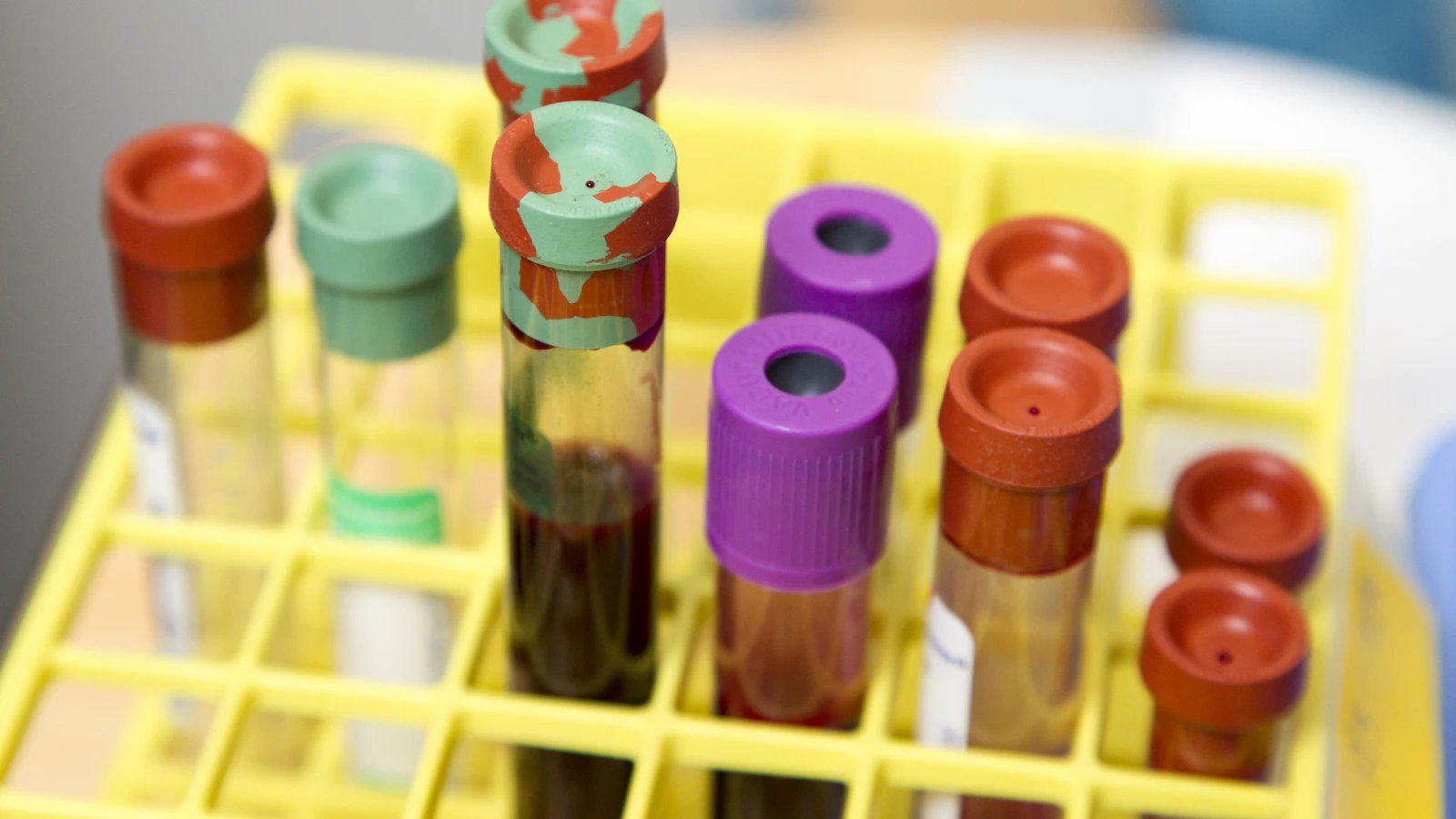
No GP referral needed. After the order we arrange the referral through ZorgDomein, within one business day; orders after 17:00 or at the weekend start on the next business day. ZorgDomein emails a barcode, and that barcode is what the draw site needs.
The draw
A blood draw from a vein in the arm, at a partner laboratory's draw site. No home kit, no finger prick.
Which test
on its own €16,- Lipids · €73,- · InsideTracker Heart Health · €129,- · InsideTracker Metabolism · €169,- · 360 Health · €346,-
Where
650+ draw sites run by independent laboratories across the Netherlands. Draw sites

LDL Cholesterol: how to prepare

Nothing special is needed for these tests.

  1. No need to fast

    Good to know

    Eating beforehand makes little difference to these values. You can have breakfast.

  • Water is always fine. Drink as usual beforehand, it makes the draw easier.
  • Take your usual medication, unless your own doctor told you otherwise.

LDL Cholesterol: when is testing worthwhile?

Draw in an ordinary week rather than an exceptional one. Right after an exhausting endurance session or a race your triglycerides and your HDL shift temporarily, and because your LDL is calculated from those values, your LDL shifts with them. A panel taken the morning after a marathon mostly measures your marathon. Schedule the draw in a regular training week instead, and keep the timing consistent on a repeat so you are comparing like with like.

On fasting: total cholesterol, HDL, non-HDL and apolipoprotein B do not require it. Your triglycerides are meal-sensitive, and so, by extension, is the calculated LDL. If you want to follow your LDL over time, draw fasted and stick to it.

If you have changed your diet substantially, for example to a low-carbohydrate or ketogenic pattern, give your body at least six to twelve weeks before drawing conclusions from a new result. Test straight after the switch and you measure the transition rather than your new baseline.

There are also moments to wait. After surgery, an injury with prolonged inactivity or a significant infection, LDL falls for weeks, so a panel gives you a rosier picture than is warranted. Wait a few weeks after recovery.

If your LDL is unexpectedly high, have an underlying cause ruled out before you start rebuilding your diet. An underactive thyroid is the classic, easily missed explanation and is excluded with a TSH test. Poorly controlled diabetes, kidney disease, cholestasis and various medicines can raise the value too.

LDL Cholesterol: symptoms of a high or low value

Low Levels

You cannot feel a low LDL, and there are no symptoms that go with it. If you are here because your result sits below the reference interval: in the vast majority of cases that is not a problem.

If you take a lipid-lowering drug, a low LDL is precisely the aim of treatment and not a side effect. So never change or stop your medication on the basis of a self-ordered result, however reassuring it looks; that result is often favourable precisely because of the medication. Discuss it with your doctor.

One misconception is stubborn: that a low cholesterol is the hallmark of undereating. It is not. In severe energy deficits and in anorexia nervosa, a raised total cholesterol is in fact commonly seen. If your LDL is unexpectedly low without medication, it can fit an overactive thyroid, liver disease, poor absorption in the gut or a chronic illness, and that deserves assessment by a doctor.

High Levels

A high LDL causes no symptoms and does not disturb your training. You will not notice it in your recovery, in your heart-rate variability or in your performance, and that is exactly the problem: the only signal is the number on the report. The damage to the artery wall builds up silently, and the first noticeable sign can be a heart attack. Excellent fitness does not rule that out.

Only with very high, inherited values can visible cholesterol deposits appear after years: a thickened Achilles tendon, thickening of the tendons on the back of the hand, yellowish patches around the eyelids or a grey-white ring around the cornea at a young age. In athletes, a thick Achilles tendon is easily attributed to training load. Have signs like these assessed by a doctor.

And without qualification: chest pain or pressure, or sudden severe breathlessness, is never a reason to order a blood test. Then you call the emergency number.

LDL Cholesterol: what to do about an abnormal value

Male

If Low

Low LDL is favourable and reduces cardiovascular risk.

If High

Elevated LDL increases cardiovascular risk. Consider diet, exercise, and statins.

Female

If Low

Low LDL is favourable and reduces cardiovascular risk.

If High

Elevated LDL increases cardiovascular risk. Consider diet, exercise, and statins.

LDL Cholesterol: lifestyle and this value

The first question is rarely how much fat, but which fat. Performance-oriented diets lean heavily on butter, coconut oil, fatty meat and full-fat dairy, and those are the sources that push LDL up hardest. Replacing part of them with unsaturated fat from olive oil, nuts, seeds and oily fish is the single most effective dietary move, and it fits comfortably inside a low-carbohydrate plan without you having to throw out your whole approach.

If you have watched your LDL rise since going low-carbohydrate, do two things. Add apolipoprotein B and non-HDL cholesterol to the panel so that you see the particle burden rather than only the calculated cargo, and put the whole picture in front of a doctor who knows your risk profile. Do not decide on your own that your pattern is the exception.

Soluble fibre from oats, barley, pulses and vegetables lowers LDL measurably. Endurance training and weight loss mainly improve your triglycerides and your HDL and usually lower LDL only modestly, so do not expect the miracle promised on the forums.

If you use anabolic androgenic steroids, know that they raise your LDL and can sharply lower your HDL. Do not leave that out when your result is assessed.

And consider having Lp(a) measured once in your life. That value is largely genetically set, does not shift with your training or your diet, and does change how your doctor reads your LDL.

LDL Cholesterol: frequently asked questions

My LDL has risen since I went low-carbohydrate. Is that a measurement error?

Almost certainly not. The equation used to calculate LDL fails when triglycerides are high, and on a low-carbohydrate diet they are usually low. The rise is then a genuine response to the way you eat rather than an arithmetic artefact. Add apolipoprotein B and non-HDL to the panel and discuss the whole picture with a doctor.

I am lean and well trained with a high LDL, a high HDL and low triglycerides. What does that mean?

It is a recognisable pattern in lean, insulin-sensitive people on a strongly high-fat diet. Whether it carries the same risk as the same LDL from another cause is unsettled: the studies in this group are small and short and prove neither safety nor harm. The number is real, and a doctor who knows your risk profile assesses what it means for you.

Does endurance training lower my LDL?

Barely. Endurance training mainly improves your triglycerides and your HDL, while the effect on LDL is usually modest. That does not make training less valuable, because your cardiovascular risk depends on far more than one number. Just do not expect a training block to normalise a raised LDL.

What do anabolic steroids do to my LDL?

Anabolic androgenic steroids raise LDL and can sharply lower HDL, most clearly with oral forms. That is exactly the combination that makes a cardiovascular risk profile unfavourable. Always mention it when your lipid panel is being assessed, otherwise your diet gets blamed while the explanation lies elsewhere.
My LDL is low because of a lipid-lowering drug. Is that bad?

No. Under treatment a low LDL is the intended result rather than a side effect: the lower the particle burden, the smaller the risk of a further vascular event. The reference interval on your report is a lab convention and no goal for you. Never stop or change your medication on your own initiative because a result looks good.

What should I track instead of a single calculated LDL?

Non-HDL cholesterol and apolipoprotein B, because they count the atherogenic particles rather than their cargo and need no division that can go wrong. Add your triglycerides and a one-off Lp(a) measurement. For repeat testing, stay with the same laboratory, otherwise you are comparing assays instead of yourself.

LDL Cholesterol: sources

  1. Nederlandse Vereniging voor Klinische Chemie en Laboratoriumgeneeskunde. Alles over testen. Over AFP: "De referentiewaarden kunnen verschillen tussen laboratoria, afhankelijk van de methode. Ga daarom uitsluitend af op de referentiewaarden van het laboratorium dat het onderzoek heeft uitgevoerd en interpreteer nooit AFP-uitslagen van verschillende laboratoria door elkaar." Geraadpleegd 14 juli 2026. (retrieved 2026) allesovertesten.nl
  2. Nederlands Huisartsen Genootschap. NHG-Standaard Cardiovasculair risicomanagement. Praktische handleiding, 2024. Geraadpleegd 14 juli 2026. (retrieved 2026) richtlijnen.nhg.org

Test Products

This marker is included in the following test panels.

InsideTracker

InsideTracker Metabolism

An 11-biomarker metabolism panel inspired by InsideTracker's Metabolism category — blood sugar, insulin, HOMA-IR, the full lipid profile, ALT and TSH behind your metabolism score.

TSH (Thyroid Stimulating Hormone) Insulin (Fasting) ApoB (Apolipoprotein B) Glucose (Fasting) HbA1c (Glycated Hemoglobin) ALT (Alanine Aminotransferase) HDL Cholesterol LDL Cholesterol Triglycerides Total Cholesterol HOMA-IR Cholesterol/HDL Ratio Non-HDL Cholesterol LDL/HDL Ratio
€169,-
Complete Health

360 Health

Broad health panel: hormones, thyroid, vitamins, lipids, liver, kidney, and blood count.

HbA1c (Glycated Hemoglobin) TSH (Thyroid Stimulating Hormone) Triglycerides Urea (BUN) Creatinine eGFR (Estimated Glomerular Filtration Rate) Free T4 (Thyroxine) LDL Cholesterol Liver Function Test (LFT) SHBG (Sex Hormone Binding Globulin) Vitamin B12 Vitamin D (25-OH) Total Testosterone Free T3 (Triiodothyronine) Ferritin HDL Cholesterol Albumin Total Cholesterol Basic Blood Count Free Testosterone Cholesterol/HDL Ratio Non-HDL Cholesterol LDL/HDL Ratio
€346,-

Medical reviewer

Medical standards

Dr. Naimi oversees the medical standards behind our content and assessments.

Medical policy
CIBG Ministerie van Volksgezondheid,
Welzijn en Sport
Official BIG registration BIG 49928676701 Opens in a new tab

LDL Cholesterol

€16,-