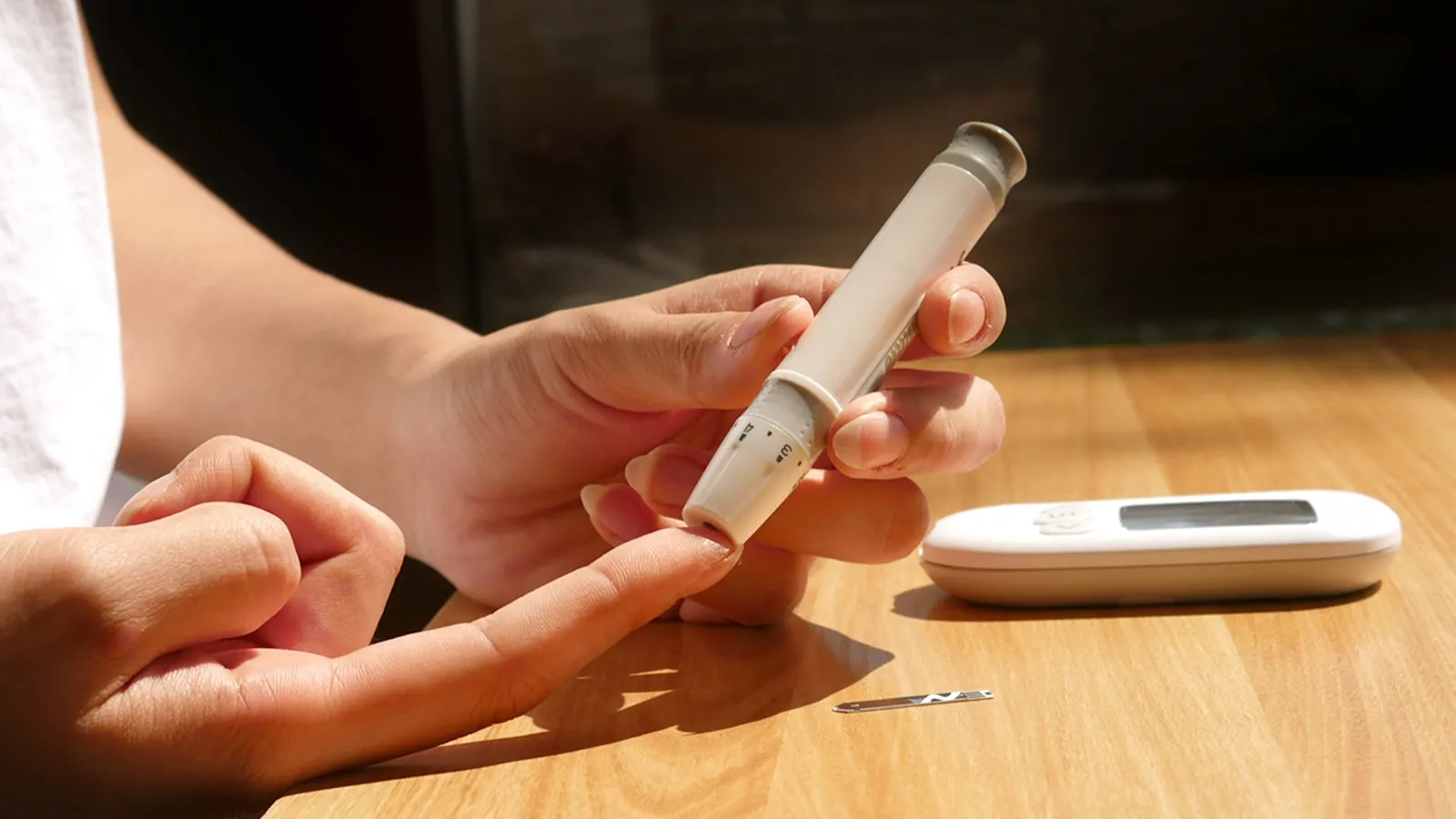
You can measure your blood sugar three ways: a finger prick at home, a sensor on your arm, or a tube of blood in the lab. All three measure glucose and all three answer a different question.
Most people pick a device first.
That is the wrong order, and it is why so many glucose meters sit in a drawer. Pick your question first. Do you want to know how you react to your oats, whether you are metabolically sharp, or what your calibrated baseline is? Three questions, three answers, and only one of the three can be measured at home.
Which method fits which question?
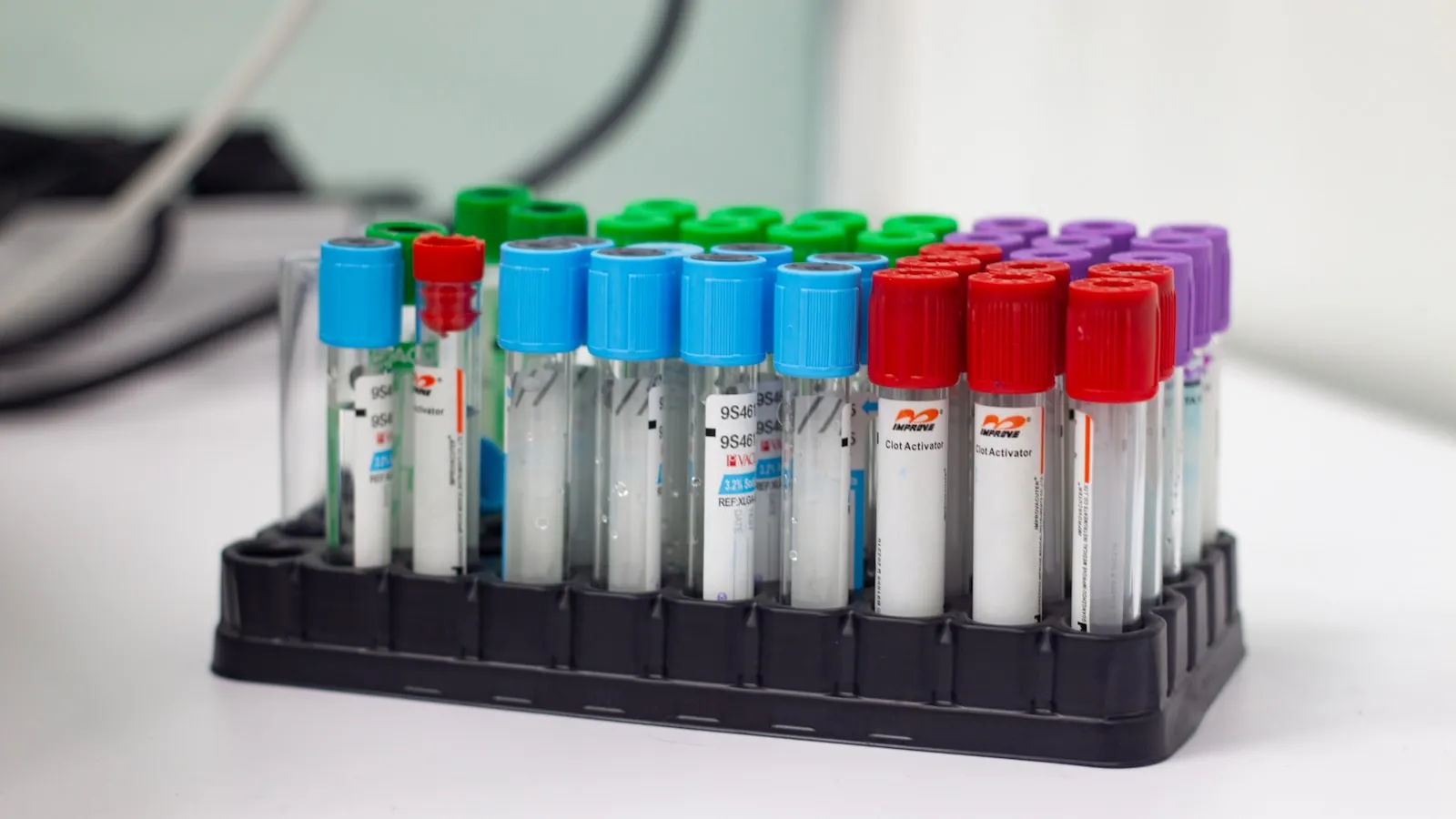
A finger prick gives you one moment and is fine for catching a spike. A sensor gives you a curve across days and shows patterns you would never have guessed. A lab draw gives you a calibrated value plus the numbers you cannot measure at home, and insulin is the most important of those.
No method wins. They do different work.
| Your question | Method | Why | What you do not get |
|---|---|---|---|
| How do I react to this meal? | Sensor | Sees the whole curve, not one point | No calibrated number, no insulin |
| Does my glucose spike after dinner? | Finger prick at 60 and 120 minutes | Cheap, and two points is already a shape | You miss what happened in between |
| Is my insulin working too hard? | Lab | You cannot measure insulin at home, full stop | One moment, no curve |
| What is my baseline? | Lab, fasting | Calibrated and repeatable across years | Says nothing about your day |
| How have the last months been? | Lab, HbA1c | An average over 2 to 3 months | Peaks, dips, and it can mislead |
| Does my glucose drop during long endurance work? | Sensor, with a pinch of salt | Only a sensor measures during exercise | Sensors are least accurate exactly then |
That last row is the annoying one. Precisely when an athlete wants the reading most, the device is at its weakest.
How accurate is a finger prick?
Accurate enough for patterns, too crude for precision. A home meter is allowed a meaningful deviation from a laboratory value under the usual standards, which means a 5.4 and a 5.8 on your meter can in practice be the same number.
So do not chase decimals your meter cannot deliver.
What a finger prick is good at: seeing the difference between 5.5 and 9.0. That is a real spike, and you will catch it fine. The Dutch Diabetes Fonds describes the technique for people with diabetes, and that explanation works exactly the same if you do not have diabetes. Only your question differs.
What can a sensor do that a prick cannot?
A sensor measures every few minutes, so it sees the shape of your curve. That is a different kind of information than a number. You see how high you peak, how long you stay high and whether you dip afterwards, all without pricking yourself twenty times a day.
Shape is worth more than height.
Stanford researchers had people with normal standard values wear a sensor and saw something no fasting prick had ever shown: that normal group spent 15 percent of the time in the prediabetic range and 2 percent in the diabetic range (PMID 30040822). They called those patterns glucotypes, because people fell into recognisable types.
That is exactly the kind of insight a fasting prick never buys you. What a sensor does and does not teach you as a healthy athlete sits in continuous glucose monitor without diabetes.
Why is a sensor less reliable during exercise?
Because a sensor does not measure your blood. It measures glucose in the fluid between your cells, and that lags behind your blood. During rapid changes, and exercise is the fastest change you make, that gap grows.
So there is a delay built into your screen.
A study tested a sensor during two types of effort and found a mean deviation of 13.3 percent during interval training and 13.6 percent during continuous moderate effort (PMID 26739116). All values stayed within the clinically acceptable zones, so it is not unusable. But 13 percent on a value of 6.0 is half a millimole, and that is exactly the margin people argue about online.
Why does HbA1c not always fit athletes?
Because HbA1c does not measure glucose but sugar-coated red blood cells, and the assumption underneath is that those cells last around 120 days. In endurance athletes and frequent blood donors the turnover can run faster. Younger cells have had less time to pick up glucose, so your HbA1c reads lower than your actual average.
Your marker then lies in your favour, which is the dangerous direction.
A study in eLife modelled this and found a median red cell lifespan of 100 days, with a spread of 83 to 102 days between people. At the shortest lifespan, lab HbA1c sat around 2 percent lower than the adjusted value (PMID 34515636).
Picture two athletes both with an HbA1c of 34 mmol/mol. One has slow cell turnover and an honest value. The other does endurance work six times a week, has fast turnover, and his real average sits higher than his result suggests. Same number, different story. More on that in HbA1c in non-diabetics.
What do you not measure at home?
Insulin. That is not a detail, that is half the story. No home meter and no sensor can measure insulin, and insulin is exactly what shows how much effort your body puts into the number on your screen.
This is the most important sentence in this article.
Two athletes can both sit at 5.3 mmol/l fasting. One does it with low insulin, the other with an insulin twice as high. On every home meter they are identical. In the lab they are nothing alike. That combination is called HOMA-IR, and the explanation sits in fasting insulin and HOMA-IR.
When do you measure?
At the moment that fits your question, and that is rarely "whenever it suits". If you want your baseline, draw fasting after at least two quiet days, because a heavy session carries into your value. If you want a meal response, measure at 0, 60 and 120 minutes.
The moment decides what you measure. Not the device.
The morning is your noisiest moment anyway, because your hormones push your glucose up before you are even awake. Why that happens and why it need not say anything about your metabolic health sits in high fasting glucose while you are fit. Which numbers you eventually place side by side sits in blood sugar values when you train.
What do you do next?
Write your question down first, in one sentence, before you buy anything. Then walk the table above and pick the method that belongs to that sentence. In most cases that saves you a purchase.
My advice: start with a lab baseline and only consider a sensor after that. The other way round you measure patterns without knowing where you came from.
If you want glucose and insulin in one go, the HOMA-IR test does that, and 360 Health puts them in a broader panel. The individual values sit at fasting glucose and fasting insulin.
Every blood test result includes a professional assessment from a BIG-registered doctor. For treatment decisions, discuss your results with your GP.
References
- Hall H, Perelman D, Breschi A, Limcaoco P, Kellogg R, McLaughlin T, Snyder M. Glucotypes reveal new patterns of glucose dysregulation. PLoS Biology, 2018. PMID 30040822.
- Bally L, Zueger T, Pasi N, Carlos C, Paganini D, Stettler C. Accuracy of continuous glucose monitoring during differing exercise conditions. Diabetes Research and Clinical Practice, 2016. PMID 26739116.
- Xu Y, Bergenstal RM, Dunn TC, Ajjan RA. Addressing shortfalls of laboratory HbA1c using a model that incorporates red cell lifespan. eLife, 2021. PMID 34515636.
- Diabetes Fonds. Measuring blood sugar.
- RIVM. Figures on diabetes in the Netherlands.
Autor
Enhanced Health
Dr. Naimi, lekarz wpisany do holenderskiego rejestru BIG, nadzoruje standardy medyczne naszych treści i ocen. Przeczytaj naszą politykę medyczną
Powiązane badania
Powiązane artykuły

Glucose spike after eating: when it helps your training and when it does not
High blood sugar without diabetes: what else moves your value