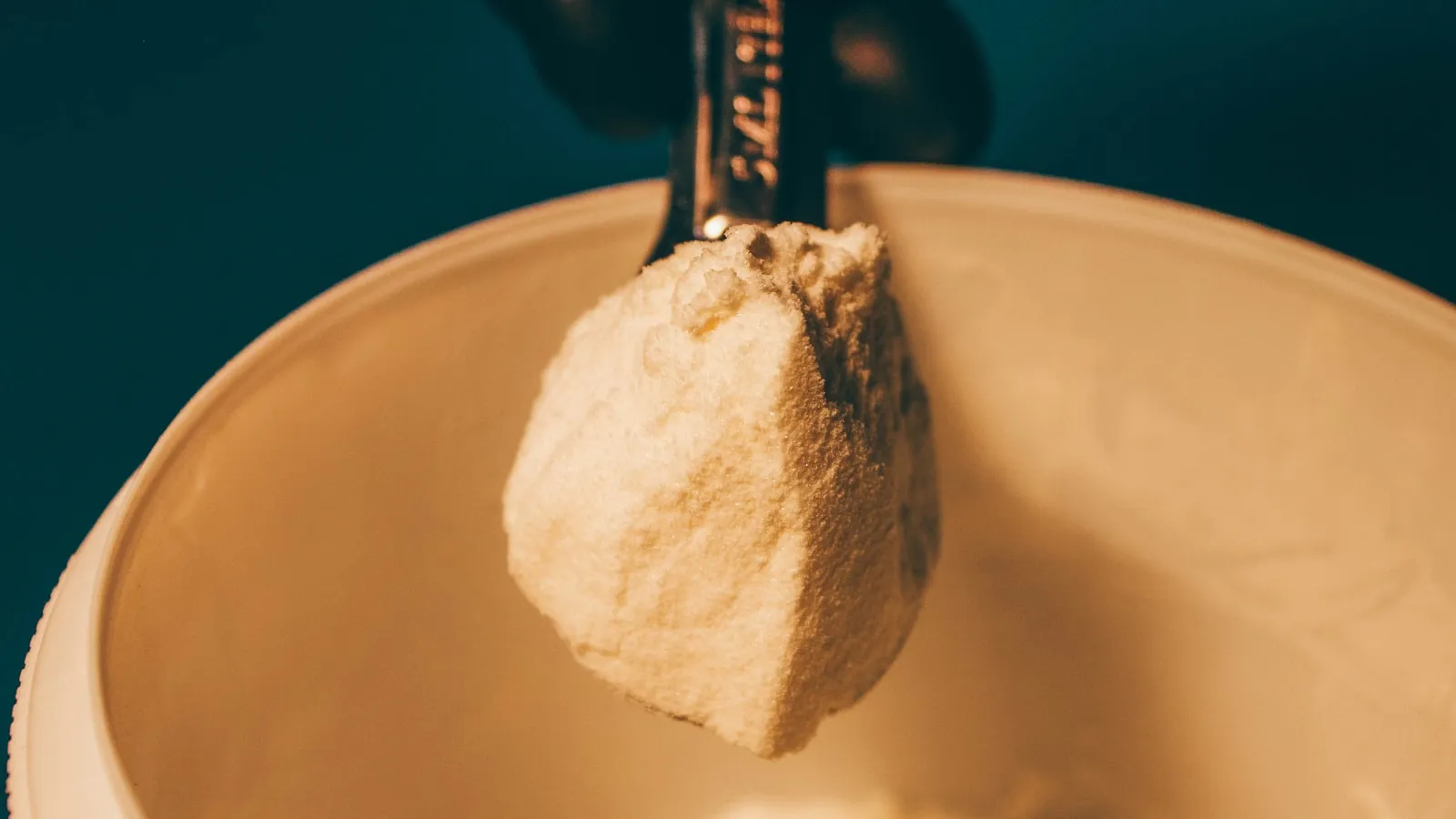
Nutrition for muscle growth comes down to three things: enough stimulus from training, a small energy surplus and enough protein. Aim for roughly 1.6 to 2.0 grams of protein per kilo of body weight per day and a surplus of about 200 to 300 kcal. Without that base, even the tightest plan falls short.
In our experience most people plan their training down to the last rep, but eat on feel. That is where the biggest gains stay hidden.
What drives muscle growth: training, energy and protein
Muscle growth happens when three levers line up. You need a training stimulus that challenges your muscles, enough energy to recover and enough protein as building material. Drop one of the three and progress stalls. Sleep and recovery also decide how well you use those building blocks.
Training kicks off the growth. Without progressive overload, your body has no reason to add muscle.
Energy is the second lever. Recovery and growth cost calories, so a lasting deficit works against you. Protein is the third: it supplies the amino acids you build new muscle protein from.
Training without protein is building without bricks. Protein without training is bricks without a plan. You need both.
Protein is also the macronutrient that fills you up most. That helps when you are in a cut and still want to train hard.
This split is a guideline, not a law. How your body responds depends on your age, your sleep, your stress and your training history.

How many calories do you need to build muscle?
To build muscle you need a small energy surplus, usually around 200 to 300 kcal per day above maintenance. We call that a lean bulk. Eat a lot more and mostly fat mass grows too. A deficit slows muscle growth, though gaining can still be possible.
Start with an estimate of your maintenance. A rough rule of thumb is your body weight in kilos times 30 to 33 kcal, depending on how active you are.
If you sit at maintenance, add 200 to 300 kcal on top. A healthy pace is about 0.25 to 0.5 percent of your body weight gained per week.
Weigh yourself a few times a week at a fixed moment. If your weight holds steady for three weeks, you are probably at maintenance.
Track your intake for a while in an app or on paper. Not forever, but long enough to learn how much you really eat.
Many people underrate their intake on busy days and overrate their training. Measuring takes the guesswork out.
If you want to lose fat and keep muscle, you work with a deficit. That is called a cut. You keep protein high and training heavy, so you hold on to as much muscle as you can.
What we see in practice: patience wins. A calm lean bulk gives you more lean muscle over time than an aggressive bulk full of fat.
How much protein, carbs and fat per day?
For muscle growth, roughly 1.6 to 2.0 grams of protein per kilo of body weight per day works. Add 4 to 6 grams of carbs per kilo and 0.8 to 1.2 grams of fat per kilo. The Gezondheidsraad (the Dutch Health Council) sets 0.83 grams of protein per kilo for adults, but that is the norm to prevent shortfalls, not to build muscle.
The Dutch Voedingscentrum notes that keen strength athletes who want to build muscle mass can benefit from 1.2 to 2.0 grams of protein per kilo per day. A position stand from the International Society of Sports Nutrition (Jager et al., 2017) lands on 1.4 to 2.0 grams per kilo to build and keep muscle.
Spread your protein across the day, for example 20 to 40 grams per meal. We work that out further in how much protein per day for muscle growth. Whether you get your protein from animal or plant sources matters less for muscle growth than your total, as long as you vary. We cover that difference in plant vs animal protein.
| Goal | Energy balance | Protein (g/kg) | Carbs (g/kg) | Fat (g/kg) |
|---|---|---|---|---|
| Fat loss (cut) | Deficit, ~300 to 500 kcal/day | 1.8 to 2.2 | 2 to 4 | 0.8 to 1.0 |
| Maintenance | Neutral | 1.6 to 1.8 | 3 to 5 | 0.8 to 1.2 |
| Muscle growth (lean bulk) | Surplus, ~200 to 300 kcal/day | 1.6 to 2.0 | 4 to 6 | 0.8 to 1.2 |
Carbs are your fuel for heavy sets. How much you need depends on your training volume, which we dig into in carbs and training performance.
Eat too little fat and your hormone balance and recovery can suffer. So keep fat rarely under 0.8 grams per kilo. You then fill up carbs until you hit your energy and training goal.
Good protein sources are chicken, fish, eggs, low-fat dairy, legumes and tofu. Combine plant sources to round out your amino acids.
These numbers are a starting point. Weigh yourself for a few weeks, check the mirror and adjust.
Fats, veg and the rest of your plate
Protein and carbs get the attention, but the rest of your plate counts too. Fats support your hormones, while vegetables and fruit supply vitamins, minerals and fibre. A menu that leans only on powders and shakes often misses those micronutrients. See whole food as the base and supplements as an add-on.
Pick unsaturated fats more often, from fish, nuts, olive oil and avocado. Those suit an active body well.
Fill at least half your plate with vegetables at your main meals. Fibre helps your digestion and keeps you full longer.
A shortfall in micronutrients can quietly hold back your recovery and energy. That is exactly why variety counts more than any brand of shake.
Timing: what do you eat around training?
Around training, carbs and protein matter most. Eat a meal with carbs and some protein 1 to 3 hours before your session, so you have energy and amino acids on hand. Within a few hours after, take protein with carbs again to support recovery. The famous anabolic window is wider than people once thought.
Before training, something simple often works well. Think oats with quark, a sandwich with chicken breast or rice with chicken.
After training, a mix of protein and carbs refills your glycogen and supplies building material. How to time those carbs smartly sits in carbs and training performance.
Train fasted or late in the evening and your whole day counts more than the exact minute. A pre-workout with caffeine can sharpen your session, which we cover separately in caffeine and pre-workout.
Do not forget your fluids and salts, especially on heavy or long sessions. How electrolytes like sodium and potassium play into cramp and recovery sits in electrolytes and hydration for athletes.
What role do supplements really play?
Most supplements do less than the label promises. Only a handful have solid research behind them: creatine, protein powder and caffeine. The rest is usually fine, but not decisive. See supplements as an add-on to your nutrition for muscle growth, not a replacement.
Creatine monohydrate is the best-backed supplement for strength and muscle mass. What it does to your blood values sits in creatine and your blood values.
Protein powder is handy when you cannot hit your protein otherwise. It is no miracle, just an easy source. Caffeine can lift your performance temporarily, especially on heavy days.
From magnesium to zinc: many supplements only help if you have a shortfall. Why magnesium can matter for athletes sits in magnesium for athletes. When in doubt, check with your sports doctor or dietitian before you start stacking.
Beta-alanine and caffeine can help a bit with short, intense efforts. For pure muscle growth the evidence is a lot thinner. Research suggests the base, protein and training, does by far the most.
Be critical of pre-workouts with long ingredient lists. The effect often sits in the caffeine and the rest is filler.
Which blood values relate to nutrition and muscle growth?
Your diet leaves traces in your blood. Values like urea, creatinine, ferritin, fasting glucose and triglycerides give an impression of your protein intake, your recovery, your iron status and how you handle carbs and fat. No single value is a diagnosis, together they sketch a picture you discuss with your GP.
| Blood value | What it says about your diet | Why it matters for athletes |
|---|---|---|
| Urea (BUN) | Reflects your protein intake and fluid balance | Can run higher on lots of protein or too little drinking |
| Creatinine | A breakdown product from muscle, tied to muscle mass | Lots of muscle can lift the value without a kidney problem |
| Ferritin / iron | Your iron store, sensitive to intake and losses | Low iron can hold back your recovery and energy |
| Fasting glucose / triglycerides | How you handle carbs and fat | Adds context during a bulk or lots of fast sugars |
| Vitamin D / B12 | Intake and status of two key vitamins | Shortfalls occur and can touch energy and recovery |
Urea rises on a high protein intake, but also when you drink too little. What the value says exactly sits on our page about urea (BUN). Creatinine ties closely to your muscle mass, which you see on the page about creatinine.
Ferritin is your iron store. Endurance athletes and people who eat little red meat can run low in particular, more on that on ferritin. Low iron can hold your recovery and energy back.
Triglycerides and fasting glucose add context during a long bulk with lots of fast sugars. They say something about how your body handles those carbs. Vitamin D and B12 belong here too, because a shortfall can quietly hold back your energy and recovery.
If you want to measure these values at once, our 360 Health test brings many of these markers together. If you want to choose which blood values you measure, you can build a custom blood test. Which values matter for strength athletes sits in blood values for strength athletes.
A day of nutrition for muscle growth in practice
Nutrition for muscle growth does not have to be complicated. For an 80 kilo athlete, 1.8 grams of protein per kilo means about 145 grams of protein per day, spread over four meals. Top that up with carbs around training and enough vegetables. That covers your building material and your fuel without micromanaging.
Breakfast can be oats with quark, fruit and a handful of nuts. That gives protein, slow carbs and healthy fats.
Lunch is, for example, wholegrain bread with chicken or tofu and some veg. Around training you grab rice or potato with fish, chicken or legumes.
An evening snack like quark or Skyr keeps your protein topped up into the night. This is an example, not a prescription, so adjust it to your taste and schedule.
Frequently asked questions
How much protein do I need per day for muscle growth? Roughly 1.6 to 2.0 grams per kilo of body weight. More than 2.2 grams gives most people little extra.
Can I build muscle in a calorie deficit? Sometimes, especially if you are starting out or coming back after a break. For most advanced lifters, gaining goes faster with a small surplus.
Are carbs needed for muscle growth? They are not strictly required, but they make heavy training easier and support your recovery. Going very low can drag your performance down.
Do I need supplements? No. Creatine and protein powder can be handy, but you build muscle with food and training as the base.
How fast will I see results? Beginners often notice a difference after 8 to 12 weeks. Advanced lifters go slower, so measure in months, not days.
Where you start today
Start small and measurable. Pick a protein target, set your calories to a slight surplus and hold it for two weeks. Only adjust after that.
My advice: fix your protein and your sleep before you think about supplements. That is where I see the biggest difference in practice.
If you want to see what your diet does to your body, use a blood test as a starting point and discuss your result with your GP.
References
- Gezondheidsraad. Voedingsnormen voor eiwitten. 2021.
- Voedingscentrum. Do you need extra protein when you exercise? 2024.
- Jager R, et al. International Society of Sports Nutrition Position Stand: protein and exercise. Journal of the International Society of Sports Nutrition. 2017.
Disclaimer
Every blood test result includes a professional assessment by a BIG-registered doctor. This article gives general information and is not a substitute for medical advice. A blood test is a tool to walk into the conversation with your GP better informed, not a diagnosis in itself. For treatment decisions, discuss your results with your GP.
Autor
Enhanced Health
Powiązane badania
Powiązane artykuły

Gut symptoms from stress: what cortisol does to your intestines

Lactose intolerance test: breath test, DNA or simply trying it out?