Your platelet count is the number of platelets per litre of blood, usually between 150 and 400 x10⁹/l. If it sits just above that line after a training week, the timing of your blood draw is often the whole explanation.
Because your platelets are not all in your bloodstream.
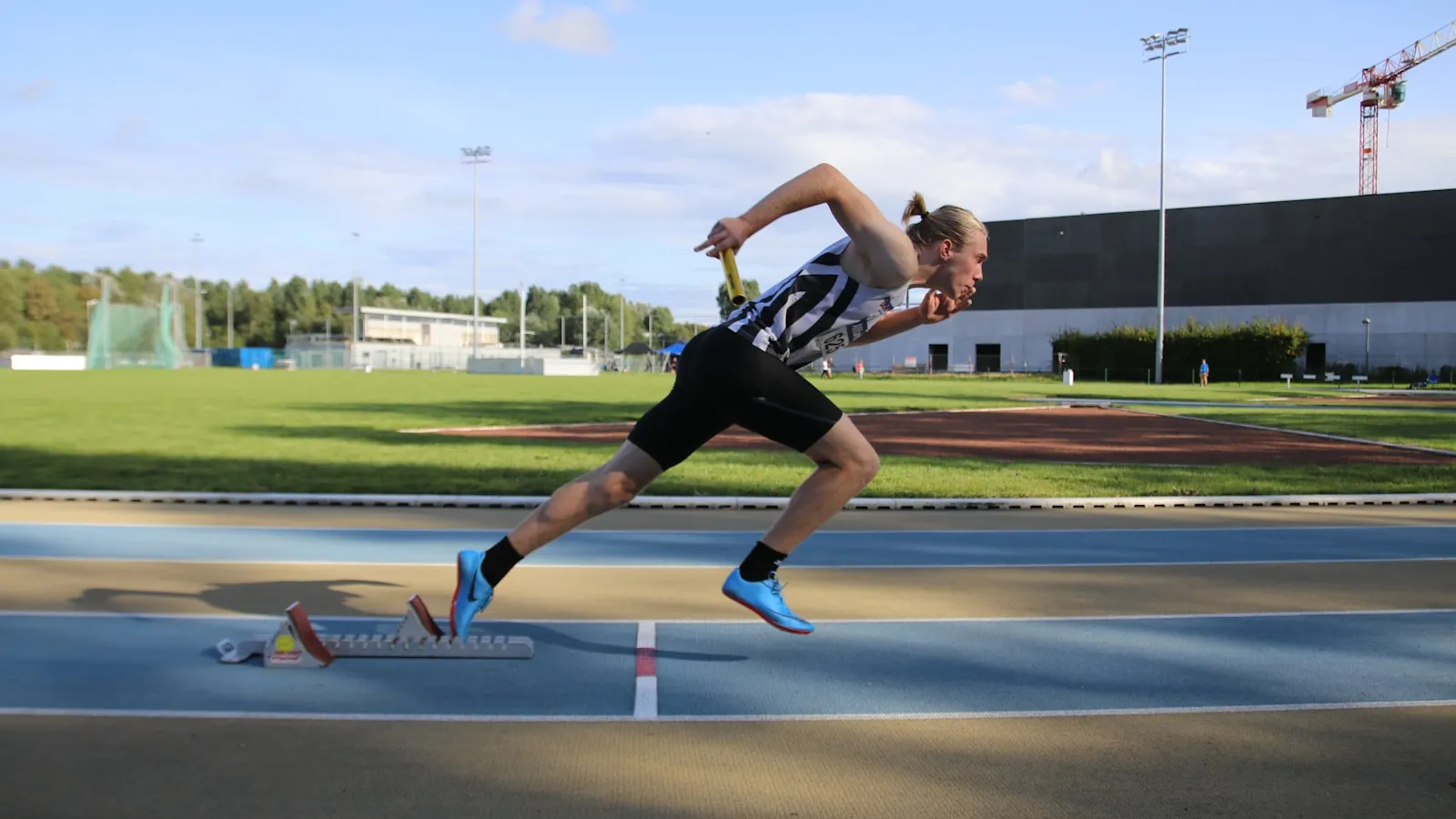
About a third sit stored in your spleen. During exertion your spleen contracts and releases them. Research on this effect measured a rise from 245 to 328 x10⁹/l during exercise (PMID 2363410). That is enough to lift somebody with a normal value over the upper limit.
What do platelets do in your blood?
Platelets, also called thrombocytes, are cell fragments that stop your bleeding. When a vessel is damaged they stick to the wound and to each other and form a first plug. Your clotting system then adds fibrin, which makes that plug solid.
They live about 8 to 10 days and are made in your marrow by megakaryocytes.
Your platelets appear on every blood count. They form the third series, alongside your red and white cells.
What is a normal platelet count?
Most Dutch labs use 150 to 400 x10⁹/l for adults, and some stretch the upper limit to 450. The exact range differs by lab, so the range on your own result is the one that counts. Women sit slightly higher than men on average.
More important than the number is what you had been doing that morning.
| Situation | Effect on your platelet count | Is it a finding? |
|---|---|---|
| Straight after intense exertion | Up to about 30 percent higher | No, this is your spleen |
| Drawn dehydrated | Higher through haemoconcentration | No, this is concentration |
| Recovering from an infection | Temporarily higher | Usually not, this is reactive |
| Iron deficiency | Higher | Yes, look at your ferritin |
| Persistently high without explanation | Higher on repeat | Yes, discuss this with your GP |
The top two rows together explain most mildly raised results in athletes. The bottom two are the rows you want a doctor for.
Why does exercise raise your platelets?
Because your spleen is a storage room. At rest a substantial share of your platelets sits there, outside the circulation. As soon as you go hard, your sympathetic nervous system fires and your spleen contracts, and that reserve joins your bloodstream in one go.
So this is not new production. These are platelets that already existed.
Research showed that the released platelets also have different properties from those already circulating (PMID 2363410). Resistance training additionally affects their activation state (PMID 12783052).
Say you ride 120 kilometres on Saturday and draw on Sunday morning, and your platelets read 421 x10⁹/l where they normally sit around 300. That is exactly the picture this physiology produces.
These shifts belong to normal physiology in trained people and have been described for decades (PMID 10688281).
How long does that effect last?
The splenic response is fast and short-lived. Most of the rise fades within a few hours to a day, once your heart rate and sympathetic activation return to rest. A reactive rise after a heavy training block or an infection lasts longer, sometimes one to two weeks.
That difference in duration is useful.
If your value falls back on a calm repeat after 48 hours, it was the acute response. If it stays put, something else is going on and the rest of your blood count becomes important.
What does a low platelet count mean?
A low value, called thrombocytopenia, means too few platelets are circulating. This is different from the high side: it rarely comes from training and does deserve attention, certainly below 100 x10⁹/l or with symptoms. Think bruising easily, prolonged nosebleeds or bleeding gums.
A common pitfall is so-called pseudothrombocytopenia: platelets clump in the anticoagulant tube and the counter does not count them.
That is a measurement problem, not a medical one, and a repeat in a different tube resolves it. How to read the size of your platelets alongside this is in MPV blood value.
When should you discuss an abnormal value with your GP?
When the value stays abnormal on a calm repeat with no training in the preceding 48 hours, especially alongside abnormalities in your red or white series. Also with symptoms that stand apart from it: unexplained bruising, persistent bleeding, fever or night sweats.
Thuisarts describes an abnormal blood result as a reason to look further rather than a diagnosis, and the NHG guidelines approach platelet abnormalities through the same pattern thinking. RIVM points out that reference values differ per laboratory in blood testing, which matters directly here because the upper limit sits between 400 and 450 depending on the lab.
Take earlier results with you, and say when you last trained hard.
Where do you start?
Look back at what you did in the 48 hours before your draw before you do anything else. Then repeat in a calm week, well hydrated, without hard training beforehand. If your value is normal then, you have your answer without further testing.
Our complete blood count test reports your platelet series with an assessment by a BIG-registered doctor.
How the values connect is covered in complete blood count explained and in the complete biomarker guide for athletes. For the size of your platelets, read MPV blood value. And for planning a draw so your training does not distort it, see fasted blood draws for athletes.
References
- Chamberlain KG, Tong M, Penington DG. Properties of the exchangeable splenic platelets released into the circulation during exercise-induced thrombocytosis. American Journal of Hematology. 1990. PMID 2363410.
- Ahmadizad S, El-Sayed MS. The effects of graded resistance exercise on platelet aggregation and activation. Medicine and Science in Sports and Exercise. 2003. PMID 12783052.
- Fallon KE, Fallon SK, Boston T. Sports haematology. Sports Medicine. 2000. PMID 10688281.
- RIVM. Blood testing and reference values. Accessed 2026.
- NHG. Dutch College of General Practitioners, laboratory diagnostics in primary care. Accessed 2026.
- Thuisarts. My blood result is abnormal. Accessed 2026.
Disclaimer
Every blood test result includes a professional assessment by a BIG-registered doctor. This article gives general information and is not a substitute for medical advice. For treatment decisions, discuss your results with your GP.
Author
Enhanced Health
Dr. Naimi, BIG-registered physician, oversees the medical standards behind our content and assessments. Read our medical policy
Related Tests
Related Posts
MPV blood value: what the size of your platelets says

Total protein blood test: what it says about your protein intake