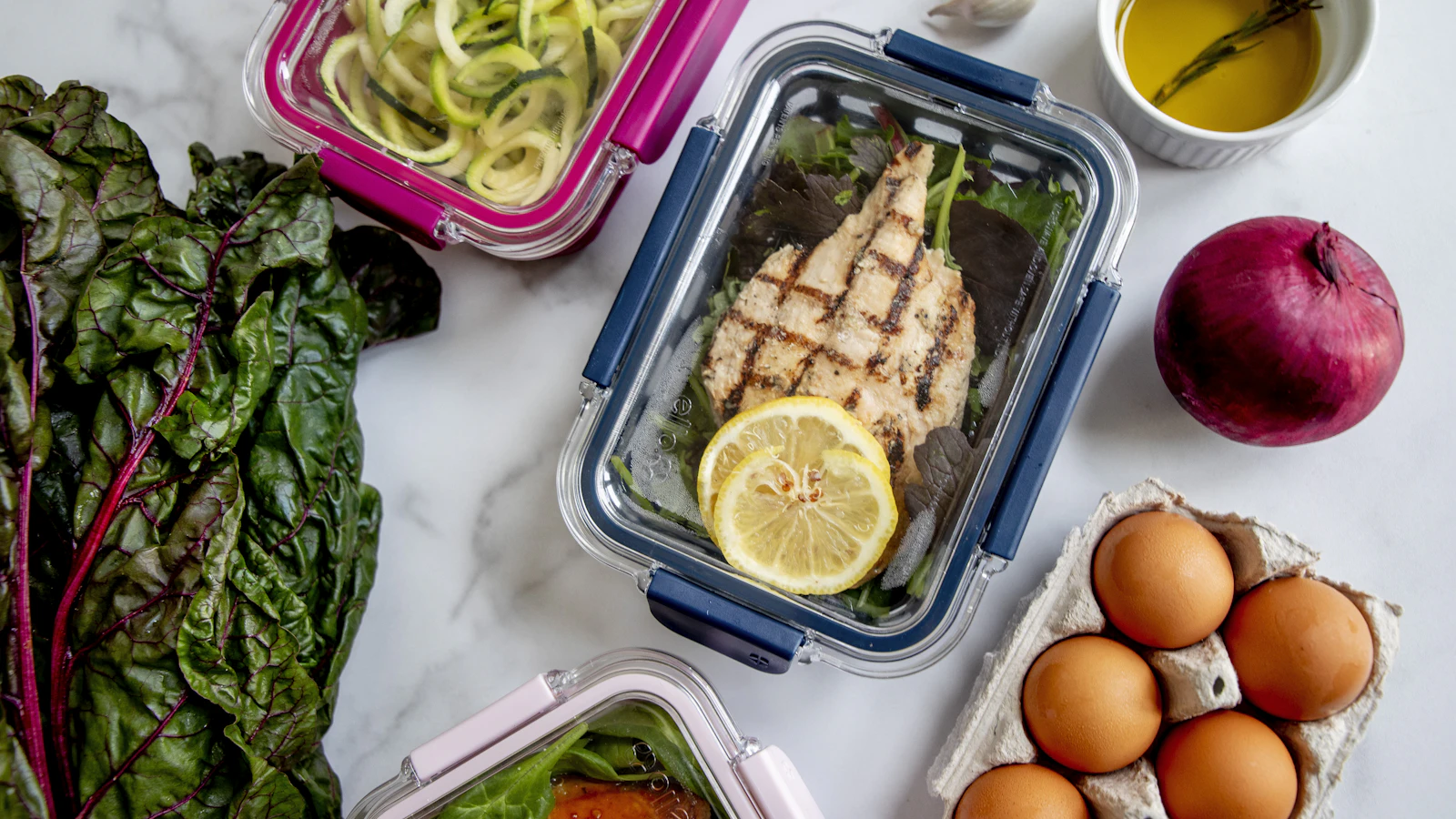
You calculate macros from your calories: you split them across protein, carbs and fat. Set your protein first, then your fat, and carbs fill the rest. For an 80 kilo athlete on 2,760 kcal, that often works out to about 160 grams of protein, 70 grams of fat and 370 grams of carbs.
I see people count macros obsessively and then forget their calories. Flip it around: calories drive your weight, macros drive your result.
What are macros?
Macros are the three nutrients that supply energy: protein, carbs and fat. Protein and carbs each supply 4 kcal per gram, fat 9 kcal per gram. Together they set your calorie intake. The split between them mostly decides whether you hold muscle mass, fuel your training and stay full.
Protein is the building block for your muscles. Carbs are your fast fuel for the gym. Fat runs your hormones and your vitamin absorption.
Alcohol, by the way, supplies 7 kcal per gram without being a macro. Handy to know when your weight will not budge.
How do you calculate your macros?
Start from your calorie needs and work in three steps. First set your protein at 1.6 to 2.2 grams per kilo of body weight. Then set your fat at 0.8 to 1.0 grams per kilo. The calories that remain, you fill with carbs. That way each macro gets a job that fits your training.
Work it out at 80 kilo on 2,760 kcal: 160 grams of protein is 640 kcal, 72 grams of fat is 648 kcal. That leaves 1,472 kcal, good for about 368 grams of carbs. You calculate your calorie needs in calculating your calorie needs.
Which macro ratio suits your goal?
Your goal mostly shifts your protein and your carbs. In a cut you keep protein high to spare muscle mass and pull back carbs and fat. For muscle growth you let carbs rise to fuel your training. In both cases you keep fat at least 0.8 grams per kilo for your hormones.
The table gives a practical starting point in grams per kilo. Carbs then simply fill the remaining calories.
| Goal | Protein (g/kg) | Fat (g/kg) | Carbs |
|---|---|---|---|
| Fat loss (cut) | 1.8 to 2.4 | 0.8 to 1.0 | rest, low |
| Maintenance | 1.6 to 2.0 | 0.8 to 1.0 | rest, moderate |
| Muscle growth (bulk) | 1.6 to 2.2 | 0.8 to 1.0 | rest, high |
Use our calorie needs calculator for your starting calories and split those with this table.
How much protein, carbs and fat do you need?
For muscle growth, research points to about 1.6 grams of protein per kilo, rising to 2.2 grams for strength athletes. Keep fat at least 0.8 grams per kilo for your hormones. Carbs fill the rest and fuel your training. Those numbers are for healthy adults, not medical advice.
A meta-analysis by Morton and colleagues (2018) found that extra protein increases the muscle gains from resistance training, flattening out around 1.6 grams per kilo. The Voedingscentrum keeps 1.2 to 2 grams per kilo for keen strength athletes.
Take two athletes of 80 kilo, both on 2,760 kcal. One eats 120 grams of protein, the other 160 grams. In a cut, at exactly the same calories, the second holds noticeably more muscle mass.
The full explanation of protein is in how much protein per day for muscle growth. For carbs and timing, read carbs and training performance.
What can you see in your blood about your nutrition?
Your blood shows indirectly whether your macro split serves you well. A lot of protein can raise your urea slightly, which reflects your diet and does not damage your kidneys. Your fat intake and your carbs leave traces in your blood lipids and your blood sugar. Discuss a deviating value with your GP.
If you eat a lot of saturated fat, your cholesterol is worth tracking. If your carbs sit high and you move little, your glucose and HbA1c give context.
If you want a starting point, our 360 health blood test measures your blood lipids, blood sugar and kidney values among others. That way you see whether your split fits your body.
My advice: calculate your macros once, round to whole numbers and hold it for weeks. The exact last gram will not make your result. The full approach to nutrition around your training is in our plan for muscle growth and recovery.
References
- Morton RW, Murphy KT, McKellar SR, et al. A systematic review, meta-analysis and meta-regression of the effect of protein supplementation on resistance training-induced gains in muscle mass and strength in healthy adults. British Journal of Sports Medicine. 2018. PMID: 28698222.
- Gezondheidsraad. Dietary reference values: protein. 2021.
- Voedingscentrum. Do you need extra protein for muscle recovery and muscle growth? 2024.
Disclaimer
Every blood test result includes a professional assessment by a BIG-registered doctor. This article gives general information and is not a substitute for medical advice. A blood test is a tool to walk into the conversation with your GP better informed, not a diagnosis in itself. For treatment decisions, discuss your results with your GP.
Author
Enhanced Health
Dr. Naimi, BIG-registered physician, oversees the medical standards behind our content and assessments. Read our medical policy
Related Tests
Related Posts
ZMA supplement: what zinc, magnesium and B6 do to your testosterone
Tongkat ali side effects: banned in the Netherlands, and why