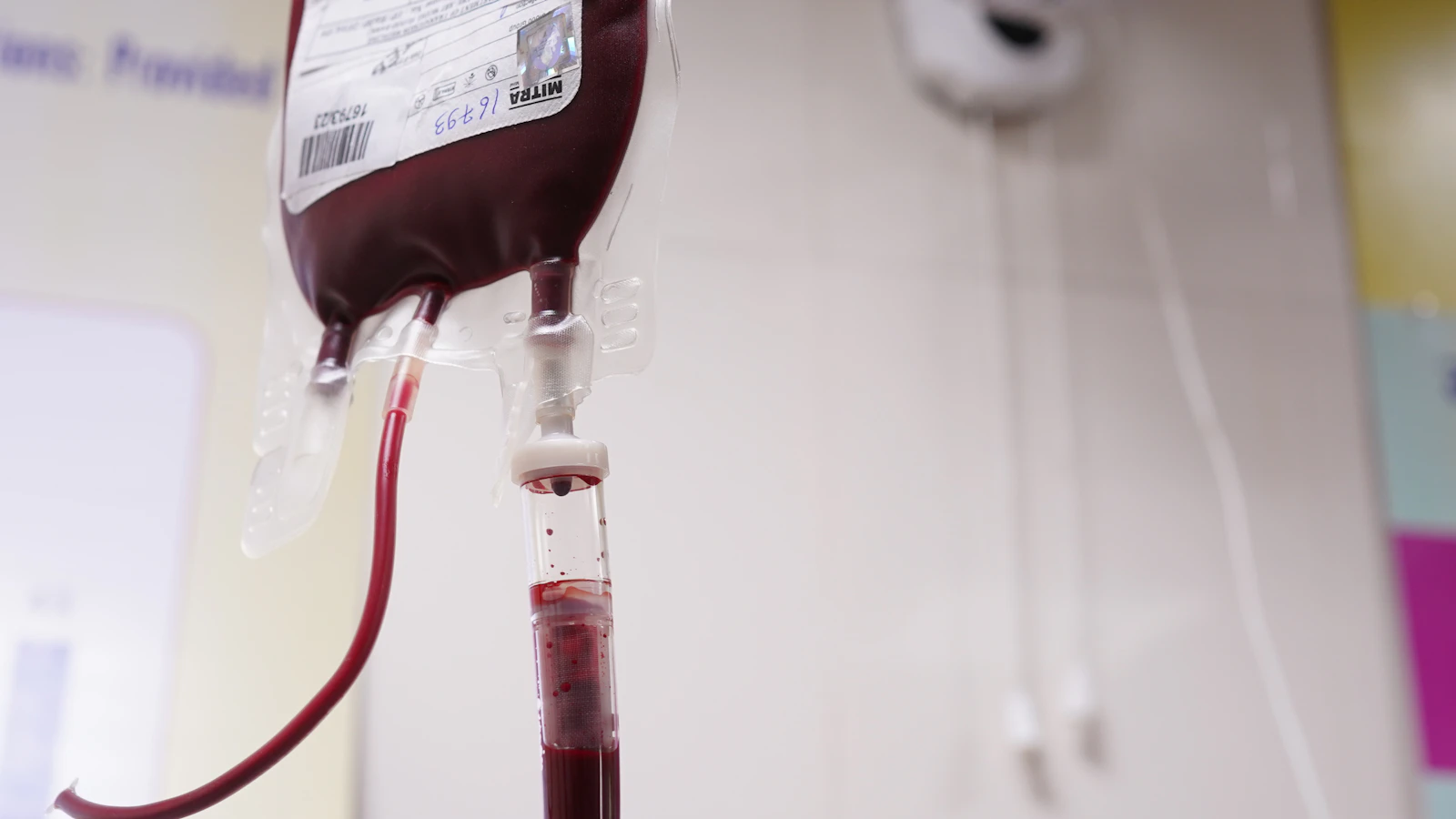
Your result comes in and your haematocrit sits above the reference range. "Thick blood", the internet says straight away, and that startles you. But before you worry: a high haematocrit in an athlete often has a perfectly ordinary explanation, and only in specific situations is it truly something to take seriously.
My stance: the most common cause of a high haematocrit is not disease but a glass of water too few. The difference between harmless and concerning lies in the context, not in the isolated number.
What haematocrit actually measures
Haematocrit is the percentage of your blood made up of red blood cells. The more red cells or the less plasma, the higher the number. That is why your hydration has a direct effect: when you are dehydrated, plasma volume drops and your haematocrit looks higher, while the number of red cells has not changed.
For athletes that matters, because right after a hard training session or a sweaty workout you are often relatively dehydrated. A draw at such a moment gives a skewed, too-high picture. The Dutch Health Council (Gezondheidsraad) stresses that reference values are statistical limits to be read in the context of the person and the moment of measurement, and for haematocrit the moment of measurement is especially decisive.
When thick blood in athletes is harmless
Most high results in athletes come from dehydration or a temporary shift in your plasma volume. Drink well and retest hydrated, and you are often neatly back within range. The table below helps you tell which cause is likely.
| Cause of high haematocrit | How often | What you do |
|---|---|---|
| Dehydration before the draw | Very often | Drink well and retest |
| Altitude training | Sometimes | Factor in the context, no worry |
| TRT or testosterone use | Known effect | Track it, discuss with a doctor |
| Smoking | Sometimes | Lifestyle factor |
| Structurally high with no cause | Rarely | Have it medically investigated |
Haematocrit and TRT: here you do pay attention
Testosterone raises the production of red blood cells, partly by suppressing the hormone hepcidin (Bachman, 2010). A rising haematocrit is therefore the best-known side effect of testosterone therapy (Ohlander, 2018). Clinical guidance recommends lowering the dose or temporarily stopping therapy when haematocrit rises above roughly 54%, in consultation with a doctor (Ory, 2023).
The Dutch Heart Foundation (Hartstichting) points out that a thickened blood composition can put extra strain on the cardiovascular system. If you use TRT, regularly tracking your haematocrit is therefore not a luxury but a fixed part of safe monitoring.
Which symptoms fit genuinely thick blood?
A structurally raised haematocrit can hinder the flow of your blood, and that sometimes gives recognisable complaints. Think of headaches, dizziness, a red or flushed face, itching after a warm shower, or a feeling of pressure. Often these signals are vague and have other causes too, so on their own they are no proof. But in combination with a persistently high value, they are a reason to have it assessed by a doctor.
The concern with genuinely thickened blood is that it can increase the chance of clots. The Dutch Heart Foundation (Hartstichting) points out that anything that obstructs the blood flow puts extra strain on the cardiovascular system, which is exactly why a persistently high haematocrit is not something to ignore. This is not about that one reading after a sweaty session, but about a value that stays high even hydrated and at rest.
What if your haematocrit is naturally on the high side?
Some people naturally sit in the upper reaches of the reference range without anything being wrong. Altitude training or a long stay at altitude also lifts your haematocrit, as a healthy adaptation to less oxygen. The difference from a concerning rise again lies in the trend and the context: a stable, slightly high value in a healthy, well-hydrated athlete is different from a value that climbs further with each measurement. That is why repeated testing under equal conditions is more valuable than a single snapshot.
How to test your haematocrit well
Test hydrated and on a calm day, not right after a hard session or a sauna. Judge haematocrit together with haemoglobin and, if you use TRT, with your total testosterone. Our TRT monitoring test bundles those markers, so you keep an eye on the trend.
Read on: the pillar blood values for strength athletes, plus estradiol on TRT and stopping TRT.
My advice: do not be alarmed by one high haematocrit, but do not ignore it either if you use TRT. Retest hydrated, look at the trend, and always discuss a persistently high value with your doctor.
References
- Bachman E, Feng R, Travison T, et al. Testosterone suppresses hepcidin in men: a potential mechanism for testosterone-induced erythrocytosis. Journal of Clinical Endocrinology & Metabolism. 2010. PMID: 20660052.
- Ohlander SJ, Varghese B, Pastuszak AW. Erythrocytosis following testosterone therapy. Sexual Medicine Reviews. 2018. PMID: 28526632.
- Ory J, et al. Management of erythrocytosis in men receiving testosterone therapy: clinical consultation guide. European Urology Focus. 2023. PMID: 36335038.
- Dutch Heart Foundation (Hartstichting) and the Dutch Health Council (Gezondheidsraad), public information on cardiovascular health and reference values.
Disclaimer
Every blood test result includes a professional assessment by a BIG-registered doctor. This article gives general information and is not a substitute for medical advice. A blood test is a tool to walk into the conversation with your GP better informed, not a diagnosis in itself. For treatment decisions, discuss your results with your GP.
Author
Enhanced Health
Dr. Naimi, BIG-registered physician, oversees the medical standards behind our content and assessments. Read our medical policy
Related Tests
Related Posts
MPV blood value: what the size of your platelets says

Total protein blood test: what it says about your protein intake