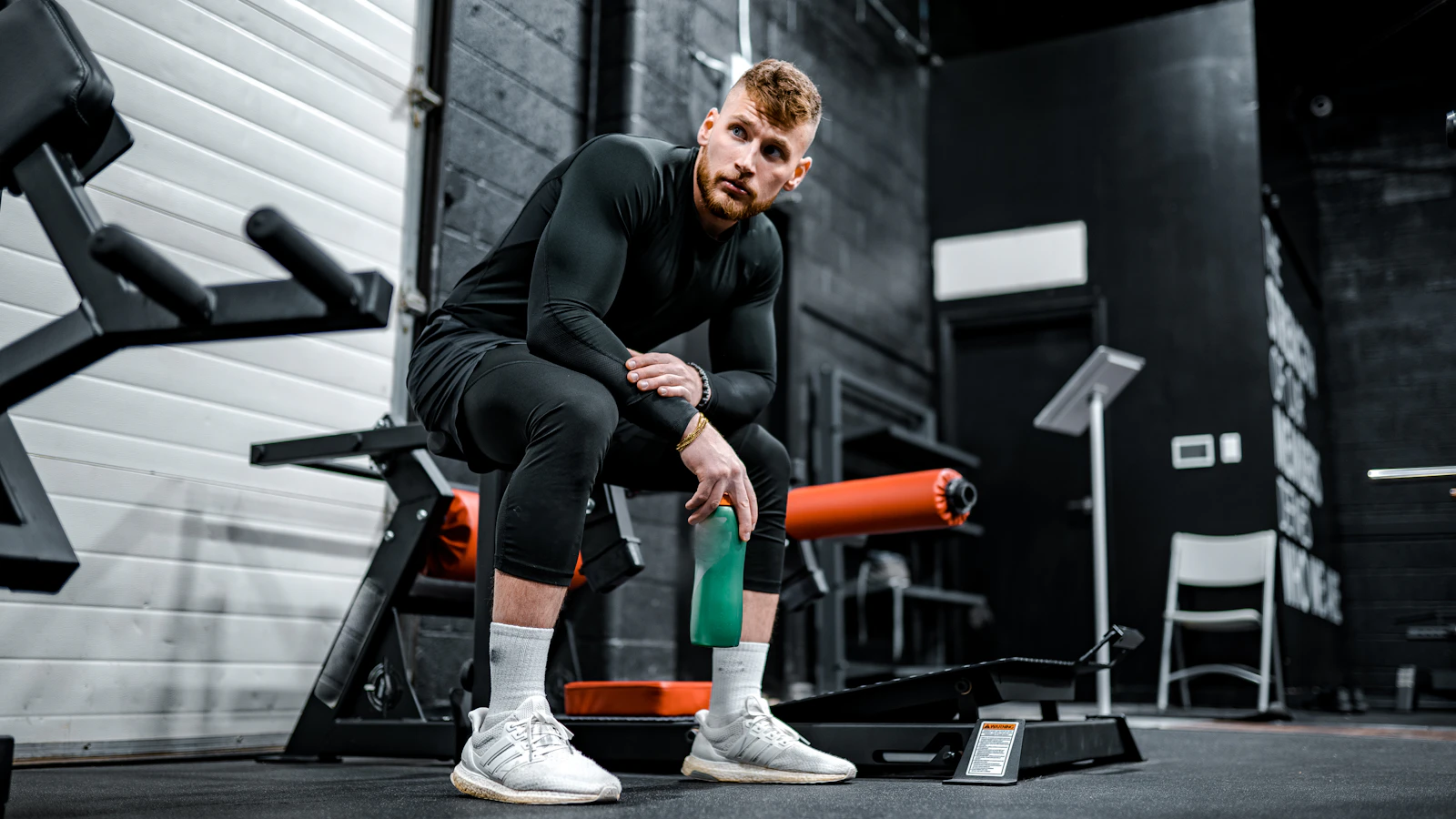
To gain weight you eat above your maintenance, usually 200 to 400 kcal extra per day. For an 80 kilo athlete with a maintenance of 2,760 kcal, that means about 3,060 kcal. That small surplus builds muscle mass without you picking up needless fat.
I am no fan of the classic dirty bulk. Eating more than this mostly adds fat, not extra muscle, and it has to come off again later.
How many calories to gain weight?
To build muscle mass you eat 200 to 400 kcal above your maintenance. That is enough to fuel your recovery and growth, but small enough to limit fat gain. If you do not know your maintenance yet, calculate that first. Without that anchor you do not know how big your surplus really is.
You find your maintenance in how many calories per day for maintenance. You simply add this surplus on top.
For beginners the surplus can sit slightly higher, for advanced lifters lower. Your muscle growth slows as you get further along.
How big should your calorie surplus be?
For most athletes a surplus of 200 to 400 kcal works best. Larger than that and you gain mostly fat, not more muscle, because your body can only build muscle at a limited rate. A tight surplus keeps your conditioning and your blood values in better shape during the bulk.
The table sets three approaches side by side for that 80 kilo athlete.
| Approach | Surplus (kcal) | Rate (per week) | Fat gain |
|---|---|---|---|
| Lean bulk | +200 to 400 | 0.2 to 0.4 kg | low |
| Aggressive bulk | +500 to 700 | 0.5 to 0.7 kg | higher |
| Recomp (at maintenance) | around 0 | stable weight | minimal |
Use our calorie needs calculator for your maintenance and add your surplus on top.
How fast can you gain without fat?
A realistic rate is 0.25 to 0.5 percent of your body weight per week. For 80 kilo that is 0.2 to 0.4 kilo. Gaining faster almost always means extra fat, because muscle growth has a natural ceiling. Beginners grow faster than advanced lifters, so match your expectation to your experience.
Enough protein turns that surplus into actual muscle. A meta-analysis by Morton and colleagues (2018) shows that extra protein increases the muscle gains from resistance training.
Take an advanced lifter who gains 0.7 kilo per week. Most of that is fat, not muscle, because his muscle growth already sits near his limit.
How much protein you take exactly is in how much protein per day for muscle growth. You set your macro split with calculating your macros.
When do you stop bulking?
You stop bulking when your body fat rises too far or when your progress flattens. Many athletes bulk to around 15 percent body fat in men and then cut for a while. That keeps your insulin sensitivity and your visible shape in check. There is no fixed rule, listen to your mirror and your blood values.
A good rule of thumb: bulk in blocks of a few months, not endlessly. After that you eat at maintenance or in a slight deficit for a period.
How to lose fat afterwards while keeping muscle is in weight loss and your blood values.
What do you check in your blood during a bulk?
A surplus leaves traces in your blood. Eating more, especially with a lot of saturated fat, can raise your cholesterol. If you grow fast, it is smart to keep an eye on your blood sugar and your blood lipids. That way you know your bulk is not undermining your health. Discuss a deviating value with your GP.
If your carbs sit high and you move little outside the gym, glucose and HbA1c give context to your shape.
If you want a starting point, our 360 health blood test measures your cholesterol and blood sugar among others. That way you bulk on data, not on feel.
My advice: pick a surplus of 200 to 400 kcal, aim for 0.2 to 0.4 kilo per week and check your blood every few months. That way you grow in a controlled way. The full approach is in our plan for muscle growth and recovery.
References
- Morton RW, Murphy KT, McKellar SR, et al. A systematic review, meta-analysis and meta-regression of the effect of protein supplementation on resistance training-induced gains in muscle mass and strength in healthy adults. British Journal of Sports Medicine. 2018. PMID: 28698222.
- Gezondheidsraad. Dietary reference values: energy. 2021.
- Voedingscentrum. How many calories do I need per day? 2024.
Disclaimer
Every blood test result includes a professional assessment by a BIG-registered doctor. This article gives general information and is not a substitute for medical advice. A blood test is a tool to walk into the conversation with your GP better informed, not a diagnosis in itself. For treatment decisions, discuss your results with your GP.
Author
Enhanced Health
Dr. Naimi, BIG-registered physician, oversees the medical standards behind our content and assessments. Read our medical policy
Related Tests
Related Posts
ZMA supplement: what zinc, magnesium and B6 do to your testosterone
Tongkat ali side effects: banned in the Netherlands, and why