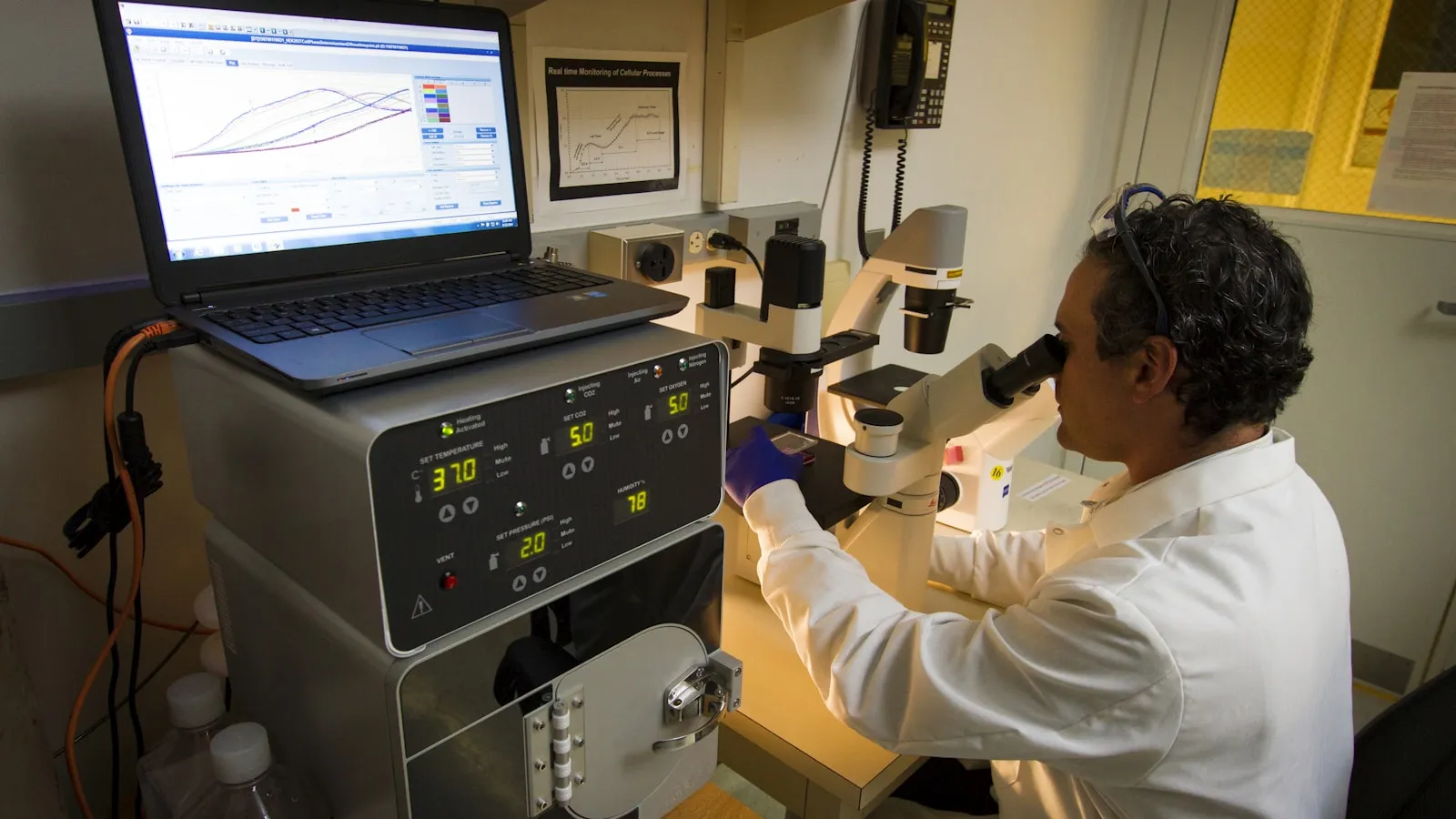
One deadline week of short nights and you feel it already: less drive, less appetite for it, worse recovery. What you do not see is that your blood registers it too. After just a week of short sleep your testosterone drops, your evening cortisol rises and your insulin sensitivity worsens. Sleep is therefore one of the most powerful, and most underrated, levers for your blood values.
I think sleep is the cheapest performance enhancer there is. And the first thing people sacrifice, often exactly when their body needs it most.
Does sleep loss lower your testosterone?
A week of too little sleep can measurably lower testosterone in healthy young men. In a controlled study, testosterone fell by about 10 to 15% during the day after five hours of sleep per night for a week (Leproult, 2011). That is a difference you would normally only see after years of ageing.
So you best measure your testosterone after a period of normal sleep, not after a bad week.
What does sleep loss do to cortisol and blood sugar?
Sleep loss shifts your stress hormone and your sugar handling the wrong way. After a few nights of short sleep, your evening cortisol rises and your glucose tolerance worsens (Spiegel, 1999). A week of five hours of sleep lowered insulin sensitivity by about 20% (Buxton, 2010).
| Marker | Effect of a week of poor sleep |
|---|---|
| Testosterone | Can fall by 10 to 15% |
| Cortisol | Evening value can rise |
| Insulin and glucose | Insulin sensitivity can fall |
The Dutch Health Council (Gezondheidsraad) and the Dutch Nutrition Centre (Voedingscentrum) both point out that structurally too little sleep is linked to a less favourable metabolic profile and more appetite, especially for sugar- and fat-rich food. Your hormones and your hunger steer the wrong way together.
How much sleep do you really need?
The Dutch Health Council (Gezondheidsraad) names roughly seven to nine hours as a healthy band for adults. For athletes the need often sits at the upper end of that, because recovery largely happens during deep sleep. It is not only about hours in bed, but hours actually asleep: an evening of alcohol or late screen use can lower your sleep quality without showing up in your total sleep time.
My line: do not look only at how long you slept, but at how you feel the next day and how you recover. Persistent poor recovery despite enough hours is a reason to take your sleep quality seriously.
The vicious circle of poor sleep and hunger
Sleep loss does not only depress your hormones, it also steers your eating behaviour. After short nights appetite rises, especially for sugar- and fat-rich food, while your sense of fullness drops. That coincides exactly with reduced insulin sensitivity, so your body handles the same carbohydrates less favourably. This way poor sleep, more eating and worse sugar handling reinforce each other. For anyone trying to lose weight or improve body composition, sleep is therefore an underrated lever.
Why the timing of your blood test matters
Because sleep affects your values so strongly, a bad week skews your result. Test your testosterone, cortisol and sugar values after a few normal nights, not after a deadline week or short nights. Otherwise you measure your sleep loss, not your baseline. For the sugar side, read fasting insulin and HOMA-IR.
How to use this
Treat sleep as part of your training and recovery plan, not an afterthought. To track the effect of your sleep on your hormones, measure in a calm, well-slept period and repeat later. Compose your panel through our custom blood test or look at the general hormone panel.
Also read alcohol and your blood values and the guide the 360 health panel.
My advice: fix your sleep before you reach for supplements or a testosterone course. If your symptoms persist despite good nights, discuss it with your GP.
References
- Gezondheidsraad (Dutch Health Council). Sleep and health. Accessed 2026.
- Voedingscentrum (Dutch Nutrition Centre). Sleep, appetite and weight. Accessed 2026.
- Leproult R, Van Cauter E. Effect of 1 week of sleep restriction on testosterone levels in young healthy men. JAMA. 2011. PMID: 21632481.
- Spiegel K, Leproult R, Van Cauter E. Impact of sleep debt on metabolic and endocrine function. The Lancet. 1999. PMID: 10543671.
- Buxton OM, Pavlova M, Reid EW, et al. Sleep restriction for 1 week reduces insulin sensitivity in healthy men. Diabetes. 2010. PMID: 20585000.
Disclaimer
Every blood test result includes a professional assessment by a BIG-registered doctor. This article gives general information and is not a substitute for medical advice. A blood test is a tool to walk into the conversation with your GP better informed, not a diagnosis in itself. For treatment decisions, discuss your results with your GP.
Autor
Enhanced Health
Dr. Naimi, lekarz wpisany do holenderskiego rejestru BIG, nadzoruje standardy medyczne naszych treści i ocen. Przeczytaj naszą politykę medyczną