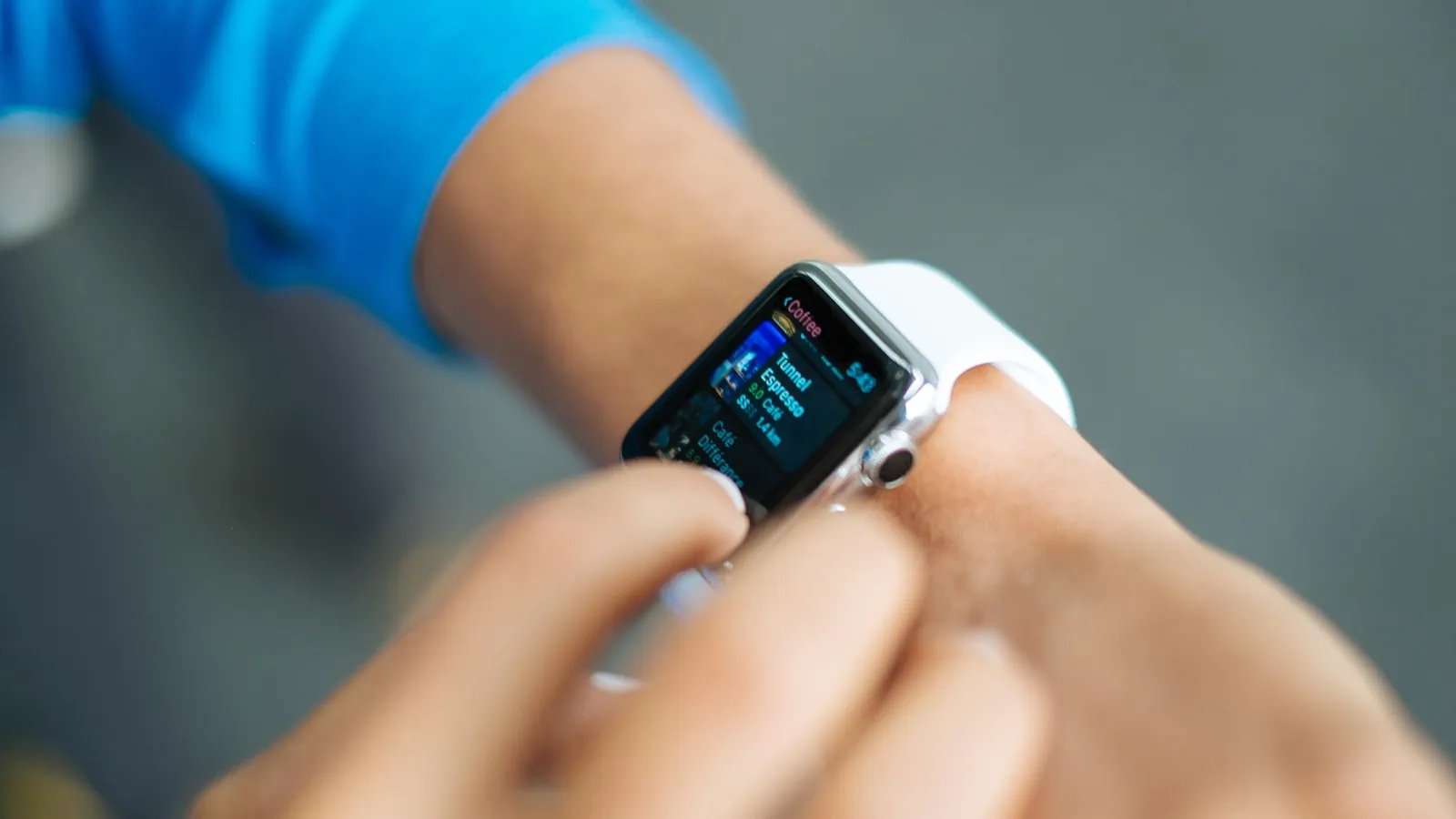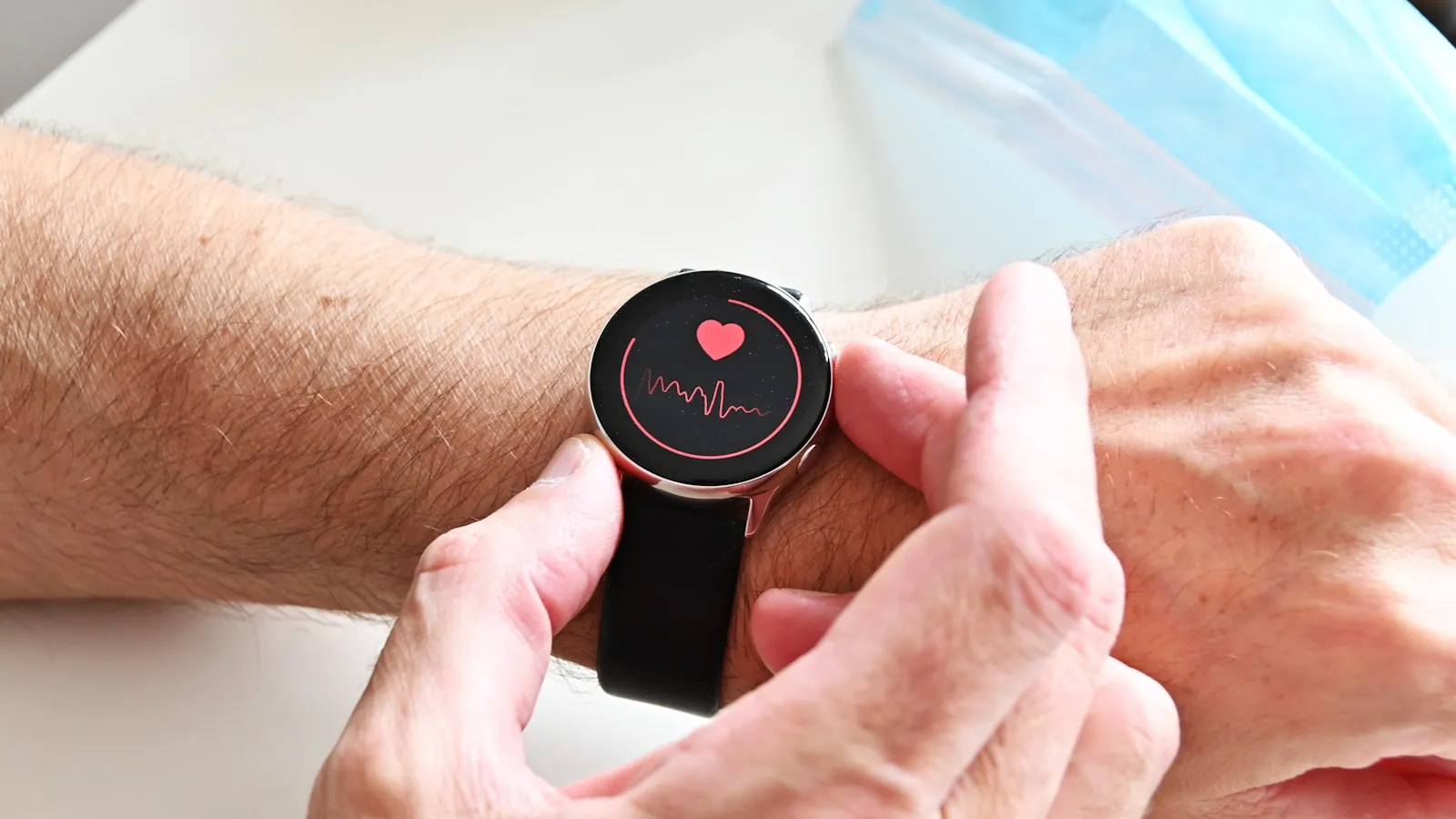
RMSSD is the metric you want if you are tracking recovery day to day. SDNN is the metric for your total variation over a longer window. The number on your watch is almost always RMSSD.
That difference is not a detail for statisticians.
I regularly see athletes place an SDNN of 140 from a 24-hour recording next to an RMSSD of 45 from their ring. They think their HRV has collapsed. In reality they are comparing a mile with a kilogram.
What does RMSSD mean?
RMSSD stands for the root mean square of successive differences between heartbeat intervals. In plain terms: it looks only at how big the jump is from one beat to the next. Bigger jumps mean a higher RMSSD.
That choice has a physiological consequence. Because RMSSD looks only at directly successive differences, it mainly reflects parasympathetic activity (PMID 29034226). That is exactly the branch that runs your recovery.
Another advantage: RMSSD is barely sensitive to recording length. An RMSSD over five minutes and one over a whole night land in roughly the same range. That makes it suitable for daily measurement.
What does SDNN mean?
SDNN is the standard deviation of all intervals between your heartbeats in the recording window. So it captures every kind of variation, fast and slow. That means your breathing rhythm, your blood pressure regulation and your day-night rhythm all end up in the number.
And there sits its weak spot.
SDNN depends heavily on how long you record. A 24-hour SDNN lands far higher than an SDNN over five minutes, simply because more kinds of variation fit inside it (PMID 8598068). Two SDNN values are only comparable at the same recording window.
In the clinical world the 24-hour SDNN is the better known metric. There it is used as a general indicator of autonomic function, not as a daily recovery gauge.
Which metric should you follow?
For daily training decisions: RMSSD, recorded during sleep, every night with the same device. For a picture of your autonomic function across months or years a 24-hour SDNN works, but that is a recording you rarely have taken.
This table is how I make the choice.
| What you want to know | Metric | Window | How often |
|---|---|---|---|
| Am I recovered from yesterday | RMSSD | Overnight | Every night |
| Is my load going the right way | Ln(rMSSD) | Overnight | 7-day average |
| How do I respond to a breathing drill | RMSSD | 5 minutes | Before and after |
| How is my autonomic function overall | SDNN | 24 hours | Rarely, via a doctor |
| What does my watch actually show | Usually RMSSD | Overnight | Automatic |
That bottom row explains most of the confusion. Garmin, Whoop, Oura and Polar all show a variant of overnight RMSSD, but rarely call it that.
What is Ln(rMSSD) and why do coaches use it?
Ln(rMSSD) is the natural logarithm of your RMSSD. That transformation compresses the outliers, so a single bad night no longer throws off your trend line. Coaches therefore prefer it to the raw value.
There is one more step. Research in elite endurance athletes combined Ln(rMSSD) with a rolling seven-day average (PMID 23852425). That combination exposes the training adaptation that disappears in single-day values.
Picture two rowers who both average 48 ms this week. One swung between 31 and 66, the other between 45 and 51. Same average, and only the second is stable.
That spread is exactly what the seven-day average makes visible. If your app does not show it, you can build it yourself in a spreadsheet in five minutes.
Why do two devices land on different numbers?
Because they measure different things and make different choices. The timing differs, the window differs, and every brand filters its raw data with its own algorithm. No manufacturer publishes that step in full.
There is little you can do about it, other than being consistent.
A broad review of heart rate measures already warned that no single measure pins down your training status on its own (PMID 24578692). That goes double if you switch devices halfway. More on that in HRV status on Garmin.
What do you do with a metric heading the wrong way?
First check how long it has been going on and whether symptoms come with it. A week below your average after a heavy block is normal. Three weeks below your average while you train easy and sleep well is not.
In that case place your HRV next to your resting heart rate. If both point the same way, the signal is serious. The Dutch Hartstichting uses 60 to 100 beats per minute for that resting rate, with lower values in trained endurance athletes.
If the picture persists, blood work is the logical next step. Ferritin, TSH and hs-CRP most often explain something in athletes. All three sit in Whoop.
The full triage per situation sits in low HRV score. Start tonight with one thing: find out which metric your device shows, and write it down.
Every blood test result includes a professional assessment from a BIG-registered doctor. For treatment decisions, discuss your results with your GP.
References
- Shaffer F, Ginsberg JP. An overview of heart rate variability metrics and norms. Frontiers in Public Health, 2017. PMID 29034226.
- Task Force of the European Society of Cardiology and the North American Society of Pacing and Electrophysiology. Heart rate variability: standards of measurement, physiological interpretation and clinical use. Circulation, 1996. PMID 8598068.
- Plews DJ, et al. Training adaptation and heart rate variability in elite endurance athletes: opening the door to effective monitoring. Sports Medicine, 2013. PMID 23852425.
- Buchheit M. Monitoring training status with HR measures: do all roads lead to Rome? Frontiers in Physiology, 2014. PMID 24578692.
- Hartstichting. Resting heart rate.
Autor
Enhanced Health
Powiązane badania
Powiązane artykuły
Fasting blood tests for athletes: 9 things that skew your results

Low HRV score: causes and what to do about it