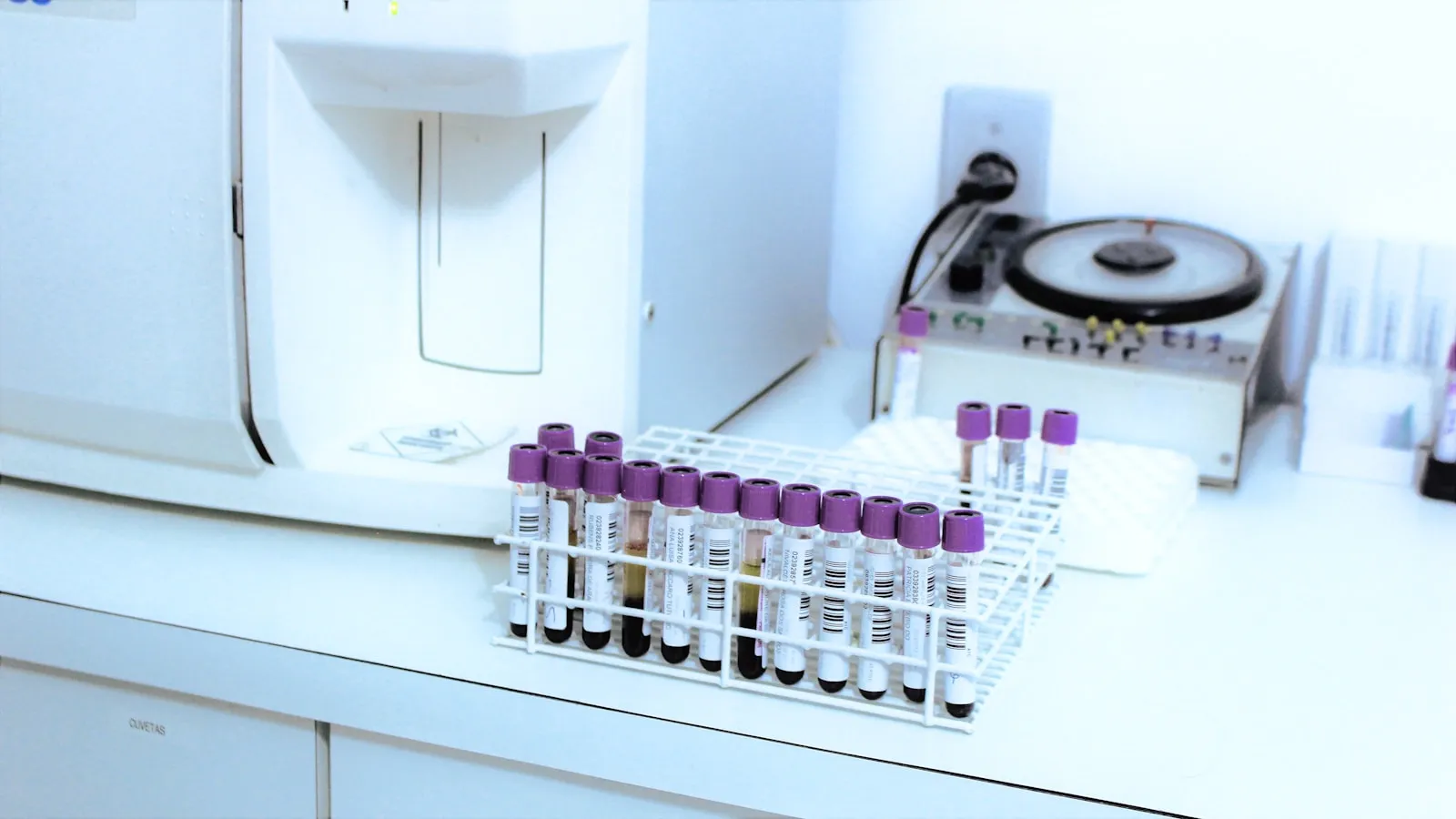
Your result comes back and your homocysteine reads 14 µmol/l. You look it up, and the first ten results want to sell you a B-complex. I understand the reflex, but it skips a step.
That step is whether lowering the number actually buys you anything.
It has been tested, in large trials, with tens of thousands of people. I could not find the outcome on a single Dutch page ranking near the top. That bothers me, because it changes what you do with your value.
What is homocysteine anyway?
An amino acid you make yourself when you break down methionine, a building block from protein-rich food. Your body then clears it again, using folate, vitamin B12 and B6 as helpers. If that clearing runs slower, homocysteine builds up and you see a higher value.
So it is not something you eat, it is a waypoint in your own metabolism.
That explains why your value is sensitive to plenty of things unrelated to your heart. The level of your homocysteine value mostly says how smoothly that conversion runs. And that conversion hangs on your vitamin status, your kidneys and your genes.
How folate, B12 and homocysteine can sit behind tiredness is covered in folate and homocysteine as a hidden cause of fatigue. Here I stay on the vascular question.
How strong is the link with cardiovascular disease?
Strong enough to take seriously, and measured properly. A meta-analysis in JAMA from 2002 pooled thirty studies on homocysteine, heart disease and stroke. A 25 percent lower value tracked with roughly 11 percent less ischaemic heart disease and 19 percent less stroke (PMID 12387654).
That is a real association, and it has been found more than once.
An association says nothing about direction, though. A high value can travel alongside something else that causes the risk, such as weaker kidney function or smoking. Statistics cannot separate those two possibilities.
For that you need a trial.
Why the large lowering trials disappointed
Those trials were run, and the outcome is not what the supplement pages tell you. HOPE-2 gave more than 5,500 people with vascular disease or diabetes folic acid with vitamin B6 and B12, or a placebo. The researchers followed them for five years.
Homocysteine fell in the treated group. The number of heart attacks and cardiovascular deaths did not (PMID 16531613). For stroke the researchers did see a favourable signal.
Cochrane added everything up in 2017: fifteen trials, more than 71,000 participants. Again no effect on heart attack or death, again a small advantage for stroke (PMID 28816346).
Lowering homocysteine is technically easy. The risk just does not follow along neatly.
Risk marker or treatment target?
A risk marker, and that is a different thing from a dial. A marker tells you something is going on, while a treatment target is a number where lowering it improves the outcome. In the research so far, homocysteine behaves like the first, not the second.
Think of a smoke alarm. It goes off because something is happening, and that is useful information. Switching the alarm off puts out no fire.
The comparison is not watertight. A raised value can genuinely point at something you can address, such as a shortage of folate or B12. The number itself is simply not the goal.
The Hartstichting, the Dutch heart foundation, names blood pressure, cholesterol, smoking and diabetes as the risk factors worth acting on. Homocysteine is not on that list. That is not an oversight, that is the trial result working through into the guidelines.
How you can estimate your own risk as an athlete, and where the standard calculation falls short, sits in cardiovascular risk in athletes.
When is homocysteine too high?
Many Dutch labs draw the line around 15 µmol/l, but that line differs per laboratory and per method. Age and sex shift the reference range as well. A value just over the line therefore says less than most people assume, certainly on a single measurement.
A 14 on Monday and a 17 on Thursday is not a deterioration. That is spread, partly yours and partly the lab. Only when the same value holds under calm conditions are you looking at a pattern.
What explains that pattern usually sits in the row next to it.
What pushes your homocysteine up?
More than your vitamin status alone: your kidney function, your genes, your age, coffee and smoking all push the same button. In athletes, a heavy training block and a high protein intake join in. That makes one raised value a question rather than an answer.
| What pushes your value up | What happens | The tell |
|---|---|---|
| Too little folate | The clearing route is missing a helper | Folate from the same tube reads low |
| Too little vitamin B12 | Same route, different helper | More common on few animal products |
| Weaker kidney function | You clear less homocysteine | Creatinine and eGFR move with it |
| A slower MTHFR variant | The enzyme in the conversion works slowly | Value stays high while your vitamins read fine |
| Lots of coffee | Research links high intake to higher values | Scales with your cups, not with your training |
| Smoking | Affects the same B vitamins and the conversion | Other values often move along |
| A heavy training block | Hard effort can move the value temporarily | Settles again in a quiet week |
The row you want to rule out first is kidney function, because it changes what your value means. The rest is mostly context. The single value that most often belongs next to it sits at folate.
What does this mean if you train?
That your value carries more noise than the average patient page suggests. Your protein intake runs higher, your coffee intake usually too, and creatine acts on the same methyl route. A single draw in the middle of a heavy block therefore says little about your vessels.
Creatine is the most interesting case. Your body uses methyl groups to make creatine itself, and that process produces homocysteine. What supplementation does to your value is not settled in the research, but it is a variable you should write down.
What creatine does to the rest of your results sits in creatine and your blood values.
Two men, both 34, both sitting at 14 µmol/l. The first drew after a heavy block, drinks four coffees a day and has just started creatine. The second drew rested, barely drinks coffee, and has a slightly low folate.
Same number, two completely different conversations.
What strikes me as a coach: almost nobody notes that context at the draw. So the conversation ends up being about the number instead of about what happened around it.
Why do you hear this so rarely?
Because a fair share of the pages about homocysteine are written by parties who also sell B vitamins. A negative trial does not fit that story, so it stays out. I find that worse than a wrong number, because it steers you towards a purchase instead of towards an explanation.
A marker that gains you nothing when you lower it is still information. It simply tells you something other than the seller suggests. It points at a route that is stalling, and that route is worth a look.
A signal, not a dial.
What do you do with a raised homocysteine?
You put it next to the values that might explain it. Folate, vitamin B12 and your kidney function together show whether a route is stalling or whether you are mostly measuring your own background noise. What is sensible after that belongs in a conversation with your GP.
What I would not do myself: build a supplement plan on this one number. The trials suggest that lowering on its own gains little in people who already have vascular disease. With a demonstrated shortage that may be different, and that is exactly why you want those values alongside.
The number is the start of a question, not the end of a diagnosis.
If you want to know how your heart behaves under load, blood does not measure that. What a cycle test does and does not pick up sits in what an exercise stress test does and does not see.
If you would rather line those values up in one draw, look at 360 Health. Note what you did that week when you give blood, because that is half your result.
Every blood test result includes a professional assessment from a BIG-registered doctor. For treatment decisions, discuss your results with your GP.
References
- Homocysteine Studies Collaboration. Homocysteine and risk of ischemic heart disease and stroke: a meta-analysis. JAMA, 2002;288(16):2015-22. PMID 12387654.
- Lonn E, Yusuf S, Arnold MJ, Sheridan P, Pogue J, Micks M, McQueen MJ, Probstfield J, Fodor G, Held C, Genest J. Homocysteine lowering with folic acid and B vitamins in vascular disease. New England Journal of Medicine, 2006;354(15):1567-77. PMID 16531613.
- Marti-Carvajal AJ, Sola I, Lathyris D, Dayer M. Homocysteine-lowering interventions for preventing cardiovascular events. Cochrane Database of Systematic Reviews, 2017. PMID 28816346.
- Hartstichting. Risk factors for cardiovascular disease.
الكاتب
Enhanced Health
فحوصات ذات صلة
مقالات ذات صلة

Exercise stress test: what a bike test does and does not see
Athlete's heart: when a bigger heart is normal, and when it is not