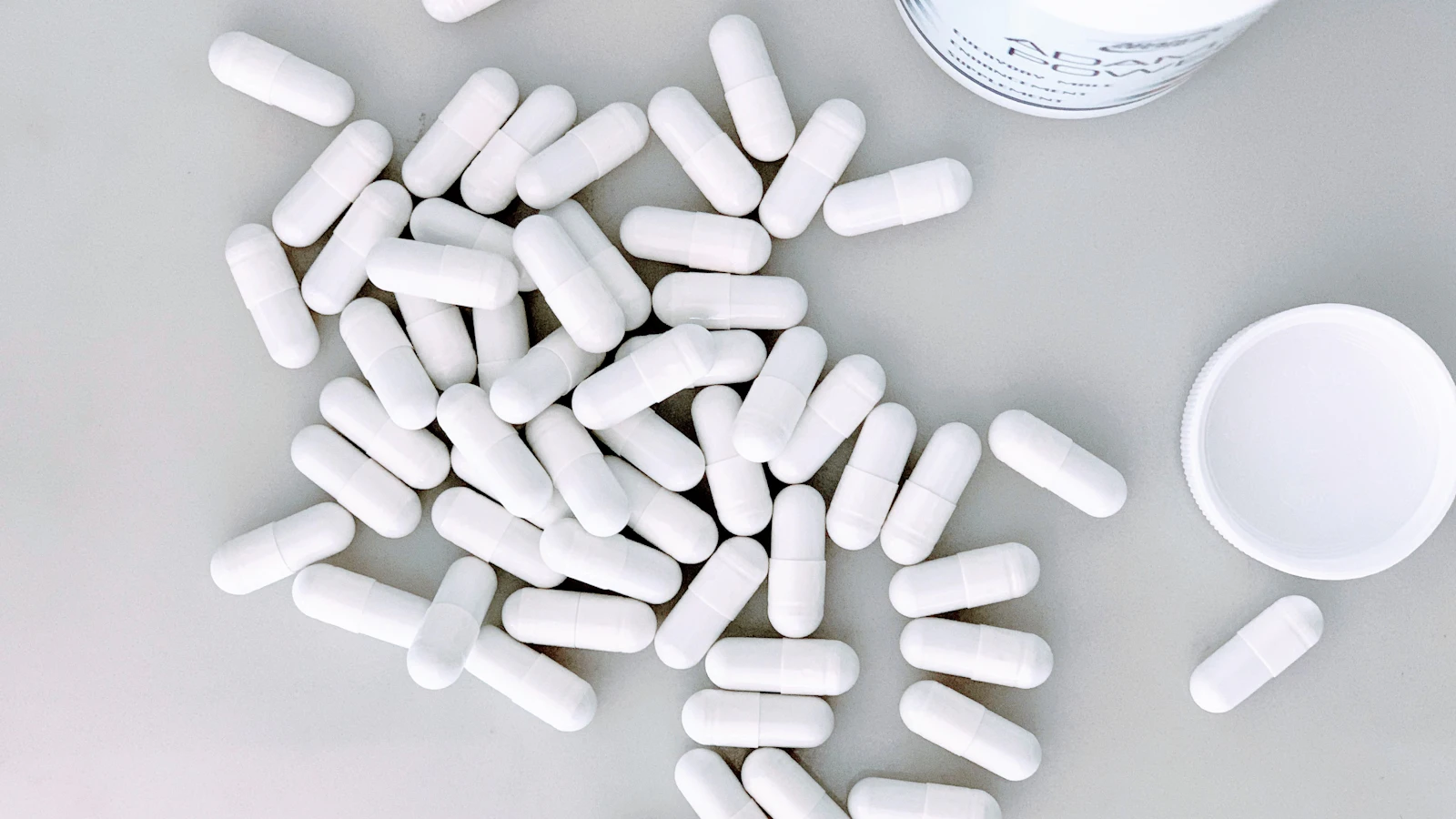
Magnesium bisglycinate is magnesium bound to two molecules of the amino acid glycine. It is gentle on your gut. But in the only randomised trial, a chelate did no better than citrate (Walker 2003, PMID 14596323). Bisglycinate belongs to that group.
You rarely read that second part on a label. What stands out: almost every page about this form of magnesium sells one. I don't sell magnesium. I want to know what happens in your body.
So below is what the trials measured and how much magnesium is really in your tablet. And what a blood test can tell you about it. That last part is harder than you'd think.
What exactly is magnesium bisglycinate?
Magnesium bisglycinate is a chelate: one magnesium atom held between two glycine molecules. You'll also see it sold as magnesium glycinate or magnesium diglycinate. It's the same compound. Glycine is a small amino acid your body also makes itself.
Supplements are magnesium plus a carrier. The carrier decides how much magnesium each gram holds and how your gut reacts to it. Oxide, citrate, bisglycinate, taurate and malate are each a different form of magnesium.
The idea behind the chelate is that part of it is absorbed intact. It would use the route for small protein fragments. Lab work supports that.
In one small human study the effect only showed up in a subgroup. More on that below.
What is magnesium bisglycinate good for?
Magnesium bisglycinate does in your body what magnesium does, whatever the carrier. The European Union allows a set of claims. Magnesium contributes to normal muscle function and to the reduction of tiredness and fatigue. Also to normal energy-yielding metabolism and normal psychological function.
Many Dutch labels promise "geestelijke balans", mental balance. That is a loose rewording of the last EU claim from Regulation 432/2012. The claim applies to every form of magnesium, not to bisglycinate in particular. A tub of oxide may say the same.
What the claims don't say is that extra magnesium does anything once you already get enough. For athletes that's the interesting question. I'll come back to it shortly.
Which is better, magnesium citrate or bisglycinate?
For absorption, there is no evidence that bisglycinate beats citrate. There is one randomised comparison with an amino-acid chelate. In it, citrate gave the highest blood magnesium after 60 days. Bisglycinate is often easier on your gut.
That's the real difference.
Here are the trials that matter for this question. Read the group in the second column above all.
| Trial | Who, how much, how long | What was measured |
|---|---|---|
| Walker 2003 (PMID 14596323) | 46 healthy adults, 300 mg magnesium a day as amino-acid chelate, citrate or oxide, 60 days | Chelate and citrate were absorbed better than oxide, measured in urine. Citrate gave the highest serum value. Oxide did no more than placebo. |
| Schuette 1994 (PMID 7815675) | 12 patients after bowel surgery, a single 100 mg dose, bisglycinate against oxide | Absorption equal on average: 23.5 against 22.8 percent. In the 4 poorest absorbers 23.5 against 11.8 percent. Everyone tolerated the chelate better. |
| Schuster 2025 (PMID 40918053) | 155 adults who slept poorly, 250 mg magnesium as bisglycinate a day | Insomnia score 3.9 points lower after 4 weeks, against 2.3 on placebo. A small effect. A larger drop in people who ate little magnesium. |
Look at the second row. The advantage of bisglycinate appeared in people who absorbed magnesium poorly after bowel surgery. A healthy athlete with a normal gut looks more like Walker's participants.
So my conclusion is a sober one. If you choose bisglycinate, you mainly choose a calm stomach. Not a higher blood value.
How much magnesium is really in your tub?
Magnesium bisglycinate is about 14 percent magnesium. The rest is glycine. A tablet with 500 mg of magnesium bisglycinate therefore delivers roughly 70 mg of magnesium. That's a fifth of the 350 mg a day the Dutch Health Council (Gezondheidsraad) uses for men.
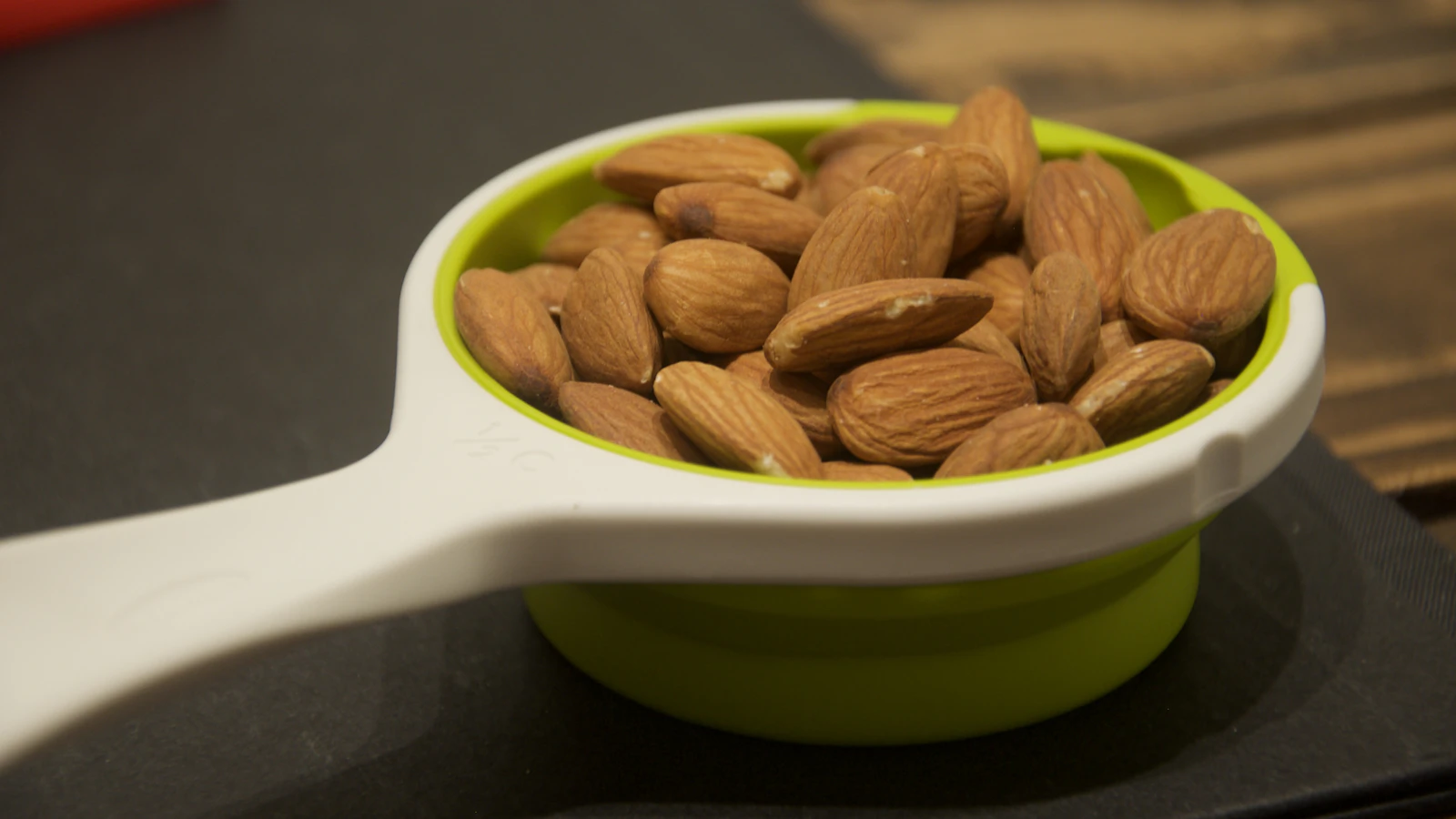
The number on the front of a tub can mean two things. Sometimes it's the whole compound, sometimes only the magnesium. So check the nutrition table on the label for the amount of magnesium. Or look for the word elemental.
I calculated the three best-known forms from their molar mass. The percentages are for the anhydrous form; a form with water of crystallisation holds less per gram.
| Form of magnesium | Magnesium per gram | Grams of powder for 250 mg magnesium |
|---|---|---|
| Magnesium bisglycinate | about 141 mg (14 percent) | about 1.8 grams |
| Magnesium citrate, anhydrous | about 162 mg (16 percent) | about 1.5 grams |
| Magnesium oxide | about 603 mg (60 percent) | about 0.4 grams |
That's why bisglycinate tablets are large and you often take two or three. Oxide fits in a small tablet, but it was barely absorbed in Walker's study.
An example: you train five times a week. In the evening you take two tablets, each with 500 mg of magnesium bisglycinate. That gives you roughly 140 mg of magnesium. Most of it still comes from your food.
How much magnesium do you need per day?
The Dutch Health Council uses 350 mg of magnesium a day for adult men. For women it's 300 mg. The Netherlands Nutrition Centre (Voedingscentrum) names wholegrain products, vegetables, nuts, dairy and meat as sources. According to the Voedingscentrum, a deficiency doesn't develop easily.
Hard training does shift that sum a little. Researchers estimate that exercise raises your needs by 10 to 20 percent. That comes from losses in urine and sweat (Nielsen 2006, PMID 17172008). According to them, athletes who make weight, such as wrestlers and gymnasts, are most at risk.
More on sweat and minerals in electrolytes and hydration for athletes.
Is magnesium bisglycinate good for sleep?
The best trial with exactly this form found a small effect. In 2025, 155 adults who slept poorly took 250 mg of magnesium as bisglycinate or a placebo. After 4 weeks their insomnia score fell 3.9 points, against 2.3 on placebo (Schuster 2025, PMID 40918053).
The difference was just statistically significant, with an effect size of 0.2. That's small. People who got little magnesium from their food responded most. That fits the pattern you see with almost every supplement.
An older study gave 46 older adults with insomnia 500 mg of magnesium a day. They slept more efficiently and fell asleep faster than on placebo (Abbasi 2012, PMID 23853635). But those were people over 65 with insomnia, not young athletes.
If you sleep badly, other things usually weigh more. Think of when you train, caffeine after midday and your light in the evening. That's covered in better sleep for athletes.
What are the downsides of magnesium bisglycinate?
The biggest downside of any magnesium supplement is loose stools at a high dose. EFSA sets 250 mg of magnesium a day from supplements as the safe upper limit. That limit is based on gut complaints, and the Voedingscentrum warns about the same above 250 mg.
Mind the difference between compound and magnesium. 250 mg of magnesium equals about 1.8 grams of magnesium bisglycinate. The upper limit counts the magnesium, not the weight of the powder.
In Schuette's study, everyone tolerated the chelate better than oxide. That doesn't make it harmless in large amounts.
Your kidneys regulate how much magnesium you lose. If your kidneys work less well, magnesium can build up (Jahnen-Dechent 2012, PMID 26069819). If you take medication, ask your pharmacist whether magnesium affects how it's absorbed.
Can you measure whether you're low on magnesium?
Partly. The standard blood test measures magnesium in serum. Serum holds about 0.3 percent of all the magnesium in your body. A normal serum value therefore doesn't rule out a deficit in your tissues. EFSA says the same.
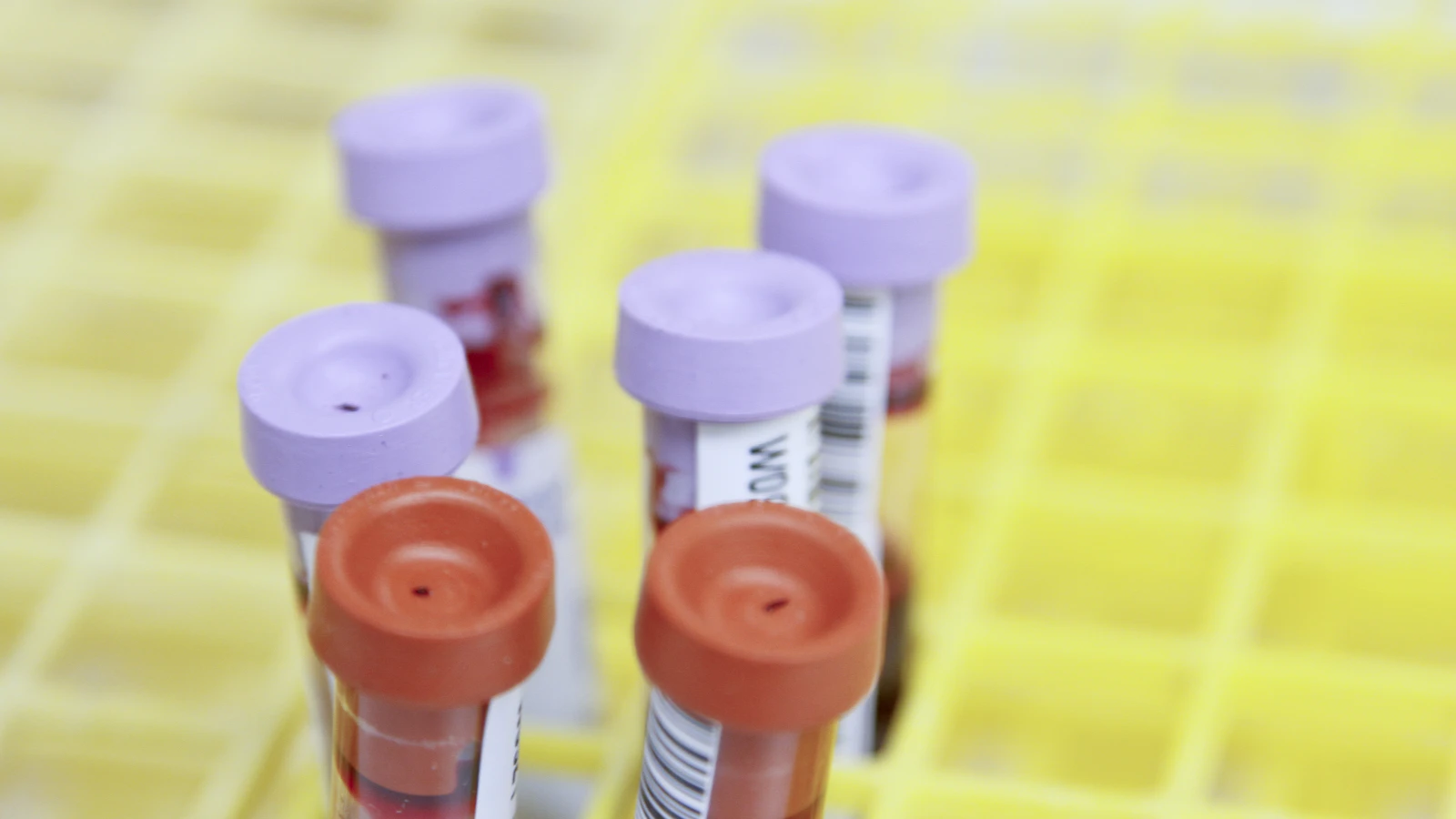
An adult carries about 24 grams of magnesium. More than half sits in your bones and a quarter in your muscles (Jahnen-Dechent 2012). Your blood keeps the serum value tight by drawing on that store.
Still, the serum value tells you something. According to EFSA, a low value points to a deficit, unless your albumin is low. Low albumin can pull total magnesium down without a real deficit.
Two athletes with the same blood value
Imagine two runners who both train 60 kilometres a week for a marathon. Both have a serum magnesium in the middle of the reference range. On paper there's no difference.
The first eats wholemeal bread, nuts and yoghurt every day. The second is making weight, eats little and often trains fasted. His intake sits below 260 mg a day. According to Nielsen, that can lead to a deficit in male athletes.
Their blood can still show the same number. Your body tops up serum from bone and muscle. In Schuster's sleep trial, it was people with a low intake who responded most.
So the number is a starting point. Your eating pattern completes the story.
There's also a measurement in red blood cells: intracellular magnesium. It measures magnesium inside the cell itself. It adds to the standard magnesium value rather than replacing it, and it has its limits too.
My own order would be this. First know where you stand, then choose. Magnesium is included in InsideTracker Recovery and InsideTracker Sleep, alongside other values around recovery and sleep.
Does magnesium improve your performance?
Only if you were low. In athletes with good magnesium status, extra magnesium did not improve performance. In a deficit it did, Nielsen and Lukaski write in their review of the research (PMID 17172008).
It's the same lesson as with zinc and testosterone. A supplement fills a gap. It doesn't lift you above normal. How that plays out for zinc, magnesium and B6 together is in ZMA supplement.
Cramp is the best-known example. Many athletes reach for magnesium when their calves cramp. What is and isn't known about that is in magnesium for athletes.
My take as a training partner
I'm not going to tell you whether to take magnesium. That's a question for you and your GP. But this: magnesium bisglycinate is a well-tolerated form, not a miracle form.
Curious about your own magnesium? Start with your food and your blood values. Compare tubs on the amount of magnesium, not on the number on the front. And stay under the 250 mg a day from supplements that EFSA uses.
A broader overview of the minerals that matter for athletes is in vitamins and minerals for athletes.
If a value is out of range, discuss it with your GP. Mention which supplements you take. Every blood test result includes a professional assessment from a BIG-registered doctor. For treatment decisions, discuss your results with your GP.
Sources
- Walker AF, Marakis G, Christie S, Byng M. Mg citrate found more bioavailable than other Mg preparations in a randomised, double-blind study. Magnes Res. 2003 (PMID 14596323).
- Schuette SA, Lashner BA, Janghorbani M. Bioavailability of magnesium diglycinate vs magnesium oxide in patients with ileal resection. JPEN J Parenter Enteral Nutr. 1994 (PMID 7815675).
- Schuster J, Cycelskij I, Lopresti A, Hahn A. Magnesium bisglycinate supplementation in healthy adults reporting poor sleep: a randomized, placebo-controlled trial. Nat Sci Sleep. 2025 (PMID 40918053).
- Abbasi B, Kimiagar M, Sadeghniiat K, et al. The effect of magnesium supplementation on primary insomnia in elderly: a double-blind placebo-controlled clinical trial. J Res Med Sci. 2012 (PMID 23853635).
- Nielsen FH, Lukaski HC. Update on the relationship between magnesium and exercise. Magnes Res. 2006 (PMID 17172008).
- Jahnen-Dechent W, Ketteler M. Magnesium basics. Clin Kidney J. 2012 (PMID 26069819).
- EFSA. Tolerable upper intake levels for vitamins and minerals, magnesium chapter (Scientific Committee on Food). 2006.
- Regulation (EU) No 432/2012, list of permitted health claims, magnesium. 2012.
- Voedingscentrum. Magnesium, with the recommended intakes of the Dutch Health Council (2018). voedingscentrum.nl.
Autor
Enhanced Health
Dr. Naimi, lekarz wpisany do holenderskiego rejestru BIG, nadzoruje standardy medyczne naszych treści i ocen. Przeczytaj naszą politykę medyczną
Powiązane badania
Powiązane artykuły
Iron bisglycinate: what it does, the dose, test first

Zinc and testosterone: what a deficiency does to your hormones