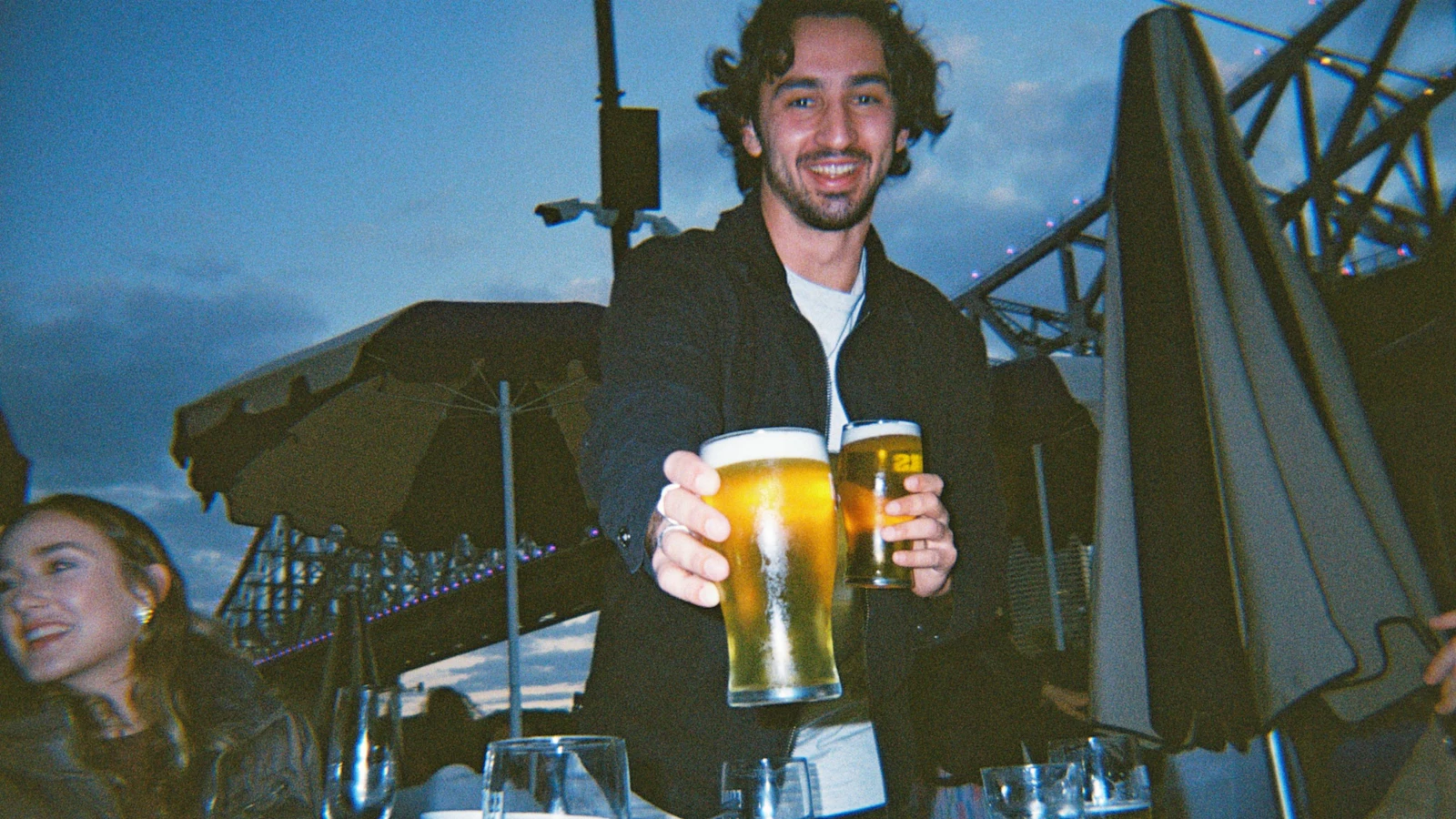
You trained well this week, but you also went hard on two evenings. The question is not whether that affects your blood values, but how much. Alcohol leaves traces, especially in your liver values, your hormones and your recovery. And the good part is: you can measure those traces.
I am level-headed about this. Alcohol is not poison at every glass, but if you train seriously, you pay for it measurably. The question is what you get back for it.
What does alcohol do to your liver values?
Your liver breaks down alcohol, and with regular use you see it back. Gamma-GT is the marker that responds most sensitively to alcohol and is a widely used indicator of intake. A raised gamma-GT is moreover associated with higher risk of several conditions, even independent of alcohol (Targher, 2010). Your ALT can also rise with more load on the liver.
The Dutch Trimbos Institute describes that the effects of alcohol are strongly dose-dependent: the difference between one glass and heavy drinking is large. You see that back in your values.
Which blood values shift from alcohol?
Alcohol touches your liver, your recovery and your hormones at once. This table lists the best known shifts, plus how sensitively each value responds.
| Value | Effect of regular drinking | Sensitivity |
|---|---|---|
| Gamma-GT | Rises, used as an alcohol marker | High |
| ALT | Can climb with more liver load | Medium |
| Testosterone | Can fall with heavy or chronic use | Medium |
| Cortisol | Can rise, together with disrupted sleep | Variable |
Alcohol and your sports recovery
Alcohol after exercise can slow your recovery, depending on the amount and the timing. A review in male athletes concludes that the influence on recovery is complex, but that higher doses can unfavourably affect muscle strength and recovery (Barnes, 2014). Caution is sensible especially after strength training with muscle damage.
A modest dose is described in that same research as less harmful than a night of heavy drinking. The Dutch Health Council (Gezondheidsraad) further advises not to drink alcohol, or in any case no more than one glass per day. That advice is for your health, not only your performance.
How long does alcohol keep affecting your values?
The effects of a drinking session do not fade as fast as the hangover. Gamma-GT responds slowly: after a period of regular drinking it can take weeks for the value to come back down once you cut back. That has a practical consequence: do not measure your liver values right after a party weekend, but after a few calm weeks, otherwise you measure a snapshot instead of your real baseline.
For your hormones it is different. A single evening usually has a short-lived effect on your testosterone and cortisol, while structurally heavy use can depress your values for longer. So the timing of your test strongly decides what you see.
Practical: drinking around your training
If you want to limit the effect on your recovery, timing helps more than you think. Alcohol right after a hard strength session coincides with the moment your muscles are recovering, and that is exactly when the influence is least favourable. If you do drink, do it on a rest day rather than straight after your hardest session, and make sure you get enough fluid and protein around it. This is not a free pass, but a way to limit the damage if you choose to drink.
How to keep an eye on it
To know what drinking does to you, measure your liver values at rest and not right after a party weekend. A targeted panel with gamma-GT and ALT shows your trend over time, which says more than a snapshot. Compose your panel through our custom blood test or look at the kidney health blood test for your organ function.
Also read what poor sleep does to your hormones and the overview the 360 health panel.
My advice: you do not have to quit to train healthily, but be honest about your intake. If your gamma-GT stays raised, discuss it with your GP.
References
- Gezondheidsraad (Dutch Health Council). Dietary guidelines: advice on alcohol. Accessed 2026.
- Trimbos Institute. Alcohol and health. Accessed 2026.
- Barnes MJ. Alcohol: impact on sports performance and recovery in male athletes. Sports Medicine. 2014. PMID: 24748461.
- Targher G. Elevated serum gamma-glutamyltransferase activity is associated with increased risk of mortality, incident type 2 diabetes, cardiovascular events, chronic kidney disease and cancer: a narrative review. Clinical Chemistry and Laboratory Medicine. 2010. PMID: 19943812.
Disclaimer
Every blood test result includes a professional assessment by a BIG-registered doctor. This article gives general information and is not a substitute for medical advice. A blood test is a tool to walk into the conversation with your GP better informed, not a diagnosis in itself. For treatment decisions, discuss your results with your GP.
الكاتب
Enhanced Health
Dr. Naimi، طبيب مسجل في سجل BIG الهولندي، يشرف على المعايير الطبية لمحتوانا وتقييماتنا. اقرأ سياستنا الطبية
فحوصات ذات صلة
مقالات ذات صلة
MPV blood value: what the size of your platelets says
Total protein blood test: what it says about your protein intake