Your MPV blood value gives the average size of your platelets, usually between 7.5 and 11.5 femtolitres. It is a measure of size, not of number. On its own, separate from your platelet count, it is barely interpretable.
That is because the two are each other's opposite.
In healthy people, count and size move in opposite directions: if you have few, they are on average larger, and the other way round. Your body regulates total platelet mass rather than units. An MPV without the count beside it is therefore half a number.
What exactly is the MPV value?
MPV stands for mean platelet volume. Your analyser measures the volume of every platelet passing through and calculates the average. Young platelets fresh from your marrow are larger and more active than old ones, so your average indirectly says something about the age of your supply.
Compare it with the red side of your blood count: MPV does for platelets roughly what MCV does for red blood cells.
A high average therefore often means plenty of fresh production.
Why do you always read MPV together with your platelet count?
Because only the combination gives a direction. A high MPV with a low count points at a marrow producing new platelets hard to compensate for losses. A low MPV with a low count points the other way, at a marrow falling behind.
The same MPV means opposite things in those two situations.
| MPV | Platelet count | What this pattern suggests |
|---|---|---|
| High | Low | Production is running, platelets consumed or destroyed elsewhere |
| Low | Low | Production is falling behind, this needs a doctor's explanation |
| High | Normal | Usually harmless, look at the tube and the time to analysis |
| Low | High | Often reactive, for example with inflammation or iron deficiency |
So never look at this value alone. The row it sits in is the message.
Why does your MPV rise while the tube is in transit?
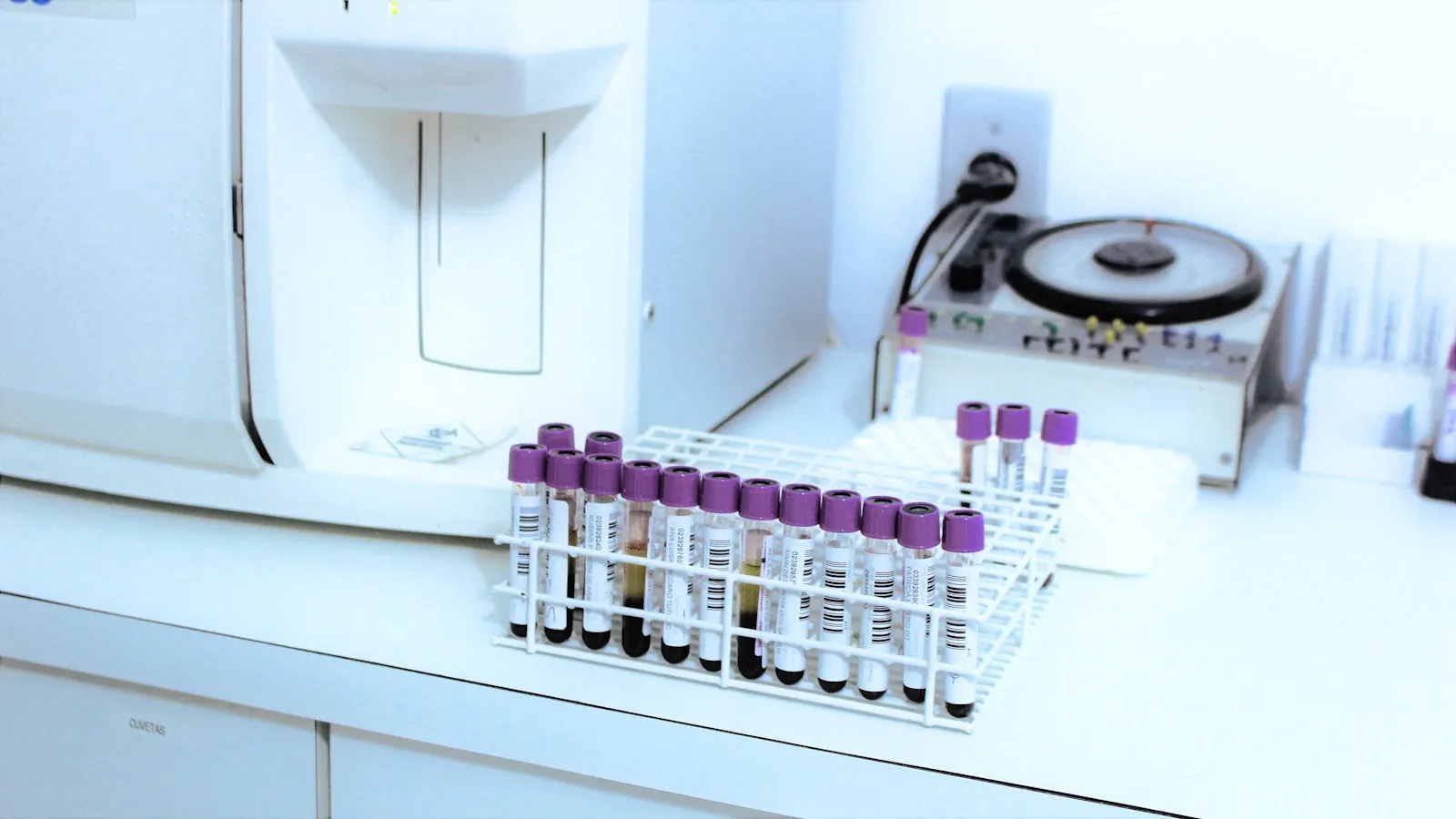
Because platelets swell in the anticoagulant EDTA. The longer your sample sits in the tube before it goes through the analyser, the larger they measure. A difference of a few hours between draw and analysis is enough to shift your MPV visibly.
That makes MPV more sensitive to logistics than to your health.
External quality assessment rounds show that the analytical performance of blood count parameters varies by parameter and by concentration, which counts for a sensitive measure like this one (PMID 31339849).
So if you draw at a location where the sample still has to travel, a mildly raised MPV is often exactly that: transport.
Does training affect your platelets?
Yes, briefly. Exertion raises the number of circulating platelets as they are released from your spleen, and heavy resistance training also affects their activation state (PMID 12783052). Those shifts are temporary and belong to normal physiology in trained people (PMID 10688281).
A result taken straight after a hard session is therefore not a good picture of your resting state.
Say you draw on a Monday morning after a hard Sunday, your platelets read 412 x10⁹/l and your MPV 9.2 femtolitres. The count sits just above the line, the size is normal, and that is exactly the picture you would expect from exertion.
Repeat in a calm week before hanging anything on it.
When should you discuss an abnormal MPV with your GP?
When your MPV is abnormal alongside an abnormal platelet count, and certainly with symptoms: bruising easily, nosebleeds that take a long time to stop, bleeding gums or small red dots on your skin. An isolated abnormal MPV with a normal count and no symptoms is usually not that.
Thuisarts describes an abnormal blood result as a reason to look further rather than a diagnosis, and the NHG guidelines approach platelet abnormalities through the same pattern thinking. RIVM points out that reference values differ per laboratory in blood testing, which matters extra for MPV because analysers use different measurement principles.
Take earlier results with you, and note how long it took for your sample to be analysed if you know it.
Where do you start?
Find your platelet count and put it next to your MPV, because that pair is the unit of information. If the pair is abnormal, repeat in a calm week without hard training in the preceding 24 hours. Ask whether the sample is analysed on site.
Our complete blood count test reports your platelet series with an assessment by a BIG-registered doctor.
How the values connect is covered in complete blood count explained and in the complete biomarker guide for athletes. For the other calculated index that is sensitive to the tube, read MCHC blood value. And for the earliest iron signals in your red series, RDW blood value.
References
- Ahmadizad S, El-Sayed MS. The effects of graded resistance exercise on platelet aggregation and activation. Medicine and Science in Sports and Exercise. 2003. PMID 12783052.
- Molina A, Alcaraz J, Guiñón L, et al. Study of the analytical performance at different concentrations of hematological parameters using Spanish EQAS data. Clinical Chemistry and Laboratory Medicine. 2019. PMID 31339849.
- Fallon KE, Fallon SK, Boston T. Sports haematology. Sports Medicine. 2000. PMID 10688281.
- RIVM. Blood testing and reference values. Accessed 2026.
- NHG. Dutch College of General Practitioners, laboratory diagnostics in primary care. Accessed 2026.
- Thuisarts. My blood result is abnormal. Accessed 2026.
Disclaimer
Every blood test result includes a professional assessment by a BIG-registered doctor. This article gives general information and is not a substitute for medical advice. For treatment decisions, discuss your results with your GP.
الكاتب
Enhanced Health
Dr. Naimi، طبيب مسجل في سجل BIG الهولندي، يشرف على المعايير الطبية لمحتوانا وتقييماتنا. اقرأ سياستنا الطبية
فحوصات ذات صلة
مقالات ذات صلة

Total protein blood test: what it says about your protein intake

Transferrin saturation: the iron value that counts when ferritin misleads