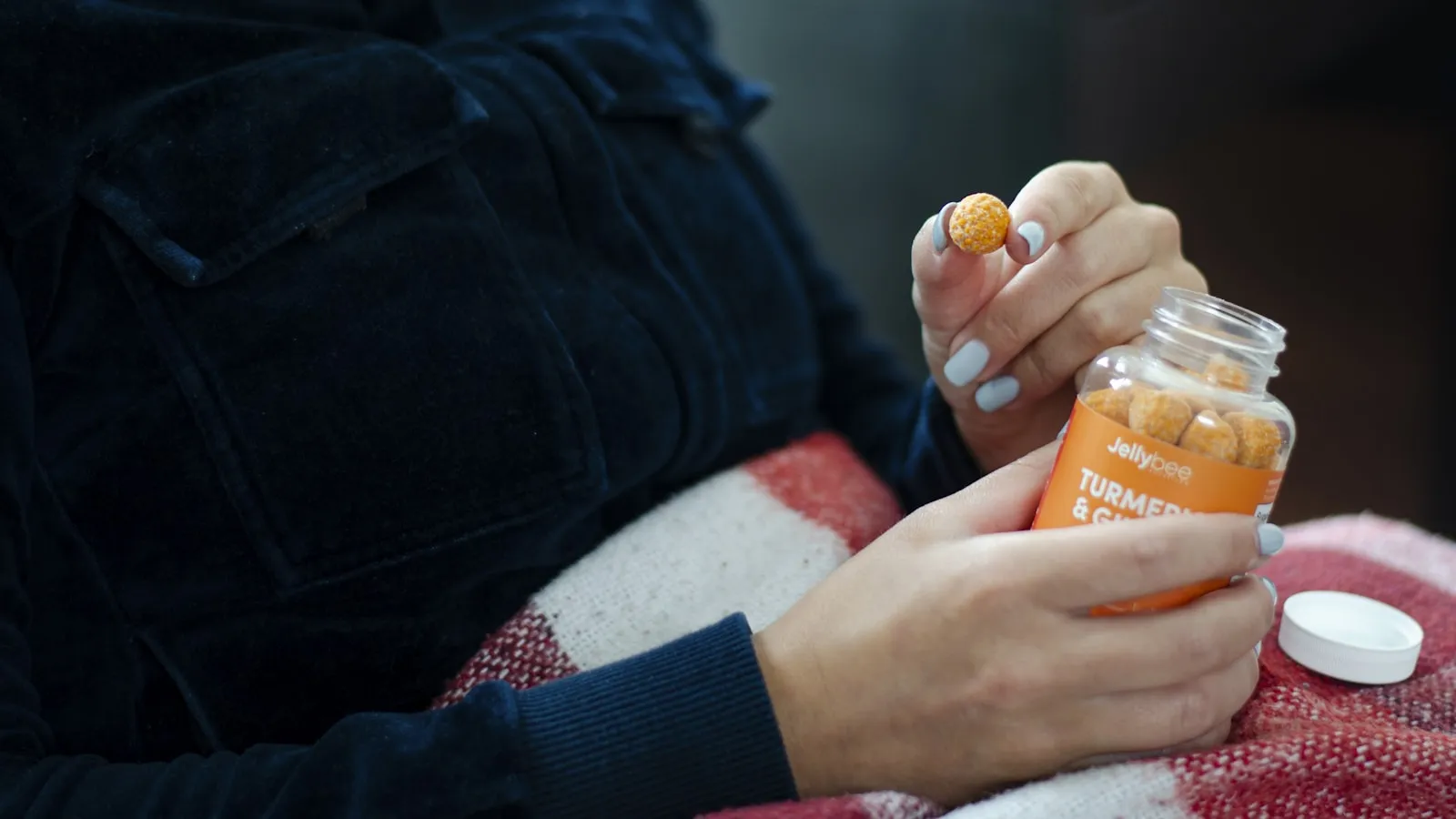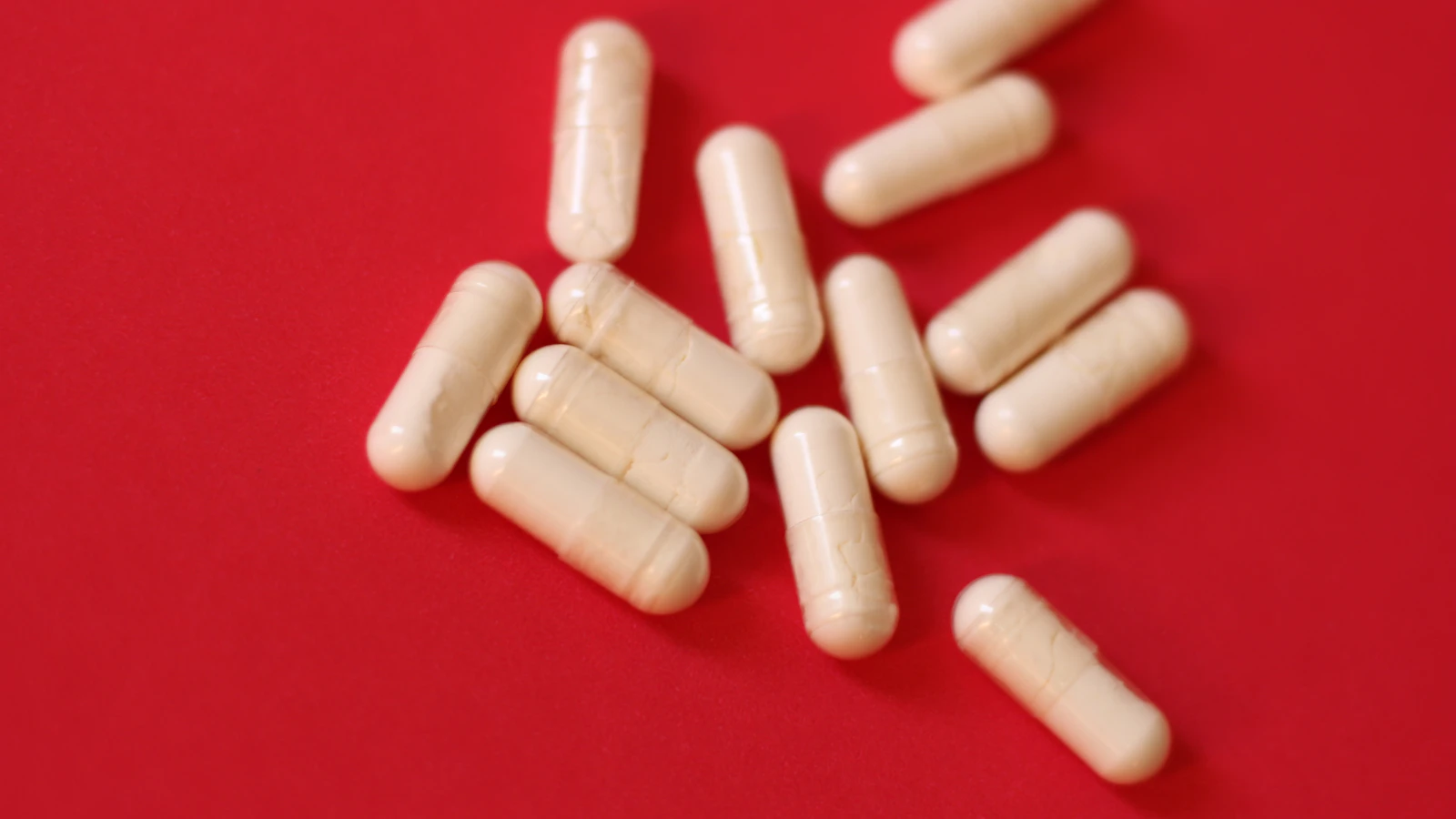
Iron bisglycinate is iron bound to two molecules of the amino acid glycine. It causes fewer stomach and gut complaints than ordinary iron salts. Better absorption has only been measured well in pregnant women (Fischer 2023, PMID 36728680).
The most important question is on no label: do you need iron at all? Your blood tells you that, not your tiredness. Almost every page about this form of iron sells one. I don't sell iron.
Below is what the trials measured and how much iron is really in your capsule. Also why taking it every other day can be smarter, and what to have measured first.
What exactly is iron bisglycinate?
Iron bisglycinate is a chelate: one iron atom held between two glycine molecules. You'll also see it sold as ferrous bisglycinate, iron glycinate or iron diglycinate. It's the same compound.
Every iron supplement is iron plus a carrier. The carrier decides how much iron each gram holds. And how your stomach reacts to it.
The idea behind the chelate is that less free iron sits in your stomach. That would irritate the stomach lining less. The trials below suggest that holds, although the absorption question is harder.
What is iron bisglycinate good for?
Iron bisglycinate does what iron does, whatever the carrier. The European Union allows claims in Regulation 432/2012. Iron contributes to the normal formation of red blood cells and haemoglobin. Also to normal oxygen transport and to the reduction of tiredness and fatigue.
Those claims apply to every form of iron. A tub of ferrous fumarate may say exactly the same.
What the claims don't say is that extra iron does anything once your stores are full. A full tank doesn't get fuller with more fuel. For athletes, that's the heart of the story.
Which is better, ferrous fumarate or iron bisglycinate?
For your stomach, bisglycinate looks better. For your blood values, it has only proved slightly better in pregnant women. In children the best analysis found no difference. For men and non-pregnant women there are too few trials.
Dutch GPs and midwives often prescribe ferrous fumarate. It is an iron salt, like ferrous sulphate. Bisglycinate is usually something you buy yourself at the chemist.
These are the trials that matter for this question.
| Trial | Who, how long | What was measured |
|---|---|---|
| Fischer 2023 (PMID 36728680) | Review of 17 randomised trials, 4 to 20 weeks of bisglycinate against other iron supplements | In pregnant women slightly higher haemoglobin and about a third of the stomach and gut complaints. Ferritin not significantly higher. No difference in children. |
| Milman 2014 (PMID 24152889) | 80 pregnant Danish women, 25 mg iron as bisglycinate against 50 mg as ferrous sulphate | Iron deficiency equally common in both groups. Fewer stomach and gut complaints with bisglycinate, at half the dose. |
Look at the second column. The evidence comes mostly from pregnant women. A runner or cyclist only partly resembles them.
So my conclusion is a sober one. If you choose bisglycinate, you mainly choose a calm stomach. It isn't a miracle form.
What is the difference between iron and iron bisglycinate?
Iron is the mineral itself. Bisglycinate is the form it takes in your supplement. The label usually states the amount of iron, not the weight of the whole compound. Check it in the nutrition table.
I worked out the three best-known forms from their molar mass. That shows how much iron each gram holds.
| Form of iron | Iron per gram | How you usually buy it |
|---|---|---|
| Iron bisglycinate | about 274 mg (27 percent) | capsule or liquid, often 14 to 28 mg iron per dose |
| Ferrous fumarate | about 329 mg (33 percent) | 200 mg tablet, which is about 66 mg iron |
| Ferrous sulphate (hydrated) | about 201 mg (20 percent) | tablet, the standard in many trials abroad |
The difference in dose is large. One ferrous fumarate tablet holds three times the iron of a 20 mg bisglycinate capsule. So always compare tubs on milligrams of iron.
Is iron glycinate better than ordinary iron?
It is easier to tolerate, and that is the best-supported advantage. In Fischer's meta-analysis, pregnant women on bisglycinate had about a third of the stomach and gut complaints. That matters, because many people stop taking iron when their gut acts up.
Higher absorption outside pregnancy has not been shown. That isn't proof it's worse. It simply hasn't been studied well yet.
How much iron bisglycinate per day?
The Dutch Voedingscentrum uses 11 mg of iron a day for adult men. For women up to menopause it is 16 mg. You get that from food. A supplement is a different thing from that daily need.
The Voedingscentrum is clear about it. Only take iron tablets after talking to a doctor. For ordinary supplements it advises not to go above the recommended amount.
A capsule with 20 mg of iron is already above a man's daily need. That's no problem if you're deficient. It is if you're not deficient and take it for months.
The dose for a proven deficiency is your GP's call. It depends on your ferritin, your haemoglobin and your symptoms.
Why every other day can be smarter
Your body slows iron absorption after a large dose of iron. It does that with the hormone hepcidin. A dose of 60 mg or more still raised hepcidin a day later. Absorption of the next dose fell by 35 to 45 percent (Moretti 2015, PMID 26289639).
The same researchers then tested alternate days against every day. Women with low iron stores took 60 mg of iron, every morning or every other day. On alternate days their bodies absorbed 21.8 percent, on consecutive days 16.3 percent (Stoffel 2017, PMID 29032957).
For the same number of tablets they absorbed more iron in total on alternate days. Two doses in one day gave no extra absorption.
One caveat belongs here. These trials used ferrous sulphate at high doses, in young women with low stores. Whether the effect is as large at 20 mg of bisglycinate has not been measured. The principle, hepcidin, applies to every form.
Iron bisglycinate when you train
Training raises hepcidin too. That happens in the 3 to 6 hours after a hard session. Take iron 2 hours after training and you absorb less (Peeling and McKay 2023, PMID 37421382).

The same researchers also describe a better moment. Absorption seems better within about half an hour of starting or finishing training. That's recent research, so treat it as a pointer.
Endurance athletes run low on iron more often than people who don't train. Why that happens is in iron deficiency in athletes. The earliest signal in your blood count is in the RDW value.
What are the side effects of iron bisglycinate?
The best-known side effects of iron are nausea, stomach pain, constipation and diarrhoea. With bisglycinate they occur less often than with iron salts. Your stool can turn dark. That's normal with iron.
The bigger risk isn't in your stomach. Iron you don't need is hard to get rid of. Your body has no good exit for excess iron.
With hereditary iron overload, haemochromatosis, the Voedingscentrum says you should definitely not take iron tablets. Many people don't know they have it. One more reason to measure first.
If you take medication, ask your pharmacist whether iron affects its absorption. That applies to thyroid medication and some antibiotics, for example.
Why you have your ferritin measured first
Your ferritin shows how full your iron stores are. Your haemoglobin shows whether you already have anaemia. Together they tell you whether iron bisglycinate makes sense. Tiredness alone doesn't.
Ferritin has one trap. It rises with inflammation and after hard exercise. A normal ferritin can then hide low stores.
That's why doctors sometimes also look at your transferrin saturation. How that works is in transferrin saturation for athletes.
Two runners, two tubs
Say two runners are both training for a half marathon. They both feel tired and both buy a tub of iron bisglycinate.
The first has a ferritin of 12 µg/l. In Milman's trial anything under 15 µg/l counted as iron deficiency. For her, iron can make the difference, together with her GP.
The second is at 80 µg/l, well above that line. His tiredness comes from somewhere else.
He takes iron he doesn't need for months. His real cause goes untouched. Think too little sleep, too little food or too much training.
The test beforehand costs you one tube of blood. The tub without a test costs you months.
If you only want to know your stores, the ferritin test measures exactly that one value. To also see your haemoglobin and red blood cells, look at the complete blood count. The values are explained under ferritin and haemoglobin.
My advice as a training partner
I'm not going to tell you whether to take iron. That's a question for you and your GP. But this: iron bisglycinate is a well-tolerated form, not a miracle form.
Start with your blood values, not with the tub. Compare supplements on milligrams of iron. And don't take iron for months on a hunch.
Why other minerals matter for athletes is in vitamins and minerals for athletes. The same question for magnesium is in magnesium bisglycinate.
If a value is off, discuss it with your GP and mention which supplements you take. Every blood test result includes a professional assessment by a BIG-registered doctor. Discuss your results with your GP before making treatment decisions.
Sources
- Fischer JAJ, Cherian AM, Bone JN, Karakochuk CD. The effects of oral ferrous bisglycinate supplementation on hemoglobin and ferritin concentrations in adults and children: a systematic review and meta-analysis of randomized controlled trials. Nutr Rev. 2023 (PMID 36728680).
- Milman N, Jønsson L, Dyre P, Pedersen PL, Larsen LG. Ferrous bisglycinate 25 mg iron is as effective as ferrous sulfate 50 mg iron in the prophylaxis of iron deficiency and anemia during pregnancy in a randomized trial. J Perinat Med. 2014 (PMID 24152889).
- Moretti D, Goede JS, Zeder C, et al. Oral iron supplements increase hepcidin and decrease iron absorption from daily or twice-daily doses in iron-depleted young women. Blood. 2015 (PMID 26289639).
- Stoffel NU, Cercamondi CI, Brittenham G, et al. Iron absorption from oral iron supplements given on consecutive versus alternate days and as single morning doses versus twice-daily split dosing in iron-depleted women: two open-label, randomised controlled trials. Lancet Haematol. 2017 (PMID 29032957).
- Peeling P, McKay A. Iron regulation and absorption in athletes: contemporary thinking and recommendations. Curr Opin Clin Nutr Metab Care. 2023 (PMID 37421382).
- Regulation (EU) No 432/2012, list of permitted health claims, iron. 2012.
- Voedingscentrum. IJzer (iron), with the recommended intakes and the advice on iron tablets. voedingscentrum.nl.
الكاتب
Enhanced Health
Dr. Naimi، طبيب مسجل في سجل BIG الهولندي، يشرف على المعايير الطبية لمحتوانا وتقييماتنا. اقرأ سياستنا الطبية
فحوصات ذات صلة
مقالات ذات صلة
Magnesium bisglycinate: what it does, the dose, your blood

Zinc and testosterone: what a deficiency does to your hormones