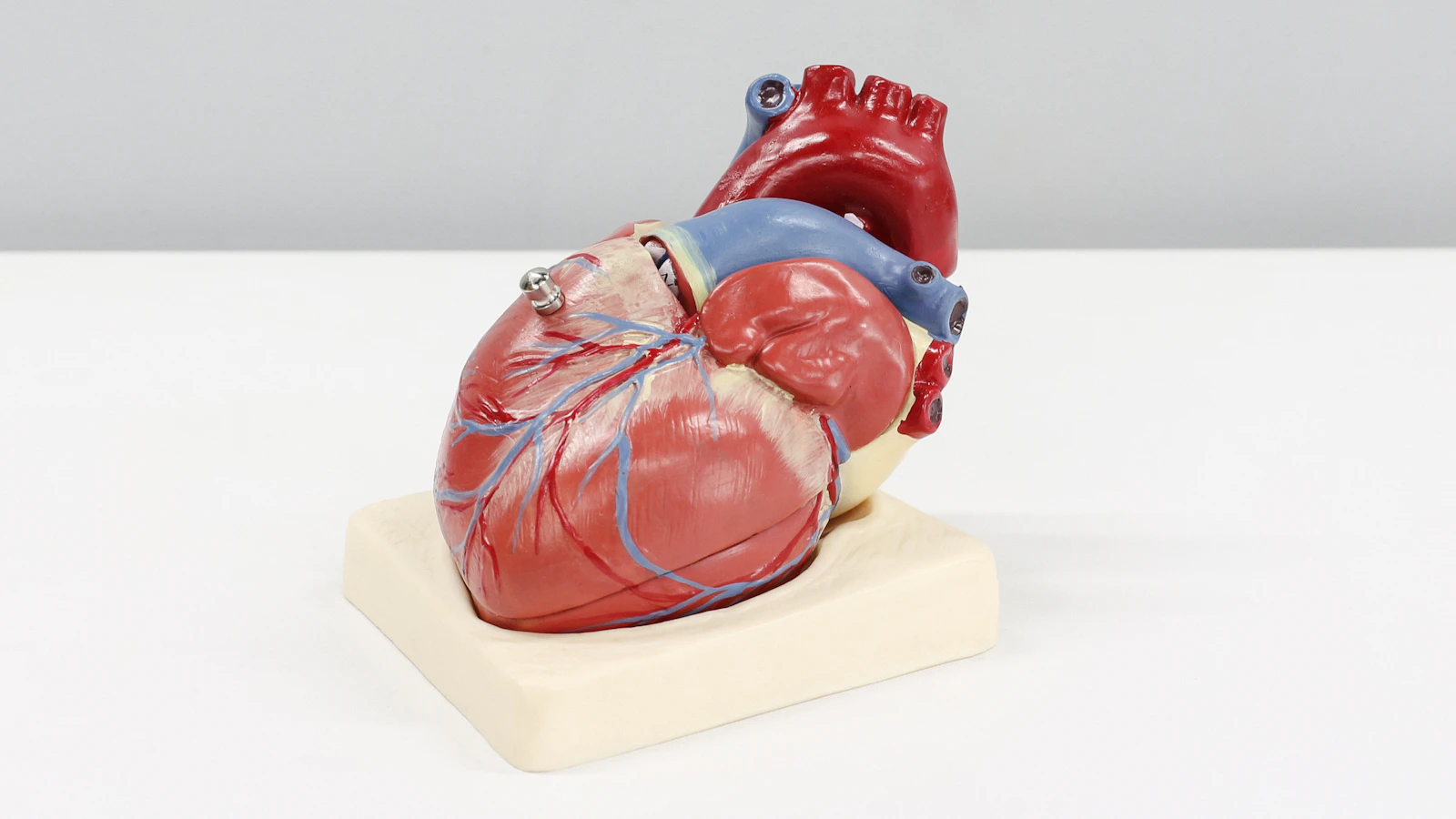
You get your cholesterol drawn, your LDL is fine, and you assume your heart risk is in order. That can be a skewed picture. Because LDL measures how much cholesterol you have, not how many particles it sits in, and it is that count that predicts your risk. That count is called ApoB.
I think ApoB is one of the most underrated blood values in mainstream care. Two people with the same LDL can carry very different risk, and without ApoB you do not see that difference.
What exactly is ApoB?
ApoB is a protein that sits on every harmful fat particle in your blood, with exactly one molecule per particle. That makes your ApoB value effectively a count of your atherogenic particles, the ones that can lodge in your artery wall. Cholesterol only enters your artery wall within these particles (Sniderman, 2019).
Put simply: ApoB counts the messengers, LDL weighs the cargo. And the number of messengers predicts the risk better.
ApoB versus LDL: what is the difference?
ApoB catches risk that LDL cholesterol sometimes misses, especially in people with many small particles. Research shows ApoB is the strongest predictor of a heart attack, independent of cholesterol content (Marston, 2022). The underlying biology is firmly established: LDL particles cause atherosclerosis in a dose-dependent way (Ference, 2017).
| Aspect | LDL cholesterol | ApoB |
|---|---|---|
| What it measures | Amount of cholesterol in LDL | Number of harmful particles |
| Does it miss anything? | Misses many small particles | Counts every atherogenic particle |
| Predictive value | Good, but coarser | Sharper, even with normal LDL |
| On a standard draw? | Almost always | Rarely, often an extra request |
When is ApoB extra useful?
ApoB adds the most when your standard cholesterol looks normal but you still suspect risk. These situations make the extra measurement worthwhile: a normal LDL with high triglycerides, insulin resistance or overweight, a family history of cardiovascular disease, or when you are optimising your lifestyle and want to track progress accurately.
The Dutch Heart Foundation (Hartstichting) points out that heart risk is always a sum of several factors. ApoB makes the particle part of that sum visible. If you wish, combine it with LDL cholesterol, triglycerides and Lp(a) for a fuller picture.
What is a good ApoB value?
Target values for ApoB depend on your overall risk profile, which is why there is no single number that fits everyone. Roughly: the higher your risk, the lower your ApoB ideally sits. Someone without risk factors has more room than someone with a family history of early cardiovascular disease. The Dutch Heart Foundation (Hartstichting) stresses that you should never read a fat value in isolation from your blood pressure, your smoking and your activity pattern. ApoB sharpens the cholesterol part of that picture, it does not replace it.
So you do not decide what to do with your value yourself from a table, but together with your GP who knows your whole profile.
What do you do with a high ApoB?
A raised ApoB is no reason to panic, but it is a signal to look hard at your lifestyle and your risk factors. Cutting saturated fat, more fibre and unsaturated fats, weight loss if you carry excess weight, and more movement can favourably influence your particle count. With a clearly elevated risk, your GP can consider medication. The Dutch College of General Practitioners (NHG) works with a total cardiovascular risk estimate in which cholesterol is one factor, alongside blood pressure, age and lifestyle. What matters is that you repeat a high value and follow the trend, because one measurement can be skewed.
Combine ApoB ideally with your triglycerides and your HDL: that combination says more about your metabolic health than ApoB alone.
How do you get ApoB tested?
You do not strictly need to fast for ApoB, but testing fasted makes comparison easier. It is part of a targeted lipid panel and is a simple addition to your blood test. Our lipids blood test measures your ApoB alongside your other fat values.
See also the overview measuring metabolic health, the omega-3 index and the guide the 360 health panel.
My advice: ask for ApoB at your next draw, certainly if heart disease runs in your family. You discuss an abnormal value with your GP, who can guide you further.
References
- Hartstichting (Dutch Heart Foundation). Cholesterol and cardiovascular disease. Accessed 2026.
- Nederlands Huisartsen Genootschap (NHG, Dutch College of General Practitioners). Guideline on cardiovascular risk management. Accessed 2026.
- Sniderman AD, Thanassoulis G, Glavinovic T, et al. Apolipoprotein B Particles and Cardiovascular Disease: A Narrative Review. JAMA Cardiology. 2019. PMID: 31642874.
- Ference BA, Ginsberg HN, Graham I, et al. Low-density lipoproteins cause atherosclerotic cardiovascular disease. 1. Evidence from genetic, epidemiologic, and clinical studies. European Heart Journal. 2017. PMID: 28444290.
- Marston NA, Giugliano RP, Melloni GEM, et al. Association of Apolipoprotein B-Containing Lipoproteins and Risk of Myocardial Infarction. JAMA Cardiology. 2022. PMID: 34773460.
Disclaimer
Every blood test result includes a professional assessment by a BIG-registered doctor. This article gives general information and is not a substitute for medical advice. A blood test is a tool to walk into the conversation with your GP better informed, not a diagnosis in itself. For treatment decisions, discuss your results with your GP.
الكاتب
Enhanced Health
Dr. Naimi، طبيب مسجل في سجل BIG الهولندي، يشرف على المعايير الطبية لمحتوانا وتقييماتنا. اقرأ سياستنا الطبية
فحوصات ذات صلة
مقالات ذات صلة
MPV blood value: what the size of your platelets says

Total protein blood test: what it says about your protein intake