Sarcopenia literally means "loss of flesh" and describes the combined decline of muscle mass and muscle strength. The process does not start at 70 but around 30, at roughly three to eight percent muscle loss per decade. Strength disappears faster than mass, and that is the part that surprises most people.
The way this topic gets covered annoys me. Search for it and you land among nursing homes and walking frames, while the decisions that matter are taken twenty to thirty years earlier.
That is exactly where this piece sits.
What does sarcopenia actually mean?
Sarcopenia is a condition where muscle strength, muscle mass and physical function decline together. In the European consensus, strength comes first, not mass. So you can carry decent muscle mass and still show early signs, because strength and neural drive fade before volume does.
The revised European consensus by Cruz-Jentoft and colleagues deliberately reversed that order (PMID 30312372). Strength first, mass as confirmation.
For an athlete that is good news. Strength is measurable, and strength is trainable.
When does muscle loss really begin?
From around 30 you slowly lose muscle mass, and after 50 the pace picks up. In people who keep lifting and eat enough protein, the slope is far flatter. In people who stop training after an injury or a busy stretch, the loss can show up within months.
What strikes me most in practice: it is rarely age itself. It is the training gap.
Two weeks ill on the sofa costs a 40-year-old more than a whole year of getting older.
Which blood values move when you lose muscle?
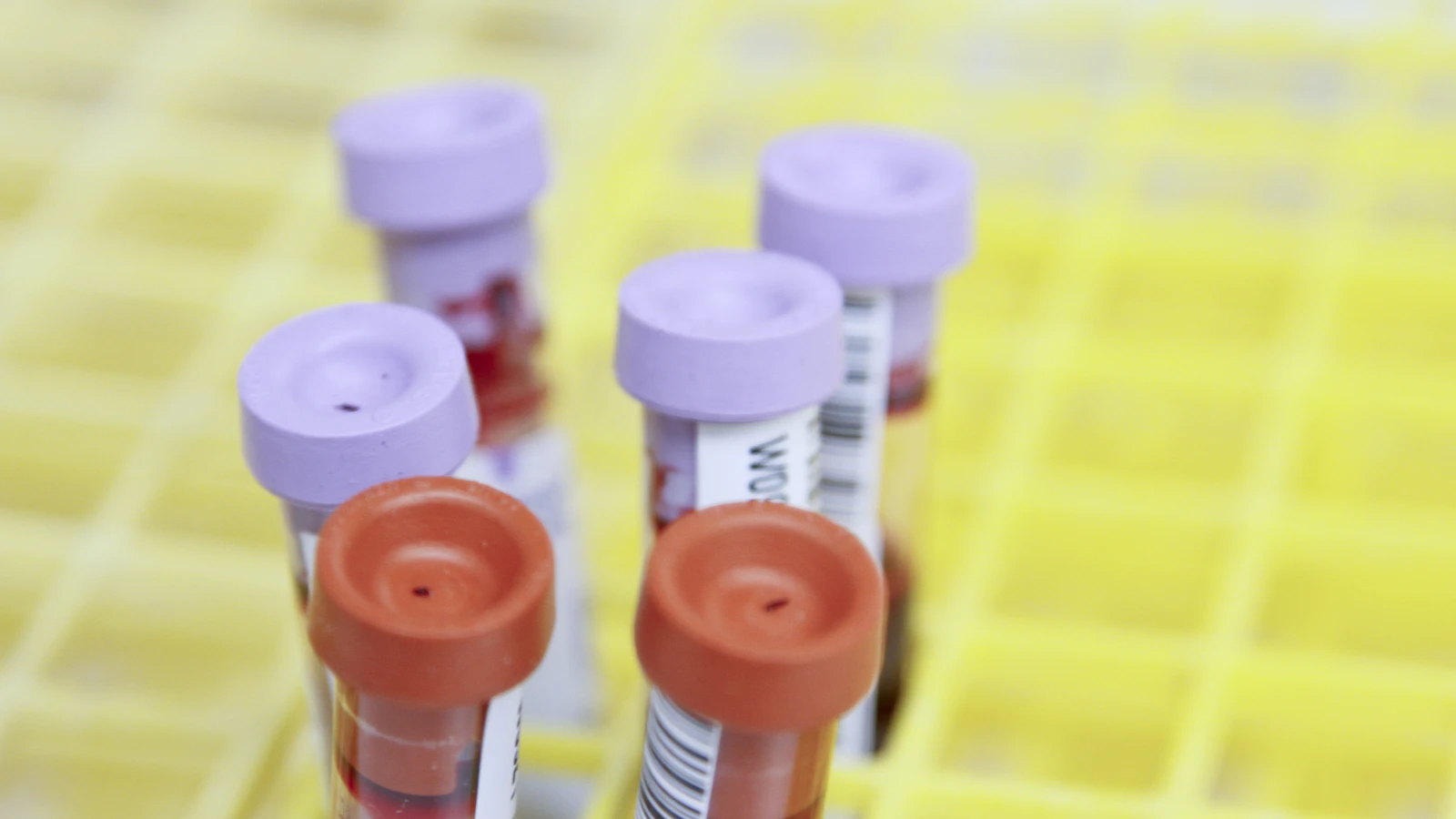
No blood value measures muscle mass directly, but several markers shift along with the causes underneath. Testosterone, vitamin D and inflammation are the three that most often explain something. A low vitamin D and a raised hs-CRP show up together strikingly often when progress stalls.
The table below is how I read a result like that myself.
| Marker | What it may mean when muscle is being lost | What you can do |
|---|---|---|
| Total and free testosterone | Low values often go together with less muscle building and slower recovery | Sleep, energy balance and training load first, then look further with your doctor |
| Vitamin D (25-OH) | Has been linked to muscle strength and fall risk | Food, daylight, and if the result is low, discuss it with your GP |
| Hs-CRP | Chronically raised may go together with muscle breakdown | Find the source: poor sleep, alcohol, visceral fat, or a smouldering infection |
| HbA1c | Insulin resistance may make protein building in the muscle harder | Resistance training and carbohydrate timing |
| Albumin | Says something about protein status more broadly | Correct a structurally low protein intake |
Note the nuance: these markers explain, they do not diagnose.
How much protein do you need to slow muscle loss?
The meta-analysis by Morton and colleagues on protein supplementation and resistance training shows that extra protein increases gains in fat free mass, but that the effect flattens above roughly 1.62 grams of protein per kilogram of body weight per day (PMID 28698222). Stacking more protein above that adds little.
The Voedingscentrum, the Dutch national nutrition centre, puts the baseline adult requirement at around 0.8 grams per kilogram. For someone lifting seriously the useful range is higher, somewhere between 1.4 and 1.7 grams.
The maths for an 80 kilo man: roughly 112 to 136 grams a day. Not 250.
The full story, including timing and spread across the day, sits in how much protein per day for muscle growth.
How do you measure strength without a lab?
Grip strength is the simplest proxy for total body strength that exists, and it takes thirty seconds with a hand dynamometer. Across large cohorts, low grip strength is associated with worse long term outcomes (PMID 25982160). It is not a diagnosis, but it is an honest signal.
Say two men of 46, both 82 kilos. One squeezes 48 kilograms, the other 31 kilograms. That gap says more about their next twenty years than their calendar age does.
How to measure it yourself, and what the Dutch reference values are, sits in grip strength as a longevity marker.
What do you actually do with this?
Keep lifting heavy, eat enough protein, and measure your strength a few times a year instead of only your weight. If your strength drops while your training stays the same, that is the moment to look at the underlying markers rather than to train harder.
To see testosterone, vitamin D, hs-CRP and HbA1c together, the 360 Health blood test covers that combination. The wider longevity context sits in healthy ageing as an athlete, and the hormonal side in testosterone and ageing.
I do not watch the scale for this, I watch my working sets. When my fifth rep starts slipping while sleep and food are fine, that is my cue to measure.
Put a dynamometer in your basket tonight. It is a smaller step than a blood test, and it tells you when the blood test becomes worthwhile.
References
- Cruz-Jentoft AJ et al. Sarcopenia: revised European consensus on definition and diagnosis. Age and Ageing, 2019. PMID 30312372
- Morton RW et al. A systematic review, meta-analysis and meta-regression of the effect of protein supplementation on resistance training-induced gains in muscle mass and strength in healthy adults. British Journal of Sports Medicine, 2018. PMID 28698222
- Leong DP et al. Prognostic value of grip strength: findings from the Prospective Urban Rural Epidemiology (PURE) study. The Lancet, 2015. PMID 25982160
- Voedingscentrum, protein and daily requirement.
Every blood test result includes a professional assessment from a BIG-registered doctor. For treatment decisions, discuss your results with your GP.
Autor
Enhanced Health
Powiązane badania
Powiązane artykuły
Grip strength: the longevity marker you can measure for free

Bone density in athletes: the blood values behind strong bones