A normal resting heart rate sits between 60 and 100 beats per minute, but in trained endurance athletes 40 to 60 is entirely ordinary. That difference is not a detail. It is why most articles on this subject do not apply to you, exactly as with your CK value.
Your heart rate is also free.
Of all the recovery signals you can track, this is the only one you get every morning without a draw, a subscription or a purchase. That does not make it the best signal, but it does make it the most practical. And it is consistently misread.
What is a normal resting heart rate?
For adults, 60 to 100 beats per minute at rest. The Dutch Hartstichting uses the same band. In well-trained endurance athletes it often drops to 40 to 60, and in elite endurance athletes values under 40 have been described. That is an adaptation, not an abnormality.
| Group | Resting heart rate | What it usually means |
|---|---|---|
| Adult, not training | 60 to 100 | The range you see everywhere |
| Recreational athlete | 55 to 75 | Normal training adaptation |
| Trained endurance athlete | 40 to 60 | Larger stroke volume, heart works more efficiently |
| Endurance athlete with symptoms at a low rate | Under 40 with dizziness or fainting | Discuss with your GP |
| Anyone, sudden rise of 5 to 10 beats | Above your own normal | Illness, sleep loss, alcohol or stacking load |
That last row is the most useful. Your absolute number says less than your deviation from your own normal.
Why do athletes have a low resting heart rate?
Because their heart moves more blood per beat. Endurance training increases stroke volume, so your heart needs fewer beats for the same amount of blood per minute. On top of that your nervous system shifts towards more parasympathetic, restorative activity.
Put simply: your heart gets more efficient and your brake gets stronger.
That is also why your resting heart rate needs months to change. It is a slow marker. Anyone expecting a lower resting heart rate after two weeks of running will be disappointed.
What does your resting heart rate say about recovery?
Something, but less than your tracker claims. A systematic review of autonomic heart rate regulation concluded that heart rate measures move with your training status and are usable for tracking adaptation (PMID 26888648). Usable is not the same as decisive.
There is a surprise in here almost nobody expects.
Research in overloaded endurance athletes found they could no longer reach their maximal heart rate (PMID 23195630). You would think an overtrained body runs a higher heart. In reality the peak is blunted: you cannot get there anymore.
Picture two people who both show a resting heart rate of 52. One has always been there, the other came down from 44. Same number, and only the second has a problem.
Can you steer your training by heart rate?
Partly. Two meta-analyses examined training guided by heart rate variability instead of a fixed plan. Both found a benefit, but a modest one and not for everyone (PMID 34639599, PMID 33143175). It is a refinement, not a breakthrough.
My honest line: use it as a safety net, not a steering wheel.
If your tracker shows a raised resting heart rate three mornings running while you sleep badly, that is a reason to move your heavy session. One odd morning after a glass of wine is not. Alcohol pushes your night-time heart rate up, and that has nothing to do with your training.
What a tracker does and does not see sits in sleep tracker versus blood values.
When is a low heart rate too low?
When symptoms come with it. A resting heart rate of 45 without symptoms in someone who cycles four times a week is an adaptation. That same 45 with dizziness, breathlessness or fainting is a reason to call your GP, however fit you are.
Fitness is not a free pass.
The distinction sits in the symptoms, not the number. The same goes for a heart rate that stays structurally above your own normal with no explanation. That deserves a conversation too.
What do you measure in your blood alongside it?
A raised resting heart rate with no training explanation sometimes has a cause you can see in your blood. Iron deficiency and an overactive thyroid can both push your heart rate up, and both are measurable.
Ferritin shows your iron stores, and endurance athletes in particular are at risk. More on that in iron deficiency in athletes.
Alongside that, cortisol and hs-CRP move with your total load. They do not tell you what your heart rate is doing, but they fill in the picture your heart rate alone cannot give. The full ranking sits in faster recovery after training.
How do you measure it properly?
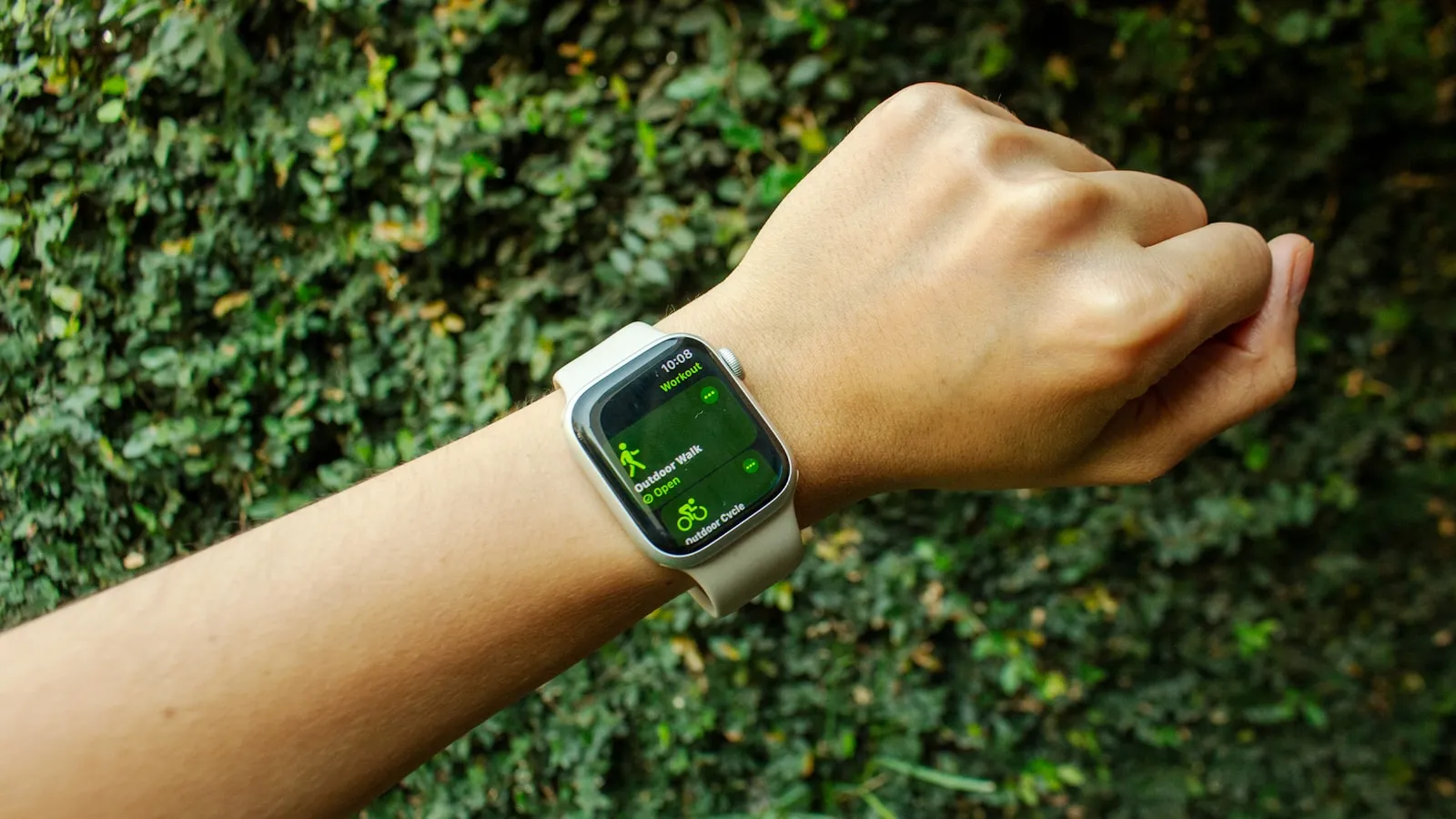
Straight after waking, before you get up, at the same time every day. A tracker does this automatically during your sleep, which is more reliable than counting by hand. What you measure with matters less than measuring consistently.
Collect two weeks of data before drawing conclusions. Without your own normal every number is meaningless, and that is exactly why the 60 to 100 from the leaflet does so little for you.
If you want your heart rate next to your recovery markers, Whoop gives you that combination in one draw. Book it in a quiet week, not the day after your hardest session.
Every blood test result includes a professional assessment from a BIG-registered doctor. For treatment decisions, discuss your results with your GP.
References
- Bellenger CR, et al. Monitoring athletic training status through autonomic heart rate regulation: a systematic review and meta-analysis. Sports Medicine, 2016. PMID 26888648.
- Manresa-Rocamora A, et al. Heart rate variability-guided training for enhancing cardiac-vagal modulation, aerobic fitness, and endurance performance: a methodological systematic review with meta-analysis. International Journal of Environmental Research and Public Health, 2021. PMID 34639599.
- Granero-Gallegos A, et al. HRV-based training for improving VO2max in endurance athletes: a systematic review with meta-analysis. International Journal of Environmental Research and Public Health, 2020. PMID 33143175.
- Le Meur Y, et al. A multidisciplinary approach to overreaching detection in endurance trained athletes. Journal of Applied Physiology, 2013. PMID 23195630.
- Hartstichting. Resting heart rate.
الكاتب