Post-viral syndrome is lasting fatigue and reduced tolerance for effort that stays behind after the infection itself has cleared. In an Australian cohort of 253 people, around 11 percent still met the criteria for a chronic fatigue syndrome at six months (PMID 16950834). A minority, then, but not a small one.
And it barely mattered which virus they had caught.
That is the most underrated finding in the study. I watch athletes spend months hunting for the exact name of their virus, when that name turns out not to predict their recovery.
What is post-viral syndrome exactly?
It is an umbrella term for complaints that persist after the acute infection has burned out. Think fatigue that will not train away, slower recovery after effort, trouble concentrating, and sometimes muscle and joint pain. No single blood value demonstrates it. The assessment rests on the course over time.
That last part is the hard bit to accept.
You are clinically better. The fever is gone, your throat is fine, your GP finds nothing remarkable. But an easy forty-minute run now costs you two days instead of an evening.
Which viruses can cause it?
In principle any virus that makes you properly ill, and some bacteria too. The Dubbo study followed people after three completely different pathogens: Epstein-Barr virus, the bacterium behind Q fever, and Ross River virus. The researchers found a strikingly similar picture after all three (PMID 16950834).
This is the point most articles walk straight past.
What did predict the course was the severity of the acute illness. Those hit hardest in the first weeks carried the highest risk of prolonged complaints. Demographic, psychological and microbiological factors did not predict it.
| Pathogen | Acute illness | Picture at six months |
|---|---|---|
| Epstein-Barr virus | glandular fever | comparable syndrome |
| Coxiella burnetii | Q fever | comparable syndrome |
| Ross River virus | epidemic polyarthritis | comparable syndrome |
| All three combined | 253 participants | around 11 percent |
The Dutch public health institute RIVM describes fatigue after glandular fever lasting two to three months. So that is not an exception, that is the ordinary course.
How long is still normal?
Roughly: the first two to three months fall inside a normal recovery, even when you feel wretched. If it runs on past that without the trend improving, that is a reason to look further. The direction of the curve says more than its height on any single day.
An example makes that concrete.
Imagine a runner of 34 with a usual resting heart rate of 52, who gets glandular fever in March. By May he runs 5 kilometres again, slowly, with a resting rate 8 beats above that. By July that resting rate is back to 54 and the distance is 10 kilometres. That is a recovering line, however slow it feels.
The same man still stuck at 5 kilometres in July with a resting rate of 60 has a flat line. That is something else. How to read that line is in resting heart rate as recovery data.
What can you measure?
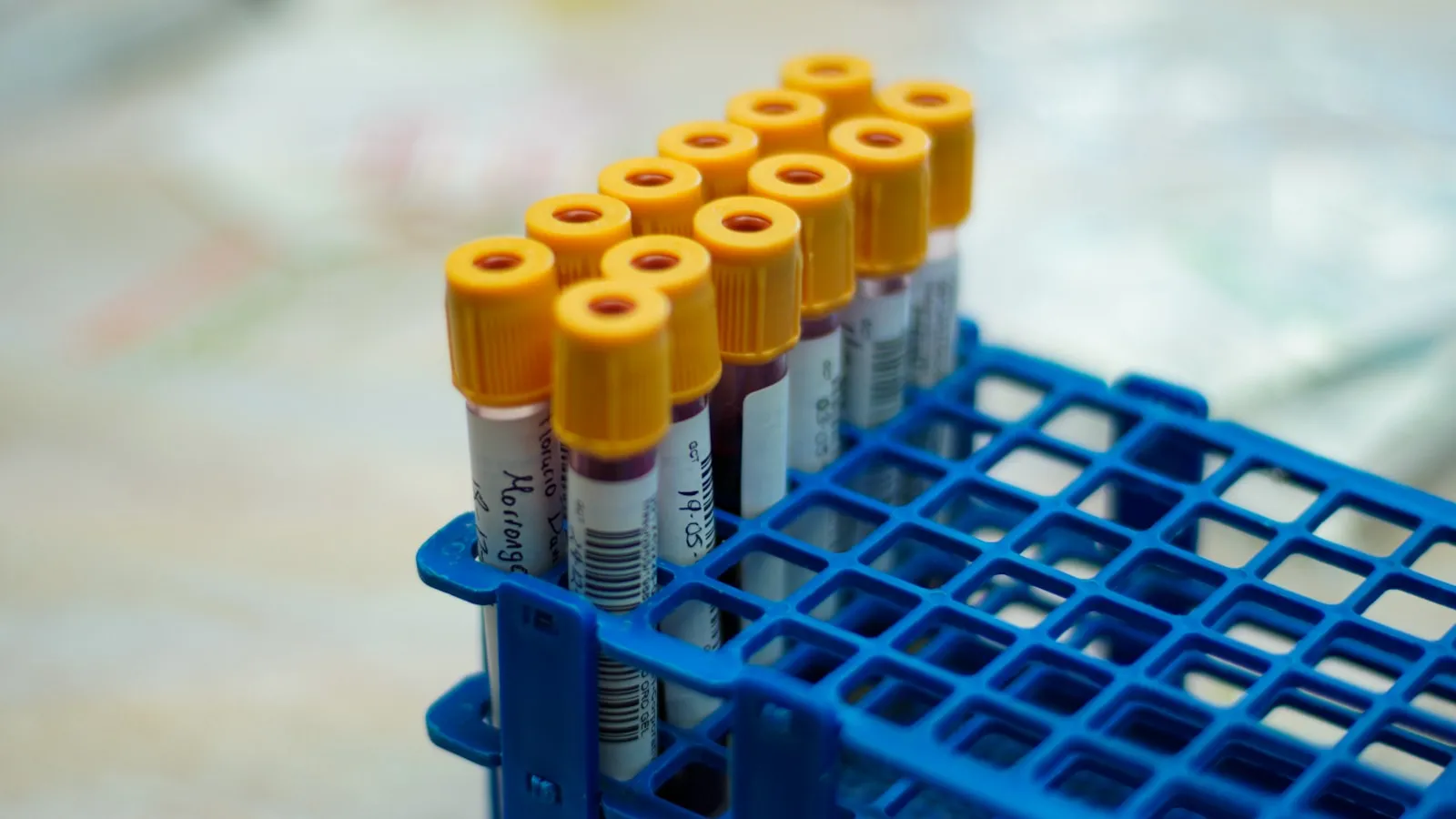
Blood testing does not demonstrate post-viral syndrome. What it can do is make the known mimics visible: iron deficiency, an underactive thyroid, a vitamin B12 shortfall, ongoing inflammatory activity, or disturbed blood sugar. Those are different explanations for the same complaint.
That order matters.
Ruling out what is treatable comes before attaching a label. Values that often come into view here are ferritin, TSH, vitamin B12 and hs-CRP. What a raised inflammatory marker means alongside fatigue is in hs-CRP and fatigue.
If you want that group looked at in one go, the panel sits in the 360 health panel.
When is it no longer post-viral syndrome?
If complaints are unchanged at six months and a clear worsening follows exertion, the conversation shifts. That pattern is called post-exertional malaise and it asks for a different approach than training through. Among adolescents after glandular fever, 13 percent met the criteria at six months, 7 percent at one year and 4 percent at two years (PMID 19564299).
That falling series is the most important number in this article.
Most people do come out of it, even when it takes long. Anyone who stays stuck belongs in front of a doctor, not a training plan. What separates post-exertional malaise from ordinary training fatigue is in post-exertional malaise, and the full overview of fatigue testing in blood test for fatigue.
My advice: track your resting heart rate, sleep duration and longest session for three months, and judge the line rather than the day. If that line stays flat, take it to your GP.
Every blood test result includes a professional assessment from a BIG-registered doctor. For treatment decisions, discuss your results with your GP.
References
- Hickie I, Davenport T, Wakefield D, et al. Post-infective and chronic fatigue syndromes precipitated by viral and non-viral pathogens: prospective cohort study. BMJ, 2006;333(7568):575. PMID 16950834.
- Katz BZ, Shiraishi Y, Mears CJ, Binns HJ, Taylor R. Chronic fatigue syndrome after infectious mononucleosis in adolescents. Pediatrics, 2009;124(1):189-93. PMID 19564299.
- Institute of Medicine. Beyond myalgic encephalomyelitis/chronic fatigue syndrome: redefining an illness. National Academies Press, 2015. PMID 25695122.
- RIVM. Glandular fever (ziekte van Pfeiffer), questions and answers.
الكاتب
Enhanced Health
Dr. Naimi، طبيب مسجل في سجل BIG الهولندي، يشرف على المعايير الطبية لمحتوانا وتقييماتنا. اقرأ سياستنا الطبية