If you stay tired while your training, nutrition and sleep are sound, a slightly raised hs-CRP can be a clue. In a study of over 5,000 young adults, a persistently high CRP was linked to more fatigue (Cho, 2009). It is not a diagnosis, but it is a signal that your recovery is being slowed in the background.
I notice athletes often wave away a raised inflammation value as a measurement error. Sometimes that is right, because a hard session skews your CRP a lot. But a value that stays high at rest is one I do take seriously.
In this piece you will read what hs-CRP is, why it links to tiredness and how to measure it cleanly as an athlete.
What is hs-CRP and why does it matter for fatigue?
hs-CRP stands for high-sensitivity C-reactive protein, a protein your liver makes during inflammation. The sensitive version measures low values too, so you see the low-grade inflammation a standard CRP misses. With persistent fatigue, that is exactly the value you want to know.
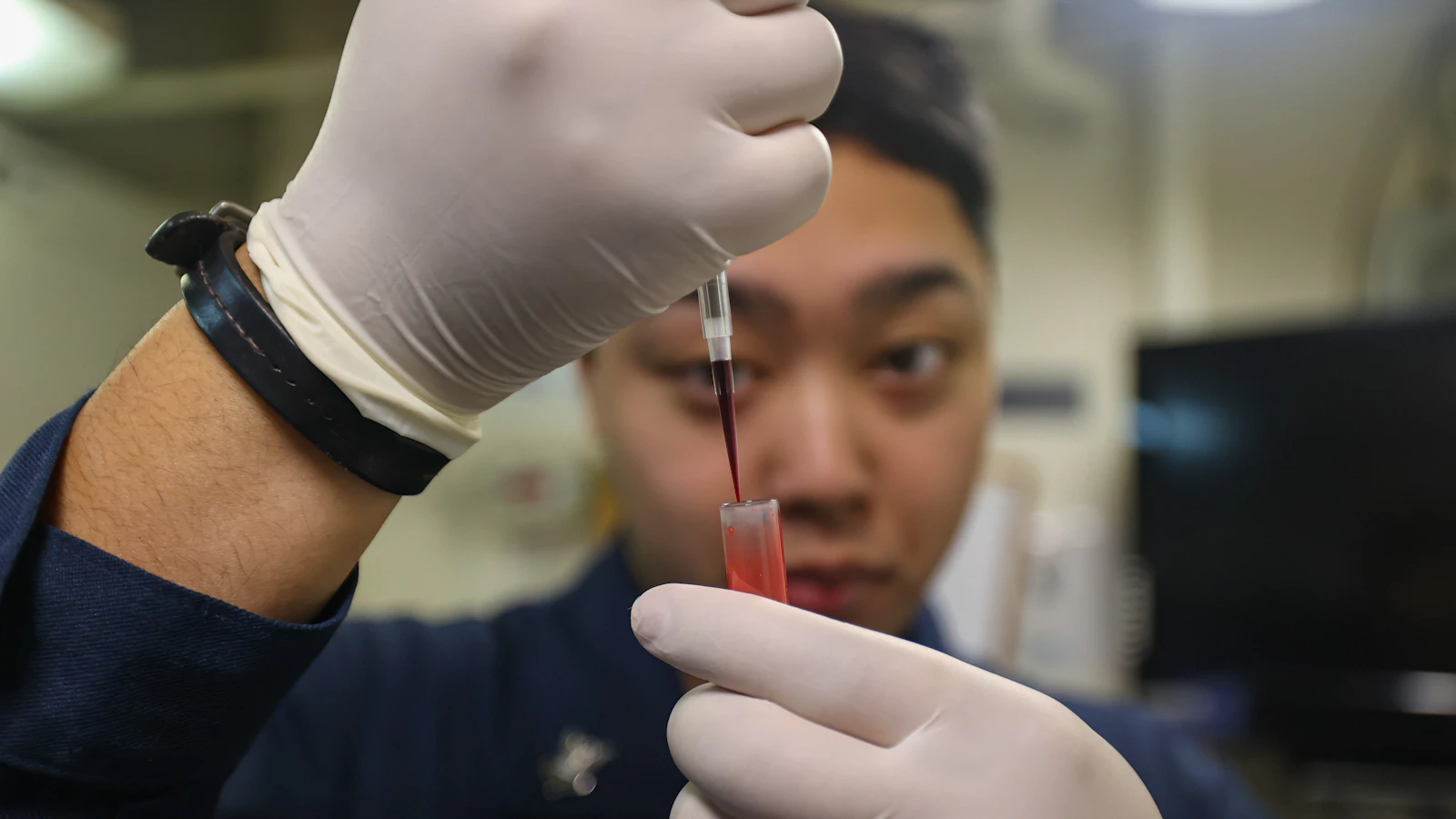
A standard CRP only jumps up with a clear infection or inflammation. The high-sensitivity version picks up the range below that.
Research in a large population sample shows that inflammatory markers such as hs-CRP are raised in people with unexplained fatigue (Raison, 2009). That makes the value relevant when you cannot link your tiredness to your lifestyle.
So do not see hs-CRP as an on-off switch, but as a gauge on a scale.
Can a raised hs-CRP explain your fatigue?
A raised hs-CRP can be one of the puzzle pieces of your fatigue, but rarely the whole story. Low-grade inflammation links to lower energy and slower recovery, though sleep, nutrition and training load always play a role. You read the value next to your other complaints.
The link is real, but it is not a cause and effect you can pin down on a single measurement. A high value calls for context, not panic.
In the study mentioned above, it was mainly a persistently raised CRP that linked to fatigue, not a temporary spike (Cho, 2009).
For you as an athlete that is an important difference. A one-off outlier says little, a pattern says more.
Why your CRP always rises after a hard session
A hard session damages muscle fibres, and your body clears that damage with an inflammatory response. That is why your CRP rises temporarily, sometimes sharply. If you measure right after a hard session, you read that muscle damage and not your baseline.
A systematic review shows that long, intense effort in particular drives your inflammatory markers up (Cerqueira, 2020). That is a normal response, not a disease.
Interestingly, the rise is not equally strong in everyone. Athletes with a lot of muscle damage, measured by a high CK, also show a higher CRP (Kyrolainen, 2019).
If you want to really understand your recovery markers, read how CK, cortisol and CRP together show overload in recognising overtraining through your blood values.
The lesson is simple: timing decides whether your measurement is worth anything.
How high is a raised hs-CRP?
For cardiovascular risk, three rough categories are often used: low below 1, average between 1 and 3, and high above 3 mg/L. That split is meant as a rough signpost, not a hard border. A value above 10 usually points to acute inflammation or an infection.
| hs-CRP (mg/L) | What it roughly indicates |
|---|---|
| Below 1 | Low risk profile |
| 1 to 3 | Average, possible low-grade inflammation |
| 3 to 10 | Raised, calls for context |
| Above 10 | Often points to acute inflammation or infection |
Which upper limit applies to you is set by the laboratory that ran your sample, not by this article. Two athletes with the same number can come back with different verdicts. Go by the range printed next to your own result.
These numbers are guidelines, not laws. An athlete who just finished a hard week can sit temporarily higher without anything being wrong.
So always read your result next to your training load of the days before.
What raises your hs-CRP besides training?
Besides training, sleep loss, excess weight, smoking, a lot of alcohol and a lingering infection also push your hs-CRP up. These factors feed a mild, chronic inflammation that slowly undermines your energy. Often they are responsible together, not a single one.
For an athlete, sleep and recovery are the most underrated levers. A few short nights sometimes show up in your values.
Your belly fat plays a role too, because fat tissue produces inflammatory substances itself. That explains why hs-CRP and metabolic health often move together.
If something changes in your lifestyle, give your body time before you measure again.
How do you measure hs-CRP cleanly as an athlete?
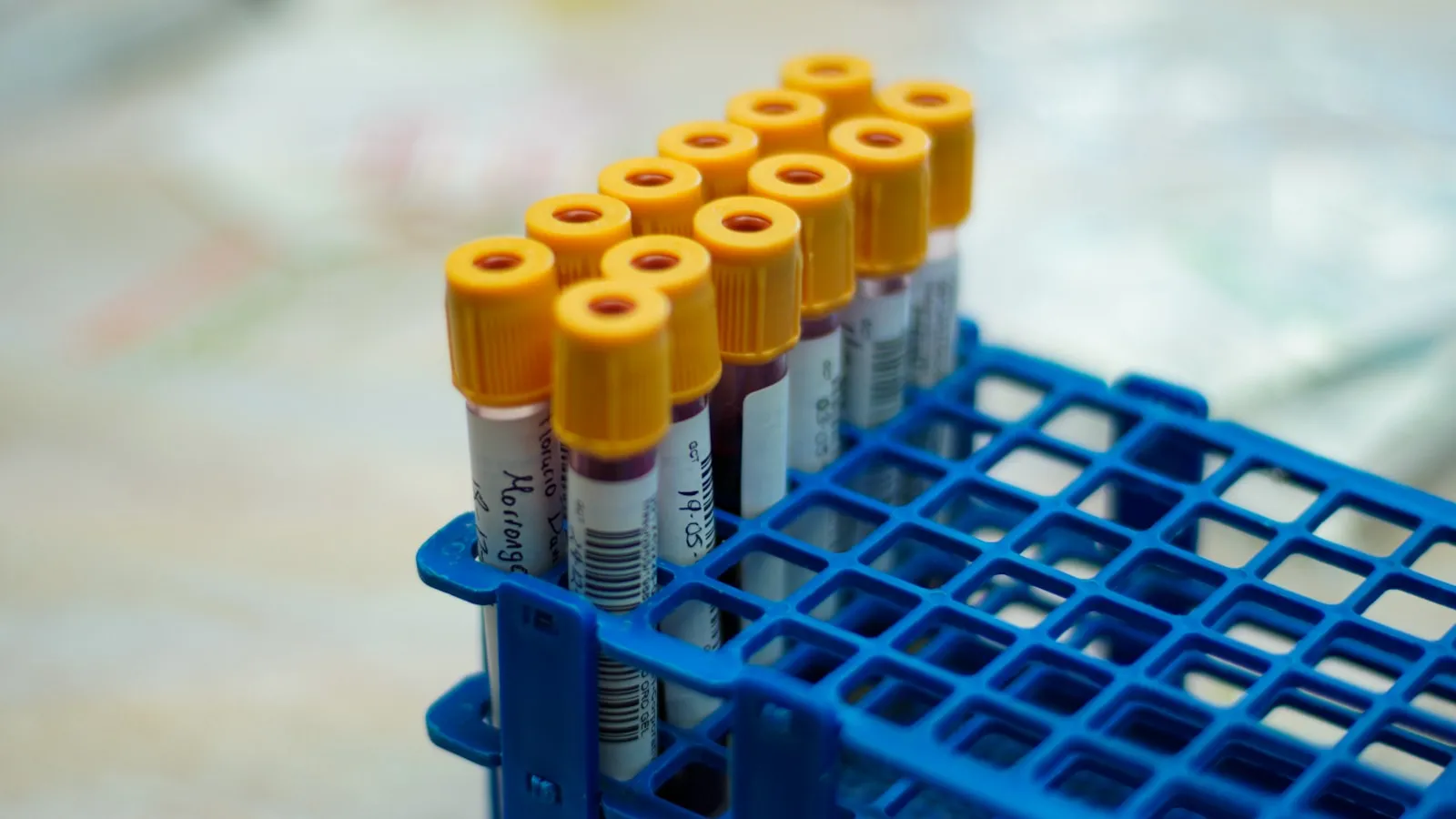
Measure hs-CRP at rest, at least 48 to 72 hours after a hard session or race, and not during a cold. That way you read your baseline and not your muscle damage. Preferably draw blood at a fixed moment, so you build an honest trend.
A single measurement is a snapshot. Two measurements at comparable, restful moments say much more together.
According to Thuisarts, a blood test is used in a targeted way for complaints, not as a loose check of everything at once. The RIVM also publishes population figures that help to put your own value in perspective.
If your hs-CRP stays raised at rest while you feel fine, discuss that with your GP.
What do you do with a raised hs-CRP?
With a raised hs-CRP you start with the simple things: repeat the measurement at rest, improve your sleep and check whether a hidden infection is at play. If you resolve those, the value often drops by itself. If it stays high, a talk with your GP is the logical step.
Do not start taking anti-inflammatories on your own based on a single number. You read a value next to your complaints, and treatment you discuss with your doctor.
A raised hs-CRP rarely comes alone. Often you see it together with other markers that help explain your fatigue.
If you want the broader picture, use the complete guide to blood tests for fatigue as a starting point.
Which blood test do you choose for fatigue and inflammation?
For fatigue with a possible inflammatory component, you choose a test that combines hs-CRP with your blood count, iron store, thyroid and vitamins. That way you know whether inflammation is the cause or one of several factors. A broad starting panel gives you that overview in one measurement.
For most athletes a broad test is a logical starting point. Our 360 Health blood test combines these systems in one measurement.
If you prefer to test in a targeted way, pick hs-CRP together with the markers that match your complaint.
That way you swap guessing for measuring.
Frequently asked questions
The questions I get back most from athletes who want to understand their hs-CRP.
Is an hs-CRP of 2 bad? A value between 1 and 3 mg/L falls in the average range and is no alarm on its own. Repeat the measurement at rest and read it next to your complaints, because context decides the meaning.
Can exercise lower my hs-CRP? Regular, well-dosed exercise links to a lower hs-CRP, while a single hard session raises it temporarily. It is about your baseline at rest, not the peak after a session.
How long after a session is my CRP normal again? That varies per person and per load, but 48 to 72 hours of rest is a reasonable guideline before you measure. After a hard race it can take longer.
Does a high hs-CRP mean I am ill? Not automatically. A value above 10 mg/L often points to acute inflammation or an infection, while a slightly raised value usually calls for context and a repeat measurement.
Do I need to fast for an hs-CRP measurement? For hs-CRP itself usually not, but if you draw it in a broader panel with glucose, fasting is handy. Preferably draw in the morning at a fixed moment.
Can a raised hs-CRP explain my performance? Low-grade inflammation links to slower recovery and less energy, so it can play a part. It is rarely the only cause, so read it next to your sleep, your iron and your training load.
References
- Cho HJ, Seeman TE, Bower JE, et al. Prospective Association between C-Reactive Protein and Fatigue in the Coronary Artery Risk Development in Young Adults Study. Biological Psychiatry. 2009. PMID: 19640510.
- Raison CL, Lin JM, Reeves WC. Association of peripheral inflammatory markers with chronic fatigue in a population-based sample. Brain, Behavior, and Immunity. 2009. PMID: 19111923.
- Cerqueira E, Marinho DA, Neiva HP, et al. Inflammatory Effects of High and Moderate Intensity Exercise: A Systematic Review. Frontiers in Physiology. 2020. PMID: 31992987.
- Kyrolainen H, Vesterinen V, Heikkinen R, et al. C-Reactive Protein Is Elevated Only in High Creatine Kinase Responders to Muscle Damaging Exercise. Frontiers in Physiology. 2019. PMID: 30804809.
- Thuisarts.nl / NHG. Blood testing. Accessed 2026.
- RIVM. Population figures and reference values. Accessed 2026.
Disclaimer
Every blood test result includes a professional assessment by a BIG-registered doctor. This article gives general information and is not a substitute for medical advice. A blood test is a tool to walk into the conversation with your GP better informed, not a diagnosis in itself. For treatment decisions, discuss your results with your GP.
Author
Enhanced Health
Dr. Naimi, BIG-registered physician, oversees the medical standards behind our content and assessments. Read our medical policy