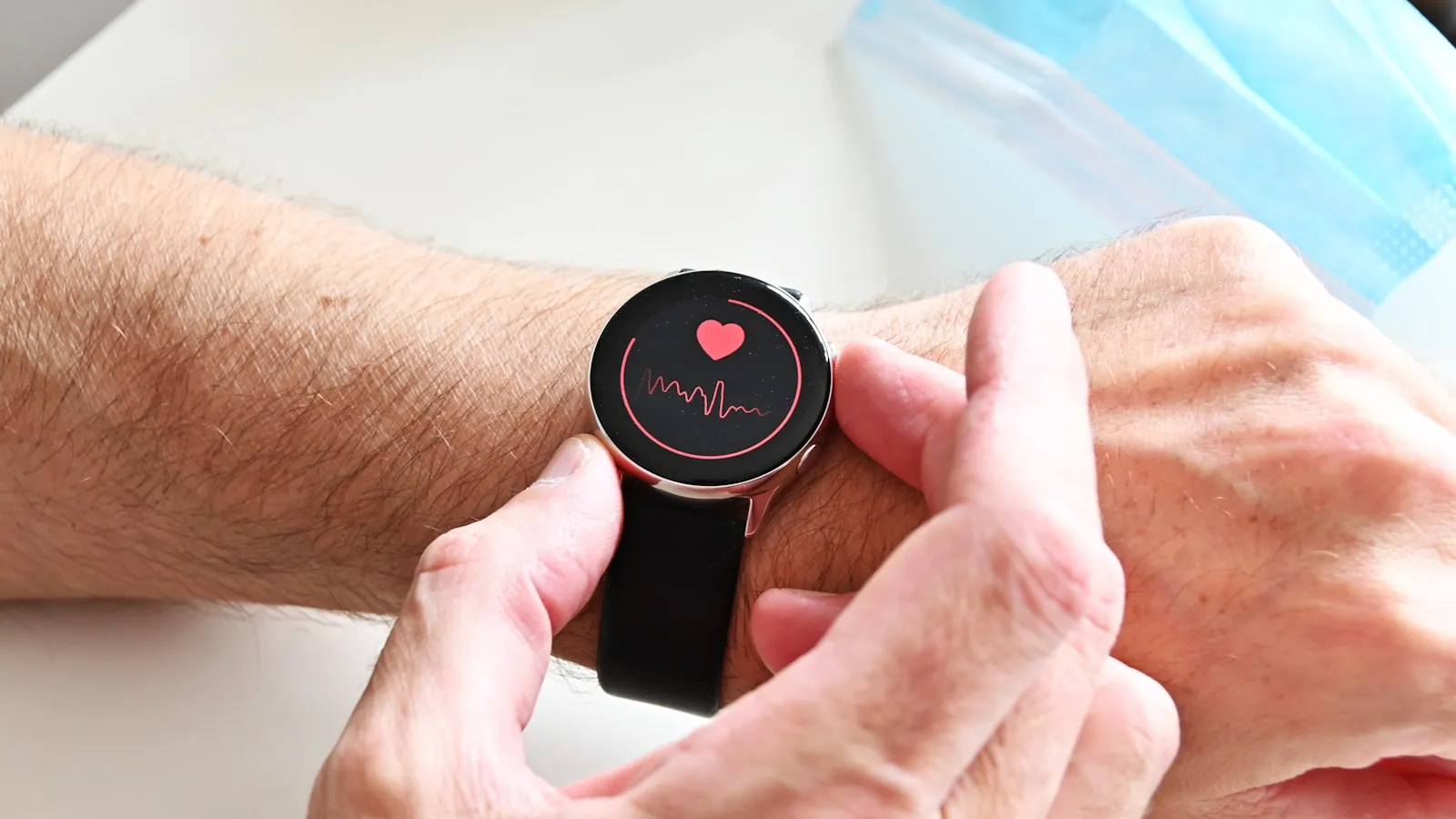
A low HRV score almost never means what you think. One night below your average is noise, usually from drink, a short night or a hard session. Three weeks below your average while you train easy is something else.
The difference sits in duration, not in depth.
That is exactly where nearly every article on this topic goes wrong. You get a list of ten causes, from stress to dehydration, followed by advice to rest more. I find that too thin, because the list says nothing about what you should do today.
What is a low HRV score?
A value below your own average of recent weeks. There is no general lower limit, because the spread between healthy people is enormous. Someone of 55 can sit at 28 ms perfectly well, while 28 in a 25-year-old would be low.
Your device therefore works from your baseline.
If you have not yet recorded fourteen nights, your score cannot be interpreted. The full tables by age and metric sit in HRV values by age.
What causes a low HRV?
Almost anything that gets in the way of recovery, and that is the problem. The list is so long that it no longer distinguishes anything. What you need is a sorting by what to do about it, not by what it is.
This table is the sorting I use myself.
| Tier | What you see | Most likely cause | Action |
|---|---|---|---|
| 1. Expected | 1 to 2 nights lower | Alcohol, late meal, short night, hard session | Nothing. Train as planned |
| 2. Watch it | 3 to 5 nights lower | Stacking load or illness starting | Intensity back, volume low |
| 3. Check blood | 2 weeks or longer lower | Iron, thyroid, inflammation, stress | Deload plus blood work |
| 4. See your GP | Lower with symptoms | Needs an explanation outside training | Make an appointment |
Tier 1 is where ninety percent of the panic sits. Alcohol measurably disturbs autonomic regulation in the first hours of your sleep (PMID 29549064), and you simply see that the next morning.
Why is my HRV so low when I am fit?
Because fitness and HRV do not measure the same thing. Your condition sits in your oxygen uptake and your heart rate, your HRV in the balance of your nervous system. A well-trained athlete mid-way through a heavy block should have a lower HRV than in a rest week.
There is another reason, and it is genuinely counterintuitive.
In heavily overloaded endurance athletes it has been described that they could no longer reach their maximal heart rate (PMID 23195630). Other work on overload shows that heart rate measures move with your training status, but not always in the direction you expect (PMID 26888648).
Picture two cyclists who both sit at 34 ms for a week. One is in week three of a build block, the other has trained easy for a month. Same number, and only the second one has something to investigate.
Which blood values explain a stubbornly low HRV?
No blood value measures your HRV, but a few markers do explain why it stays low. Autonomic imbalance is associated with inflammatory activity and with factors around cardiovascular risk, and those can simply be drawn (PMID 19910061).
In athletes I look at four things.
Ferritin shows your iron stores, and endurance athletes in particular are at risk. More on that in iron deficiency in athletes. TSH and free T4 tell you whether your thyroid is driving your heart rate.
hs-CRP shows silent inflammation, and cortisol moves with your total load. That combination sits in InsideTracker. If you only want the stress side, the cortisol test is the smaller starting point.
How do you raise your HRV score?
By improving your recovery, because your HRV follows that and not the other way round. Sleep duration and sleep quality have the largest effect. After that come your total training load, alcohol and the way you handle stress.
No supplement takes this over.
One technique has been studied separately. Breathing slowly at around six breaths per minute raises HRV during and shortly after the exercise, described in the literature as HRV biofeedback (PMID 25101026). Five minutes a day, free, and it does not work against a two-hour sleep debt.
The rest is dull and works better. Fixed bedtimes, less drink, building an aerobic base and planning real rest days. What sleep does to your recovery sits in better sleep for athletes.
When is a low HRV a reason to call someone?
When symptoms come with it. Palpitations, dizziness, breathlessness or an irregular heartbeat belong with a doctor, however fit you are otherwise. That holds even when your HRV looks fine.
Fitness is not a free pass.
The Dutch Hartstichting stresses the same point: a consumer sensor is not a medical instrument and does not replace investigation when there is doubt. An app showing green rules nothing out, and an app showing amber proves nothing.
Without symptoms, but with a score that stays low for weeks, you are in tier 3 of the table. Spotting overtraining through your blood sits in recognising overtraining.
Do one thing this week: check in your app how many nights you are genuinely below your average. Below three, you do not need to change anything.
Every blood test result includes a professional assessment from a BIG-registered doctor. For treatment decisions, discuss your results with your GP.
References
- Le Meur Y, et al. A multidisciplinary approach to overreaching detection in endurance trained athletes. Journal of Applied Physiology, 2013. PMID 23195630.
- Bellenger CR, et al. Monitoring athletic training status through autonomic heart rate regulation: a systematic review and meta-analysis. Sports Medicine, 2016. PMID 26888648.
- Thayer JF, et al. The relationship of autonomic imbalance, heart rate variability and cardiovascular disease risk factors. International Journal of Cardiology, 2010. PMID 19910061.
- Lehrer PM, Gevirtz R. Heart rate variability biofeedback: how and why does it work? Frontiers in Psychology, 2014. PMID 25101026.
- Pietila J, et al. Acute effect of alcohol intake on cardiovascular autonomic regulation during the first hours of sleep. JMIR Mental Health, 2018. PMID 29549064.
- Hartstichting. Heart rate and heart rhythm.
Autor
Enhanced Health
Powiązane badania
Powiązane artykuły
Fasting blood tests for athletes: 9 things that skew your results
HRV status on Garmin: what your watch measures while you sleep