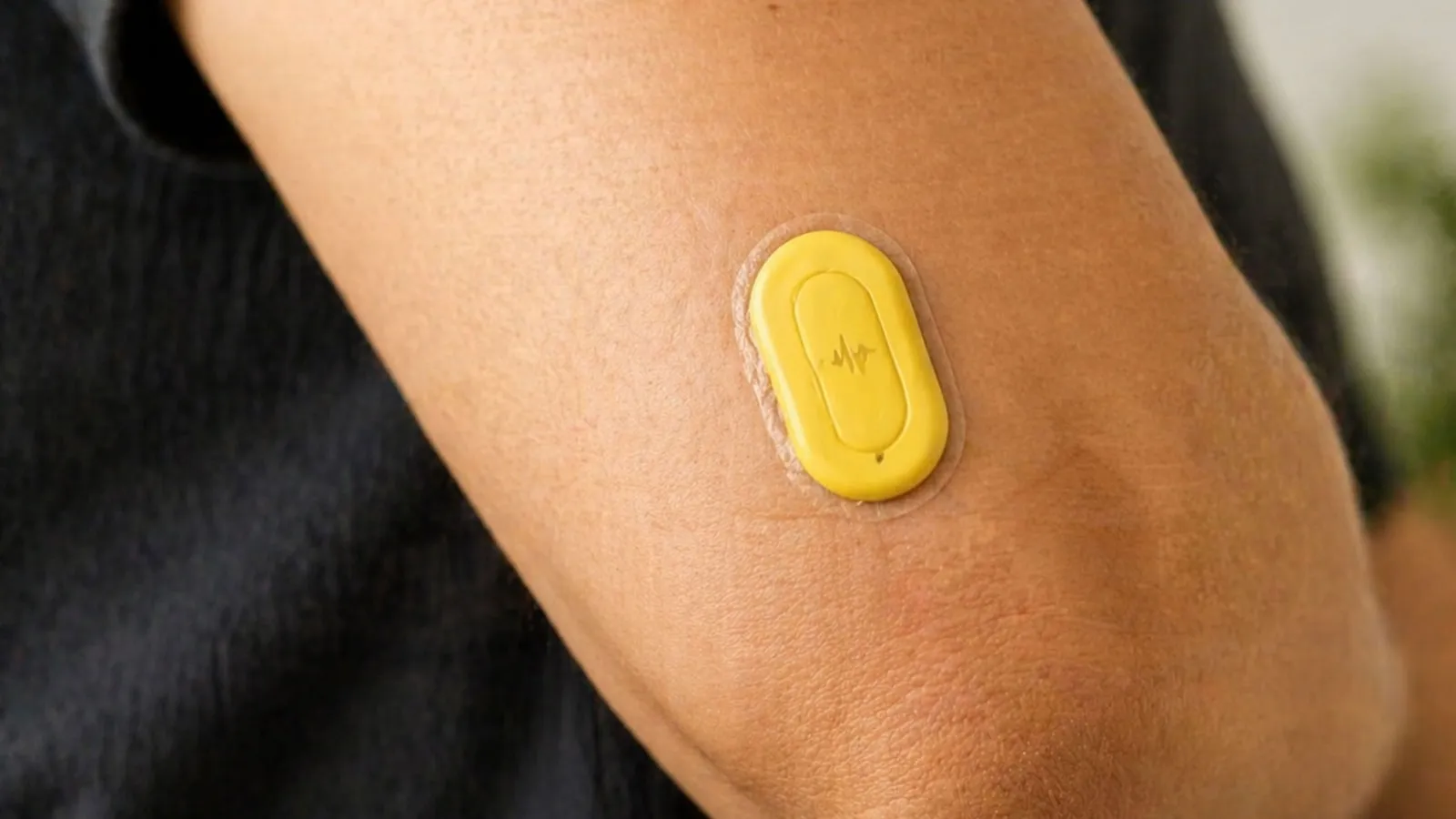
Your blood sugar rises after eating. That is how it works. In most people glucose peaks around 30 to 60 minutes after a meal and is back under 7.8 mmol/l two hours later, and that is not a problem you need to solve.
Yet "flatten your curve" is the most popular advice going right now.
For someone staying on the sofa that is reasonable advice. For someone getting under a bar in an hour, it is simply wrong. The same spike, two opposite verdicts, and the difference sits in what you do afterwards.
What is a normal glucose spike after eating?
Two hours after a meal glucose stays under 7.8 mmol/l in most people, and in between it is allowed to climb. Exactly how high depends on your meal, your training that day, your sleep and your genes. A peak of 8.0 that is gone within an hour looks different to the same 8.0 hanging around for two hours.
How long counts for more than how high.
That people differ enormously from each other has been measured properly. Stanford researchers saw that people with normal standard values fell into recognisable patterns, which they called glucotypes. Some stayed flat all day, others shot up on the same food (PMID 30040822).
Which means an influencer's meal advice may not even apply to you.
When is a spike useful?
When you are about to burn that glucose. Eat carbohydrates 45 minutes before your training and the rise you see is exactly the fuel your muscles are about to use. That same rise on the sofa, at 10pm, does not do that.
Context decides whether a curve is a problem.
| Situation | What the spike does | Verdict |
|---|---|---|
| Carbohydrates 45 min before training | Delivers fuel you use immediately | Exactly the point |
| Meal right after your training | Refills your muscle glycogen | Useful, your muscles are eager now |
| Big meal, then 10 min walking | Spike is flattened by movement | Fine, and free |
| Big meal, then two hours sitting | Spike hangs around longer | Here the tip does make sense |
| Sweet snack at 10pm on the sofa | No uptake, only storage | The worst version |
| Anxiously avoiding every spike | You eat too little to train | Worse than the spike itself |
I see that last row more often than I would like. An athlete who cuts his carbohydrates to keep his sensor line pretty trains worse within a few weeks. His graph is beautiful and his deadlift is dropping.
Does walking after eating really help?
Yes, and this is the best-supported advice on this entire page. Better still: it only works if you do it after the meal, not before, which is exactly the opposite of how most people plan their day.
Ten minutes of walking beats every supplement you wanted to take over it.
A meta-analysis of 8 randomised trials with 116 participants, 69 of them without diabetes, compared moving before and after the meal. Moving after eating lowered the glucose excursion compared with moving before it (standardised difference 0.47) and compared with doing nothing (0.55). Moving before the meal did almost nothing: the difference was even slightly negative (PMID 36715875).
The researchers also found the time between meal and movement mattered. The shorter, the better. So walk right away, not in an hour.
Does the order of your food matter?
Somewhat, and less dramatically than the videos suggest. Fibre and protein first and carbohydrates last slows your stomach emptying, so glucose arrives more gradually.
It is a real effect. It is not a big effect.
The study always cited here is a short publication in Diabetes Care in which Shukla and colleagues showed that food order affects glucose and insulin after the meal (PMID 26106234). It was small, and it was about people with type 2 diabetes.
Nothing wrong with that, but it is a different starting point to a trained 30-year-old. The Dutch Voedingscentrum is strikingly level-headed about this, and the contrast with the spike panic online is stark. If order tricks help you, fine. If they make your meal stressful, drop them.
Should you avoid spikes if you train?
No, and this is where I disagree with virtually every page ranking above this one. An athlete who cuts his carbohydrates around his training to keep his curve pretty is trading performance for a graph.
You do not train to win your sensor line.
Picture two athletes both eating oats and seeing a peak of 8.5. The first then cycles to the gym and is back at 5.4 within an hour. The second eats the same and goes to work, and is still at 7.5 two hours later. Same meal, same spike, two completely different days.
What happens in your blood when you cut carbohydrates structurally sits in carbohydrates and training performance. And if you dip after eating instead of staying high, blood sugar dips and energy is your post.
How do you see your own spike?
Only with a sensor or with two finger pricks on the clock. A fasting draw cannot see your spike by definition, because it is long gone by six in the morning.
Your fasting value knows nothing about your dinner.
If you want to do it cheaply: prick at 0, 60 and 120 minutes after a meal you eat often. Three points is already a shape. If you want the whole curve you need a sensor, with the caveat that it is least accurate during exercise. The trade-off sits in measuring your blood sugar and continuous glucose monitor without diabetes.
When is a spike actually a signal?
When it is still not gone two hours later, and when that happens every time. One slow curve after a pizza says nothing. Structurally staying above 7.8 for two hours on ordinary meals is a different story, and then insulin becomes more interesting than glucose.
Slow curves are more informative than high curves.
Because a spike that falls slowly often means your insulin has to work harder to do the same job. You only see that once you measure insulin alongside it, and that sits in fasting insulin and HOMA-IR. The broader picture sits in blood sugar values when you train, and what else pulls at your value outside your meals in high blood sugar without diabetes.
What do you do next?
Walk ten minutes after your dinner, starting today, and change nothing else. That is the only intervention on this page that is free, immediate, and has the strongest evidence behind it.
My advice: leave your carbohydrates around your training alone and move your attention to the meals you then sit still for two hours after. Your margin is there, not in your pre-workout.
If you want to know whether your spikes cost you anything, measure glucose and insulin together with the HOMA-IR test, or more broadly with InsideTracker. The individual value sits at fasting glucose.
Every blood test result includes a professional assessment from a BIG-registered doctor. For treatment decisions, discuss your results with your GP.
References
- Engeroff T, Groneberg DA, Wilke J. After Dinner Rest a While, After Supper Walk a Mile? A Systematic Review with Meta-analysis on the Acute Postprandial Glycemic Response to Exercise Before and After Meal Ingestion in Healthy Subjects and Patients with Impaired Glucose Tolerance. Sports Medicine, 2023. PMID 36715875.
- Shukla AP, Iliescu RG, Thomas CE, Aronne LJ. Food Order Has a Significant Impact on Postprandial Glucose and Insulin Levels. Diabetes Care, 2015;38(7):e98-e99. PMID 26106234.
- Hall H, Perelman D, Breschi A, Limcaoco P, Kellogg R, McLaughlin T, Snyder M. Glucotypes reveal new patterns of glucose dysregulation. PLoS Biology, 2018. PMID 30040822.
- Voedingscentrum. Carbohydrates.
- RIVM. Figures on meeting the physical activity guidelines.
Autor
Enhanced Health
Powiązane badania
Powiązane artykuły
High blood sugar without diabetes: what else moves your value

High fasting glucose while you are fit? This is what happens in the morning