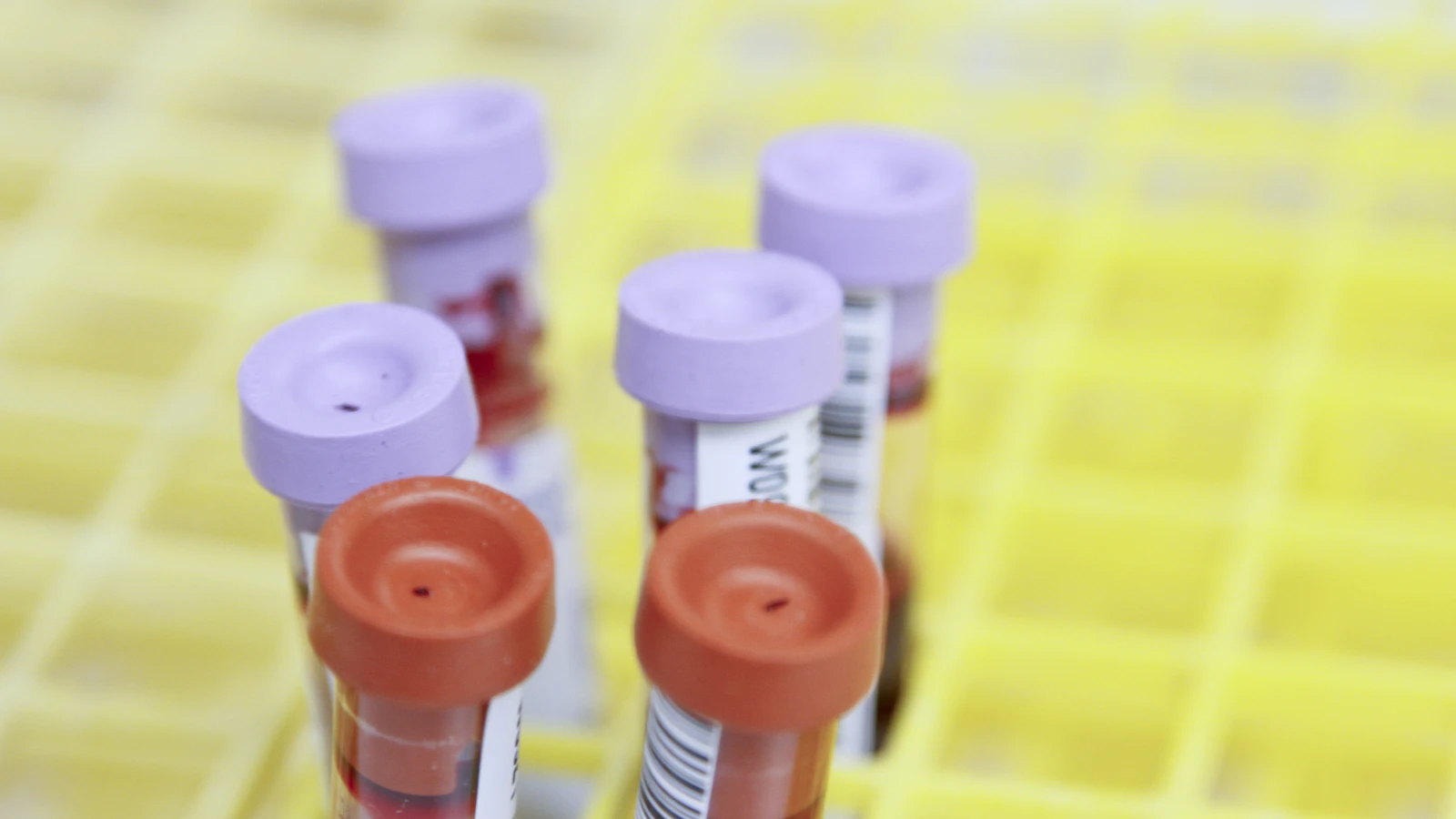
Cystatin C is a small protein produced at a steady rate by almost all of your cells and filtered out by your kidneys. That lets it estimate kidney function without muscle mass getting in the way. For someone carrying a lot of muscle that is the whole difference, because the standard calculation via creatinine does depend on muscle mass.
I see this misunderstanding more often than I would like: a healthy lifter who panics at his eGFR and concludes his kidneys are failing.
Usually they are not failing at all.
What is cystatin C exactly?
Cystatin C is a protein produced by all nucleated cells at a rate that barely fluctuates. Your kidneys filter it out of your blood, so the less your kidneys filter, the higher the value in your blood. Reference values at most labs sit roughly between 0.62 and 1.11 mg/l, though this differs per lab.
An important detail: its production has almost no link with muscle mass, age or meat intake.
That is exactly why it is so useful in people who are not average.
Why does creatinine mislead when you carry muscle?
Creatinine is a waste product of creatine phosphate from your muscles. More muscle mass means structurally more creatinine in your blood, even with perfectly working kidneys. The eGFR formula does not know that difference and converts your higher creatinine into a lower estimated kidney function.
Baxmann and colleagues showed exactly this: muscle mass and physical activity clearly influence creatinine, while cystatin C is far less sensitive to both (PMID 18235143).
So a heavily muscled man with a creatinine of 115 micromol per litre can have the same true kidney function as a lean man at 85.
| Creatinine and eGFR | Cystatin C | |
|---|---|---|
| Origin | Breakdown product from muscle tissue | Protein from almost all cells |
| Sensitive to muscle mass | Yes, strongly | Barely |
| Sensitive to a meat heavy meal | Yes | No |
| Sensitive to creatine supplementation | Yes, it can lift the value | No |
| Distorts in a strength athlete | Towards a falsely low eGFR | Almost never |
| Included in standard GP bloodwork | Nearly always | Often not by default |
Is cystatin C better than creatinine?
Not better, but different, and strongest in combination. Inker and colleagues showed in the New England Journal of Medicine that a formula using creatinine and cystatin C together estimates kidney function more accurately than either alone (PMID 22762315). Shlipak and colleagues found that cystatin C separates risk better in people whose creatinine gives borderline results (PMID 24004120).
The practical translation: use them together when you can.
If they diverge widely, that divergence is itself a signal worth attention.
What happens with two men who have identical kidneys?
Picture two men of 45, both with exactly the same true kidney function. One weighs 96 kilos with a lot of muscle, uses creatine, and has a creatinine of 112 micromol per litre, pushing his eGFR to around 70. The other weighs 72 kilos, does not train, has a creatinine of 82 and an eGFR of 95.
On paper the athlete looks worse off. Measure cystatin C in both and they land on nearly the same value, say 0.85 mg/l.
That is the moment the penny drops. The formula was wrong, not the kidney.
How creatinine plays out in lifters specifically is covered in high creatinine from muscle mass.
Does creatine ruin your kidney values?
Creatine supplementation can lift your serum creatinine slightly, simply because you have more creatine in circulation. That is a measurement artefact, not kidney damage. Cystatin C is not affected by it, which is what makes it so usable in creatine users.
A protein rich diet, or a steak the night before, can also raise your creatinine temporarily.
Whether a lot of protein harms your kidneys is a question I handle separately in protein intake and your kidneys.
When is cystatin C interesting for you?
Mainly when your eGFR comes out low while you are otherwise healthy and carry plenty of muscle. Also when you use creatine, eat a lot of protein, or when two measurements diverge sharply without an obvious reason. The Nierstichting, the Dutch kidney foundation, and the NHG both stress that a single unusual estimate is not kidney disease.
What you do with an unusual result is a conversation with your GP. That is not modesty, it is simply the right route.
You will find the cystatin C blood value in the kidney health blood test, alongside creatinine and urea. How kidney function fits into the rest of your ageing picture sits in healthy ageing as an athlete, and why creatinine also distorts your biological age score is in measuring biological age.
Did your last eGFR give you a fright? Add cystatin C to your next test before drawing conclusions.
References
- Inker LA et al. Estimating glomerular filtration rate from serum creatinine and cystatin C. New England Journal of Medicine, 2012. PMID 22762315
- Baxmann AC et al. Influence of muscle mass and physical activity on serum and urinary creatinine and serum cystatin C. Clinical Journal of the American Society of Nephrology, 2008. PMID 18235143
- Shlipak MG et al. Cystatin C versus creatinine in determining risk based on kidney function. New England Journal of Medicine, 2013. PMID 24004120
- Nierstichting, information on kidney function and eGFR.
Every blood test result includes a professional assessment from a BIG-registered doctor. For treatment decisions, discuss your results with your GP.
الكاتب